

The left has spent years insisting noncitizen voting simply doesn’t happen.
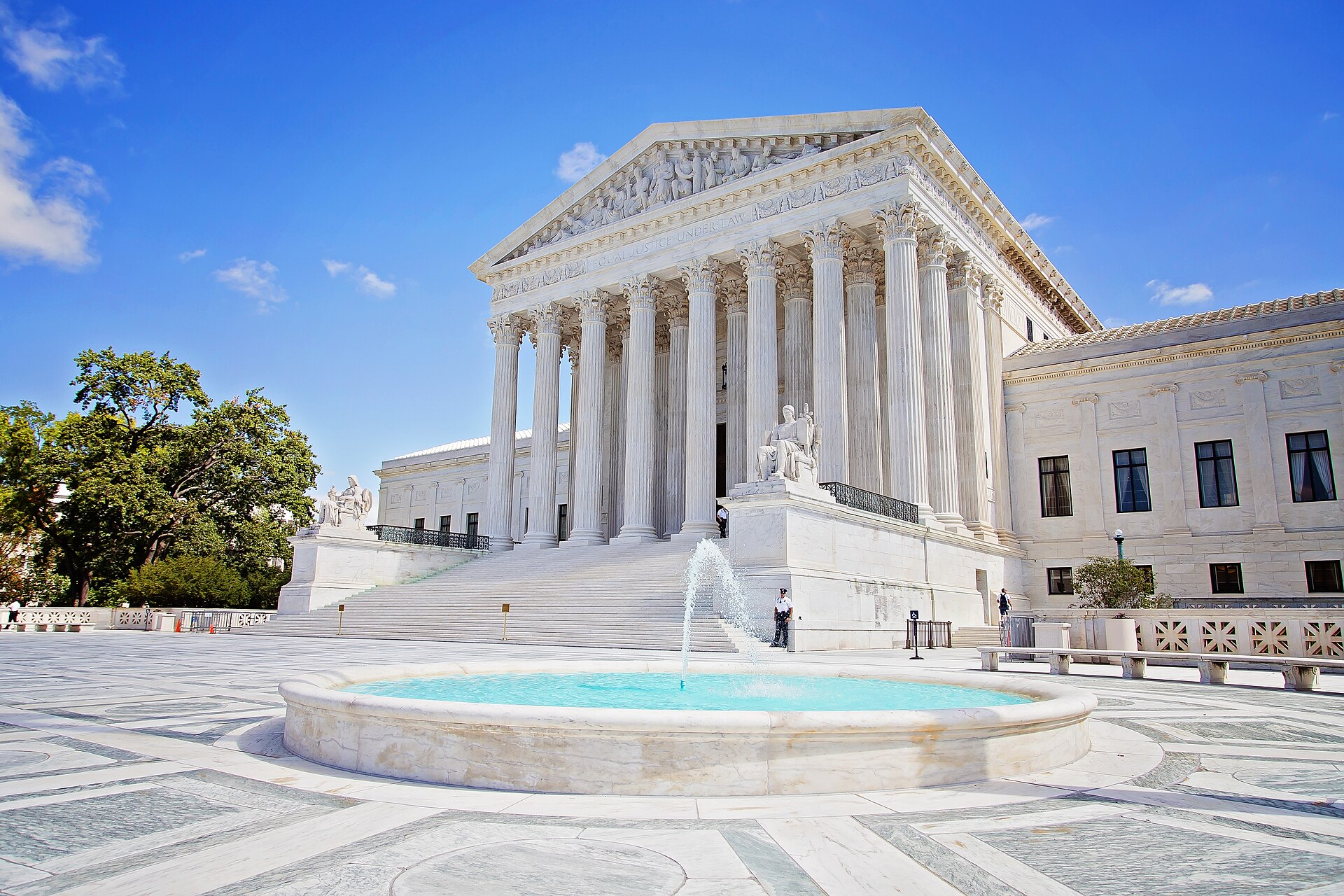
Now the highest court in the land just handed President Trump the tool to prove them wrong.
And the three liberal justices who tried to stop it are seething after the Supreme Court restored Trump’s mass voter verification system with weeks to go before the midterms.
What the Court Actually Did
The US Supreme Court ruled 6-3 to restore the Trump administration’s expanded version of a federal voter eligibility database known as SAVE — the Systematic Alien Verification for Entitlements program.
The justices granted the Justice Department’s request to block a judge’s order that had stopped state officials from using Social Security numbers and other information to conduct sweeping checks of the citizenship status of registered voters against federal records.
The emergency order allows states, for now, to use the Department of Homeland Security program, called Systematic Alien Verification for Entitlements, or SAVE, in their efforts to verify the eligibility of voters on their rolls.
SAVE is a 40-year-old federal data system that was created to check the immigration status of noncitizens to determine their eligibility for public benefits. The Trump administration took that existing tool and expanded it in a way that had never been done before.
The overhaul also allowed bulk queries to SAVE, and DHS encouraged states to upload their entire voter rolls to SAVE to verify those registered are US citizens and not listed as deceased in federal records.
The numbers tell the story. In his appeal, Solicitor General D John Sauer wrote that since May 2025, the updated version of SAVE has verified more than 65 million voters across 26 states, and has flagged 28,635 as potential noncitizens.
That is not a small or theoretical number. That is a real pool of registrations that demands a closer look before November.
In an unsigned opinion, the majority wrote that Congress, in the Illegal Immigration Reform and Immigrant Responsibility Act, authorized “an information-sharing regime like the modified SAVE program.”
“The District Court’s order thus inhibits the Federal Government’s efforts to assist state and local agencies in the proper administration of the midterm elections. Under these circumstances, the equities weigh in favor of a stay,” the majority wrote.
A Biden Judge Who Got Overruled
In June, US District Judge Sparkle Sooknanan, a Biden appointee, blocked use of the modified version of SAVE, finding that its aggregation and disclosure of sensitive data violated the Social Security Act, the Privacy Act and the Administrative Procedures Act.
Her ruling dripped with political language. “All in all, the federal government has knowingly trampled on the privacy rights of American citizens in a manner that threatens the sacred right to vote,” Sooknanan wrote.
That’s a serious charge. But the Supreme Court looked at the same legal question and reached the opposite conclusion, finding that federal law expressly permits exactly this kind of data-sharing between agencies. A Biden appointee’s dramatic ruling does not always reflect what the law actually says.
After an appeals court panel refused to stay the lower court’s decision in a 2-1 vote, Solicitor General D John Sauer appealed to the Supreme Court earlier this month.
And the Supreme Court said yes.
Justice Ketanji Brown Jackson dissented, joined by Justices Elena Kagan and Sonia Sotomayor. Their dissent focused on the argument that the risks of disenfranchising a small number of voters outweigh the government’s interest in keeping noncitizens off the rolls. Jackson wrote, “The harm caused by burdening or disenfranchising even a few lawful voters outweighs the nonexistent harm that the Government experiences when it is prevented from taking an action that it likely lacks the authority to take.”
That argument asks the country to accept a broken status quo rather than build a better one. The majority chose differently.
What DHS Said After the Win
DHS General Counsel James Percival made no effort to hide his frustration with the road the administration had to travel to get here. “This decision is a victory for election integrity,” Percival said. “It’s remarkable that we had to file an emergency petition in the Supreme Court just so we can use government data to stop noncitizens from voting illegally. American elections are for Americans.”
Read that again. The federal government needed a Supreme Court emergency petition just to run a citizenship check on its own voter rolls. That tells the real story about how hard the left has worked to block even basic election integrity measures from going forward.
The opposition groups who filed suit — the League of Women Voters and the Electronic Privacy Information Center — said in a statement that “today’s decision is profoundly disappointing, as it puts millions of Americans at risk of being unlawfully targeted by the administration’s unreliable voter purge database weeks before the midterm elections.”
But they also admitted: “However, this case is not over. The DC district court ruled that the expanded SAVE program violated multiple laws. We will be doing everything in our power to protect Americans’ voting and privacy rights by ensuring that the district court decision stands.”
So they plan to keep fighting it. Fine. That’s what courts are for. But for now, the Supreme Court has spoken.
The Critics’ Error Rate Argument
The groups challenging the program leaned hard on error rate concerns. In their Supreme Court filing, the advocacy groups cited a Travis County, Texas, election official who said 25% of the system’s noncitizen matches there involved people who had already proven their US citizenship, and news reports finding that at least 81% of the system’s responses in St Louis County, Missouri, were erroneous.
Those numbers deserve scrutiny — and they got it. But consider what they actually reveal: the system flagged voters, those flags triggered follow-up, and local officials sorted out which cases involved actual citizens. That process is working the way it should. The alternative — running no checks at all — guarantees nothing gets caught.
Critics noted that even though 65 million voters had been verified by the revamped SAVE, the government had not yet released the system’s error rate, or how many Americans’ citizenship was misrepresented “and who consequently have been forced to reverify their citizenship to retain their voter registration or obtain government benefits.”
That’s a fair concern to raise in court. What it is not is a reason to shut the whole thing down weeks before a national election.
The 2005 bipartisan Carter-Baker Commission on Federal Election Reform identified the integrity of voter rolls as a foundational issue. Checking whether registered voters are actually citizens belongs in the same category as requiring ID at the polls. The principle is identical: verify before you count.
What This Means Going Into November
The practical impact of the ruling on the midterms may be limited. The immediate impact on the upcoming midterms is likely limited because existing law blocks most states from systematically purging voters from their rolls within 90 days of an election, said David Becker, an election law expert who leads the Center for Election Innovation and Research.
And states’ use of the SAVE program is voluntary.
But this ruling matters beyond November. It establishes that the Trump administration has the legal authority to cross-check voter rolls against federal immigration and Social Security data. That is a precedent that survives whatever happens in this election cycle.
The administration’s data-sharing arrangement is one in a series of actions boosting the federal government’s involvement in voting ahead of November’s midterm elections in which Trump’s fellow Republicans seek to maintain control of Congress.
The left spent years arguing that noncitizen voting was a myth invented by conspiracy theorists. The Trump administration built a system to check. A Biden-appointed judge tried to bury that system. The Supreme Court said no.
Americans who have raised legitimate questions about the integrity of elections for years — through the COVID-era rule changes, through the influx of mail-in ballots, through the billion-dollar flood of private money into election offices in 2020 — now have a clearer picture of what genuine institutional resistance to basic verification looks like. It looks like activist judges, left-wing advocacy groups, and three Supreme Court justices joining hands to stop the government from running a citizenship check on its own voter database.
The Supreme Court just drew a line. States that want clean rolls now have the tool to build them. What they do next is up to them.
Sources: Reuters via CNBC, ABC News, NPR, Department of Homeland Security