

Americans already lived through one mystery illness out of a foreign lab.
Communist China lied about it. Millions paid the price. Nobody in Beijing ever answered for it.
But one former prosecutor knows a shifting story when he hears one, and Moscow’s story keeps shifting.
A Dead Scientist and a Story That Won’t Hold Still
Darya Shipilova was 28 years old. She worked at the Irkutsk Anti-Plague Institute, a research facility tucked away in Siberia more than 2,500 miles east of Moscow.
Russian media outlets reported that she broke a test tube holding plague bacteria in late September. Severe pneumonia set in soon after, and she died in early October 2026.
And that’s about where the agreed-upon facts run out.
Alexei Tsydenov, the head of Russia’s Republic of Buryatia, first posted that Shipilova died of plague. Then he went back and edited the post to add the word “possibly,” according to Lyudi Baikala, an independent Russian news outlet operating in exile.
Local officials near the town of Shelekhov, where she spent her final days in the hospital, put out a warning telling people to stay away over a possible human plague case. Somebody deleted that warning in under two hours.
Russia’s health watchdog, Rospotrebnadzor, eventually landed on a different explanation altogether. The agency insists no accident ever happened at the institute and lists her cause of death as “pneumonia of unknown etiology.”
Kremlin spokesman Dmitry Peskov told Russians to lean on the experts at Rospotrebnadzor and stick with official information.
Anybody who sat through 2020 has heard that tune before.
Trey Gowdy Has Seen This Movie Before
Few people on television know an evolving official story better than Trey Gowdy.
Before he ever sat behind a Fox News desk, Gowdy made his name as a federal prosecutor and later as a solicitor in South Carolina, putting criminals away for a living. Former US Representative Trey Gowdy (R-SC) then spent eight years in Congress, where he chaired the House Select Committee on Benghazi and later the House Oversight Committee.
Benghazi taught him plenty about governments and their talking points. The Obama administration initially pinned the deadly 2012 attack on an anti-Islam internet video, a story that fell apart under scrutiny.
So when Gowdy brought the Russian plague scare onto Sunday Night in America, he brought a career’s worth of instincts with him.
His guest was Dr Marc Siegel, Fox News’ senior medical analyst, who walked viewers through how pneumonic plague actually spreads.
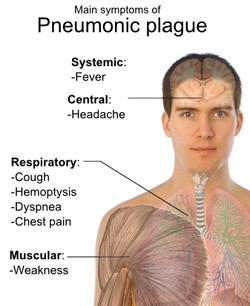
Pneumonic plague isn’t the bubonic plague most folks remember from history class. The same bacteria, Yersinia pestis, attack the lungs instead, and the sickness can jump from one person to another through droplets in the air.
The Centers for Disease Control and Prevention puts the death rate for untreated pneumonic plague close to 100%. Antibiotics can knock it out, but doctors have to move fast, since symptoms can show up within one to four days of exposure.
Gowdy and Siegel closed the segment on something far more hopeful. Siegel talked about his upcoming book, The Angels Among Us, and the healing power of prayer for patients staring down the worst news of their lives.
That’s a message the cable news crowd doesn’t hear nearly enough.
Moscow’s Actions Don’t Match Moscow’s Words
But here’s the part that should bother everybody.
If Shipilova died of ordinary pneumonia, why did Russian authorities put nearly 200 people under medical observation? Why quarantine a hospital? Why send the country’s top disease control official flying out to Irkutsk?
Nobody reacts to a garden-variety chest infection that way. Any prosecutor would flag that gap between the explanation and the behavior in about five seconds.
Dr Amesh Adalja, a senior scholar at the Johns Hopkins Center for Health Security, made a similar point. He also noted the rest of the world has to rely on a government with “a documented history of concealment on biosecurity.”
Ian Jones, a virology professor at the University of Reading in Britain, said he could hardly believe modern labs still hadn’t pinned down what killed a trained worker inside a plague facility.
Secretary of State Marco Rubio took the measured approach. Rubio told reporters the situation isn’t “cause for alarm, but it is cause for focus.” He pointed to the very limited travel between the US and Russia and said the administration would keep a close eye on things.
The World Health Organization rates the risk to people outside Russia as very low. No secondary cases had turned up by mid-October, and Russia lifted its quarantine in the Irkutsk region.
That’s good news. And it doesn’t settle a thing.
The Kremlin’s Long Record of Lab Lies
Russia has run this play before, and the last run didn’t end well for the truth.
In 1979, anthrax spores escaped from a Soviet military facility in the city of Sverdlovsk and killed dozens of people. Soviet officials blamed bad meat. Boris Yeltsin finally admitted the military connection in 1992, more than a decade after the funerals.
During the 1980s, Soviet scientists engineered plague strains that could shrug off antibiotics. That history still shapes the nightmare scenarios biological warfare experts war-game to this day.
So when a Kremlin spokesman tells the world to calm down and trust the official line, a little skepticism looks like plain common sense.
Wuhan Taught Americans This Lesson the Hard Way
The comparison to Communist China practically writes itself.
In late 2019, reports of a strange pneumonia trickled out of Wuhan, a city that happened to host a lab studying bat coronaviruses. The Chinese Communist Party silenced doctors, stonewalled outside investigators, and assured everyone the situation was under control.
The World Health Organization repeated Beijing’s early talking points. Big Tech platforms throttled posts that raised the lab-leak question. And Dr Anthony Fauci’s public health establishment spent the better part of two years treating that question like a fringe obsession.
But the FBI and the Department of Energy later concluded a lab accident was the likeliest origin. The CIA eventually leaned the same direction.
None of that proves Shipilova died of plague. Nobody outside Russia knows for certain, and the official Russian explanation could turn out to be right.
Still, Americans earned the right to ask hard questions. The last time a regime swore a mystery pneumonia was nothing to worry about, governments across the country ended up padlocking schools, churches, and small businesses for months on end.
That kind of thing tends to stick with people.
Dangerous Labs Need Sunlight, Not Spin
The bigger worry stretches well past one research building in Siberia.
Labs all over the world tinker with some of the deadliest pathogens on the planet, and plenty of them operate behind closed doors. President Trump signed an executive order in May 2025 cracking down on federal funding for risky gain-of-function research.
That decision looks wiser with every new headline out of a foreign lab.
Rubio’s steady response hits the right note, too. No panic. No pointless travel bans. Just close attention and a demand for straight answers from a government that rarely volunteers them.
Moscow could clear this whole thing up in a hurry by letting independent investigators in and releasing the lab results. So far, the Kremlin prefers the trust-us approach.
And Americans already know how that story ended the last time.
Sources: Fox News, “Concerns rise amid suspected pneumonic plague in Russia”; CBS News, “Russia plays down plague fears and denies lab accident, says scientist died of ‘pneumonia of unknown origin’”; PolitiFact, “Does a Russian lab worker’s death carry pandemic risk? Not based on what we know now, experts say”; The Conversation, “The death of a Russian plague researcher, explained by a microbiologist”; NBC News, “Russian lab worker dies of suspected plague as 200 enter medical observation”; CNN, “Dozens quarantined after researcher at Russian plague laboratory dies of ‘unknown’ infection”; NPR, “What is the pneumonic plague?”