

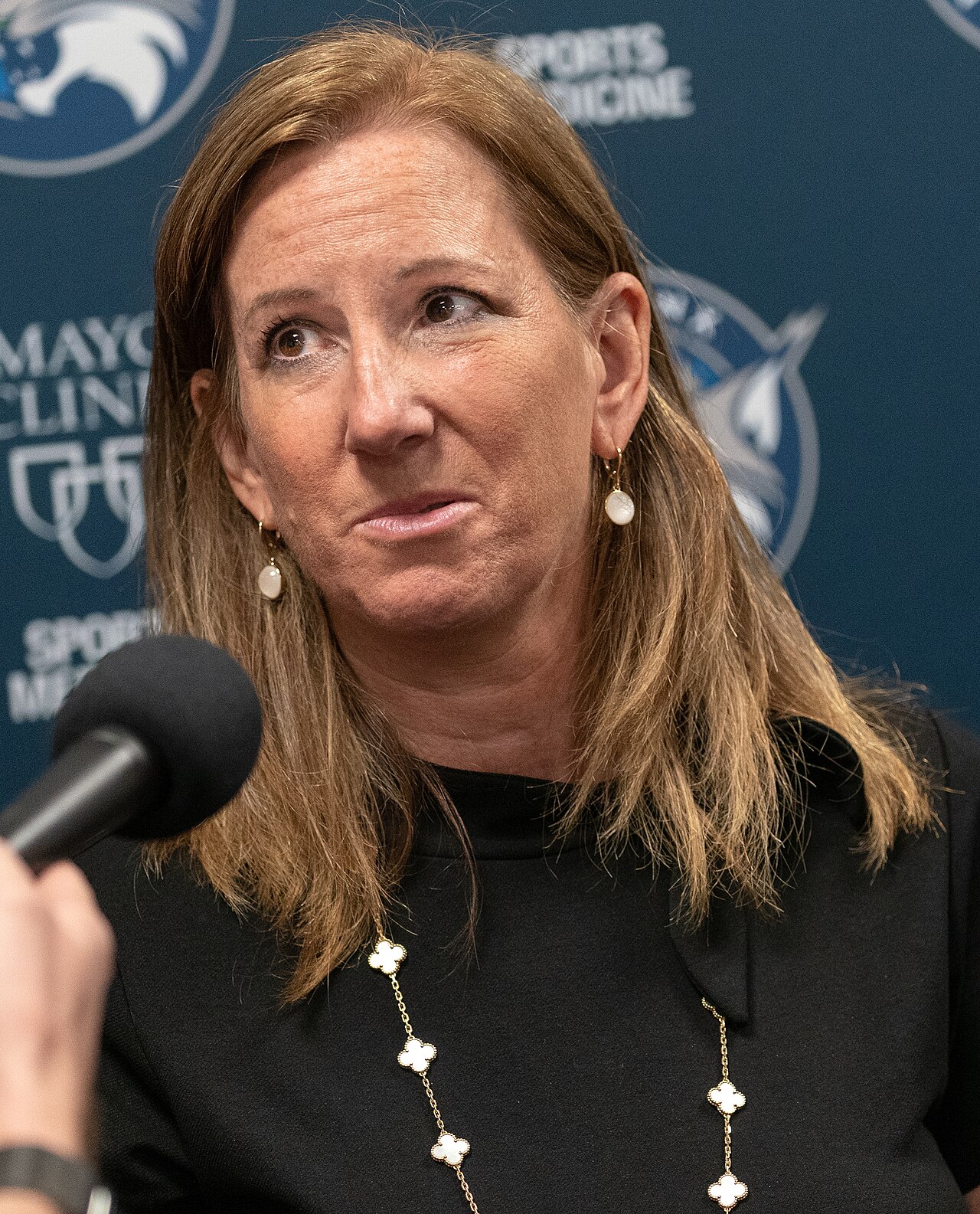
The WNBA’s woke culture just ran headfirst into a wall it built itself.
Two former NBA players called the league’s bluff in the most public way possible.
And now WNBA Commissioner Cathy Engelbert is scrambling to respond after Enes Kanter Freedom and Royce White declared for the 2027 WNBA Draft, leaving the league with no clean answer and nowhere to hide.
The Declarations That Broke the Internet
Enes Kanter Freedom, the 34-year-old activist and former NBA player, announced his desire to play in the WNBA in a video posted on X. Freedom is listed at 6 feet 10 inches and 250 pounds on his NBA player profile.
“My team and I have carefully examined the WNBA’s eligibility criteria and governing framework surrounding self-identification and inclusion,” Freedom said. “Based on the current guidelines, I can and am officially declaring my eligibility for the upcoming WNBA draft in April 2027.”
And he was not alone for long.
The 6-foot-8 former Houston Rockets draft pick Royce White followed Freedom, telling Fox News Digital he believes he’d be “unstoppable” in the WNBA and suggested he could pursue legal action if denied an opportunity to play.
“I’m transgender. I’m a woman. I identify as sometimes identifying as a woman for purpose of basketball, professional basketball, so I’ll be declaring for the WNBA draft in 2027 as well,” White said.
White did not stop there. “I’d like to know what the parameters are,” White continued. “What exactly are the specifics? What criteria do I need to meet in order to be able to play? Is it just a wig? Do I have to cut my beard? Does my voice have to get a little bit lighter? Do I have to do this snip-snip? I’d like to know the specifics of the criteria, and I hope they’d be able to defend it in a court of law.”
White wrote on X: “As I stated a few days ago, I am declaring for the 2027 WNBA Draft. I identify as a sometimes identifying transgender woman! My wig is in the mail.”
The whole thing went viral within hours. The announcements became the top trending topic across social media, as sports fans across the world mocked the WNBA for its policy that doesn’t clearly define who is allowed to play in the league based on genetic sex.
The Memo That Answers Nothing
WNBA Commissioner Cathy Engelbert sent a letter to teams addressing concerns over the inclusion of transgender athletes in the league as two former NBA players announced their intentions to declare for the next WNBA Draft.
“I know many of you have received questions in recent weeks regarding transgender athlete participation in women’s basketball, and I expect this topic will continue to receive significant attention,” Engelbert wrote in the memo, per The Associated Press. “I wanted to reach out to share how we are approaching these conversations at the league office and to thank those of you who have responded to questions from the media with thoughtfulness and professionalism.”
Thoughtfulness and professionalism. That is the league’s answer to two 6-foot-plus male athletes declaring for a women’s professional basketball draft.
“We recognize that this is a complex and nuanced topic, and we will continue to have important conversations with all of you and the Players Association in the weeks and months ahead,” Engelbert said in the memo. “We also plan to convene additional discussions and offer listening sessions for any team leaders who would like to participate. Your perspectives and feedback are invaluable, and I appreciate those who have already reached out to share their thoughts.”
The memo said the topic will be discussed further by a task force of team presidents and general managers at a previously scheduled meeting next week.
More meetings. More listening sessions. More nuance. The league spent years building a political identity around inclusion, and now the logical endpoint of that identity is standing at the draft podium asking for a jersey.
The league’s collective bargaining agreement states that “only players who are women are eligible to play in the WNBA,” but it does not include any more specific language about gender identity or sex assigned at birth. That gap is now the entire problem.
Freedom put the contradiction plainly. “I am definitely not here to mock, make fun of, or disrespect any community or personal choices,” he said. “I’m simply asking that the current rules be applied equally to everyone, the rules that represent the very values many WNBA players and coaches have publicly advocated for.”
That is a hard sentence for the league to answer without admitting something it does not want to admit.
Sophie Cunningham Said It First
None of this came out of nowhere. Indiana Fever guard Sophie Cunningham had been saying for weeks what the league’s leadership refused to say.
“I want to protect young girls in a locker room, or young girls in sport who shouldn’t have to go against biological men,” Cunningham said.
The attacks on her were immediate. She got called a “MAGA Barbie.” Fans organized counter-protests at Fever games. The league’s woke culture treated her common-sense defense of women’s sports as if it were a radical act. But she did not back down.
“I got a lot of negative feedback about me hating trans. And I’m like, ‘I never once said that,'” she told ESPN.
And now, weeks later, two former NBA players have shown up to make exactly the point she was making, just with considerably more height and weight behind it.
The players union responded to the declarations with a statement that managed to say a great deal without saying anything at all. The WNBA players’ association released a statement on social media emphasizing diversity and inclusion while saying the group “will not be used as political pawns.” “We embrace justice equity, diversity, and inclusion,” the statement read. “Those are the values that unite this Union and allow it to protect women’s sports while creating transformational change. Hate, abuse, and demonization of any person or group of people, including transgender people, only fuel fear, division, and harm.”
But here is the question nobody in that union office wants to answer: if the values they embrace require them to allow biological males into women’s basketball, do those values still protect women’s sports? The statement claims both things simultaneously. Biology does not allow for both things simultaneously.
The Binary the League Cannot Escape
The WNBA now faces a choice with no comfortable exit.
If the league bans Freedom and White from the draft on the grounds that they are biological males, it is effectively admitting that transgender identity does not change biological sex. That is an admission the league’s leftist, woke culture has spent years refusing to make. Every player who wore a pride jersey, every coach who put on a “trans kids belong” shirt, every union statement praising inclusion would be rendered hollow by a policy that acknowledges biological reality.
But if the league allows biological males to compete, the competitive consequences are not theoretical. Freedom played 11 seasons in the NBA. White led his team at Iowa State University in all five major statistical categories. Freedom stands at 6 feet 10 inches and 250 pounds. The average WNBA player is several inches shorter and built for a different game entirely. Any team that puts a male athlete on the floor against women’s competition gains an advantage that cannot be offset by skill development or coaching strategy.
Teams would eventually recruit male athletes willing to identify as women. The incentive is obvious. And when that happens, women’s basketball as a meaningful competitive category ends. Not metaphorically. Literally.
A public declaration does not, by itself, place White or Freedom in the WNBA Draft pool, and it would not guarantee either player a selection or contract. The league has not publicly explained what criteria it would use to decide whether a transgender applicant satisfies the CBA’s women-only provision.
That silence is the story. The league built its identity around inclusion and never thought through where that identity led. Now two former NBA players have walked the logic to its conclusion, and Commissioner Engelbert is sending memos about listening sessions.
Sophie Cunningham saw this coming. The league punished her for saying so. And the longer Engelbert’s office talks about nuance instead of biology, the more the WNBA looks like an institution that chose ideology over the women it was built to serve.
Sources: Fox News/OutKick, The Associated Press, Fox News Digital, EssentiallySports, Washington Times