

Democrats thought they had found a shortcut to flipping the House of Representatives.
It was a scheme to swipe four GOP-held seats before November.
But the Supreme Court just dropped the hammer on this evil plan to rig the 2026 election.
The Plan, and How It Fell Apart
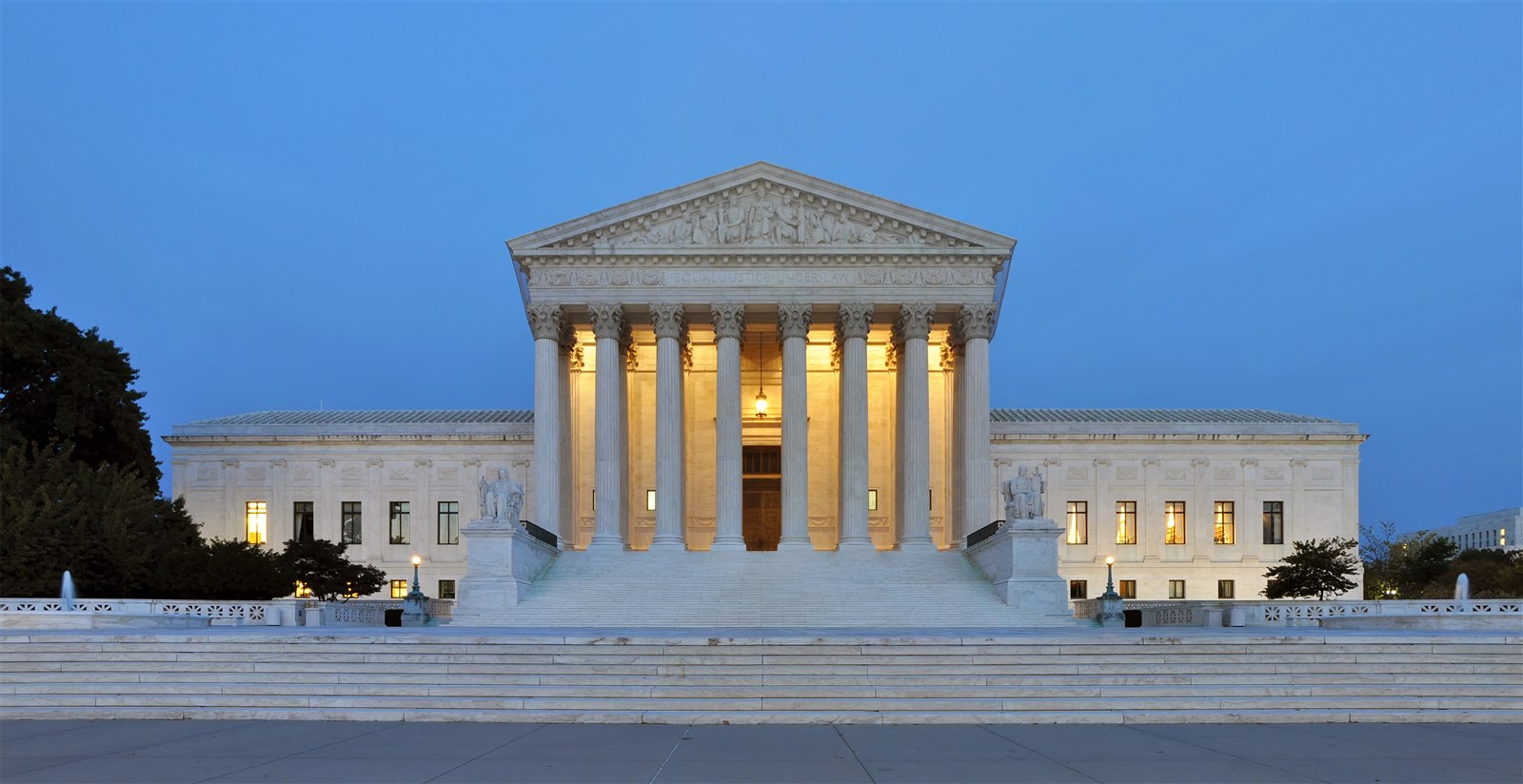
The U.S. Supreme Court on Friday rejected an emergency request from Virginia officials to reinstate a Democrat-drawn congressional map that would have handed the party as many as four additional House seats heading into the 2026 midterm elections. The justices didn’t bother to explain their decision. They simply said no.
The story starts last fall, when Virginia Democrats cooked up a constitutional amendment to bypass the state’s bipartisan redistricting commission — the same commission that Virginia voters approved back in 2020 specifically to keep politicians from drawing their own maps. Democrats needed to gut that commission to get their preferred lines in place.
Under Virginia’s Constitution, placing an amendment on the ballot requires the legislature to pass it in two separate sessions with a general election in between. Democrats first voted on the measure in late October 2025, while early voting for that fall’s state elections was already underway. Republicans sued, arguing that move violated the required process.
Democrats got caught red-handed breaking the law with this redistricting power grab.
The Virginia Supreme Court agreed. In a 4-3 ruling on May 8, the court declared the referendum “null and void,” writing that the constitutional violation “irreparably undermines the integrity of the resulting referendum vote and renders it null and void.”
Virginia Democrats raced to the U.S. Supreme Court the following Monday, urging the justices to step in. Their lawyers called the state court’s ruling “deeply mistaken” and said it had “profound practical importance to the nation.” Republican legislators fired back that it would be improper for the federal high court to wade into what was essentially a state law dispute — especially since Democrats had never raised any federal claims in the lower court proceedings.
The Supreme Court sided with Republicans.
Democrats Spent $66 Million on a Map That Broke the Rules
Republican National Committee Chair Joe Gruters put it plainly after the Virginia Supreme Court’s initial ruling. “Democrats just learned that when you try to rig elections, you lose,” Gruters said. “Today, the Virginia Supreme Court sided with the rule of law and struck down Democrats’ unconstitutional maps.”
Gruters said the RNC “led the charge in court against this blatant power grab” and accused Democrats of pouring “more than $66 million into an effort to lock in control and silence voters.”
And the map Democrats were pushing was no small tweak. According to Wikipedia’s analysis of prior election results, the new districts would have favored Democrats in 10 out of Virginia’s 11 congressional seats. Virginia currently sends six Democrats and five Republicans to the House. Democrats wanted to reduce Republican representation in the entire state to a single district.
The group Virginians for Fair Maps, which opposed the Democrat push, celebrated the ruling. “Virginians spoke loud and clear in 2020 that voters should pick their elected officials, not the other way around,” said group co-chairs Jason Miyares, the Republican former state attorney general, and Eric Cantor, the Republican former U.S. House majority leader. “Today, their voices were heard over the shamefully deceptive rhetoric and language of an unconstitutional effort by Richmond Democrats to carve up the state for themselves.”
President Donald Trump praised the original Virginia Supreme Court ruling on Truth Social as a “Huge win for the Republican Party, and America.”
The Bigger Picture Here Is Worth Paying Attention To
Democrats didn’t launch this effort out of some principled stand for fair representation. They launched it because President Trump encouraged Republican-led states to redraw their congressional maps to shore up the GOP’s narrow House majority — and Democrats panicked.
States like Texas, Florida, Missouri, North Carolina, Ohio, and Tennessee all moved forward with Republican-friendly maps. Democrats responded by trying to engineer their own gerrymanders in Virginia and California. California’s effort survived. Virginia’s did not, because Democrats cut corners on the constitutional process and got caught.
Democrats weren’t trying to restore fairness to Virginia’s maps. They were trying to use a temporary constitutional amendment to lock in a 10-to-1 congressional delegation advantage in a state that’s genuinely competitive. That’s not a reform. That’s an attempt to permanently tilt the electoral map in their favor and make Republican votes in Virginia essentially meaningless for a generation.
Republicans could now gain as many as 14 seats from redrawn maps across six states, compared to six for Democrats. That’s a net redistricting advantage heading into November that Democrats’ Virginia gambit was specifically designed to erase.
House Minority Leader Hakeem Jeffries, Democrat of New York, called the decision “an unprecedented and undemocratic action that cannot stand.” But the Virginia Supreme Court wasn’t overruling the voters on a whim. The court found that Democrats violated the state’s own constitutional process to get that referendum on the ballot in the first place. You don’t get to cheat the process and then complain the referees called a foul.
What Comes Next
Democrats need a net gain of at least three House seats in November to flip the House majority. Losing Virginia’s potential four-seat pickup is a serious blow to that math.
Virginia’s current maps stay in place through the 2026 elections. Democrats will have to win the old-fashioned way — by actually persuading voters — rather than drawing themselves into a majority.
And the broader redistricting war isn’t over. Republican legislatures in Alabama, Louisiana, and Tennessee are all moving forward with new maps following the Supreme Court’s recent Voting Rights Act ruling. Democrats are already signaling they plan to retaliate in blue states after 2028, targeting remaining Republican seats in places like California, Illinois, and New York.
The courts will be sorting all of this out for years. But for now, Democrats’ most ambitious attempt to game the 2026 map just ran into a wall of their own making.
Sources: Politico, NPR, CNN, NBC News, PBS NewsHour, Virginia Mercury, Wikipedia (2026 Virginia redistricting amendment)