

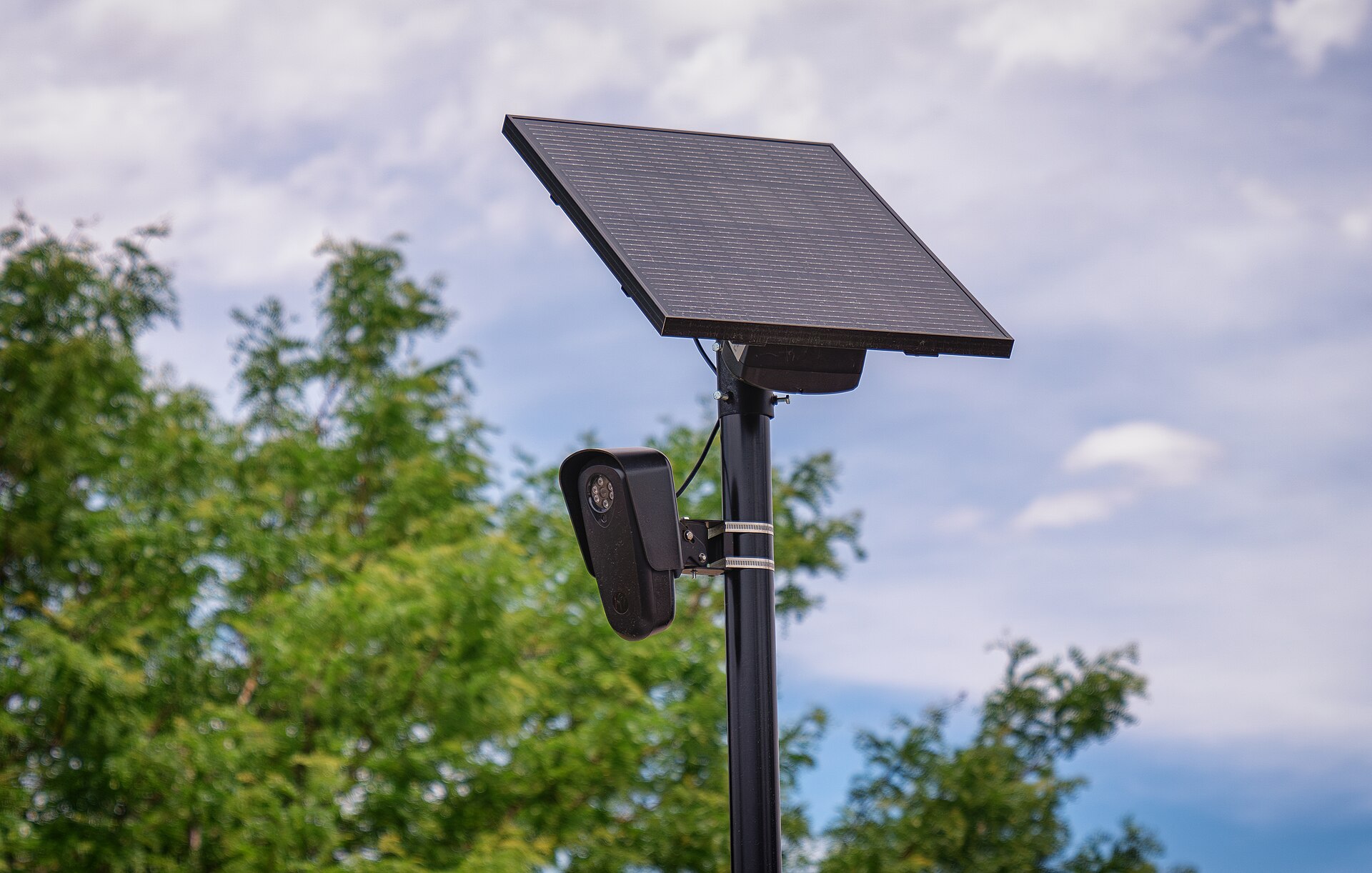
The backlash against mass surveillance cameras is going national.
Flock Safety CEO Garrett Langley took his case directly to Fox News — and what he said raised more questions than it answered.
Because buried inside his “compromise” pitch was an admission that should put every law-abiding American on alert.
What Langley Actually Said on Fox News
Flock Safety CEO Garrett Langley sat down with Fox News host Kayleigh McEnany on Saturday in America to defend his company’s automated license plate reader technology against a wave of public anger that has turned physical in some parts of the country.
Camera poles destroyed. Lenses blocked. Contracts canceled. At least 54 cities have voted to reject or cancel Flock contracts since the start of this year alone.
Langley’s response to all of it? He wants a “compromise.”
“I think these are important conversations to have,” Langley told McEnany. “I value my privacy… but what we’re talking about is safety as well.”
He went further: “And so I think when people talk about just one of these things, privacy or safety, they’re prioritizing the wrong thing. What we have to prioritize as a country is compromise: how do we have our safety, and how do we balance privacy?”
That framing deserves scrutiny. Privacy is not a bargaining chip to be traded away in exchange for government-provided safety. The Fourth Amendment does not include a “compromise” clause. It requires warrants, probable cause, and individualized suspicion — not a blanket scan of every vehicle on every road, retained in a searchable database, accessible to thousands of officers across jurisdictions most residents have never heard of.
When McEnany pointed out that critics include US Senator Bernie Sanders (I-VT), who has called for an outright ban, and US Representative Tim Burchett (R-TN), who has pushed to cut federal funding for the cameras, Langley dismissed the idea of a ban as absurd.
“That’s like banning vehicles. That would never have made sense,” Langley said. “Instead what we did is we introduced laws against drunk driving, laws around airbags.”
But that analogy does not hold. Vehicles are privately owned tools of transportation. Flock cameras are government-deployed surveillance infrastructure that logs the movement of every vehicle that passes — whether or not that driver is suspected of anything. Nobody needs a warrant to buy a car. Law enforcement absolutely should need one before tracking where a citizen has been.
The Accountability Problem Langley Admitted Himself
To his credit, Langley did not pretend the system is clean. He acknowledged the surveillance network currently operates with almost no meaningful guardrails.
“Today, it is too often that in Flock and in other technologies, there’s no regulation. There’s no accountability, and we think that’s wrong,” Langley said.
Read that again. The CEO of the company that has installed cameras in thousands of American communities just admitted there is no real accountability in place right now.
Reports of police officers using Flock data to stalk women — a Washington Post investigation found at least 50 alleged cases — have not exactly helped the company’s case. Three alleged instances of improper officer access were cited during the Fox News interview itself. And Flock’s own internal feature designed to flag abnormal search behavior was previously optional, with the company acknowledging that a third of agencies turned it off.
Langley’s answer to all of this is to recommend a seven-day data retention limit and hold officers accountable when they misuse the system. Those are not unreasonable starting points. But recommending a policy is not the same as requiring it. And a company that profits from expanding its surveillance footprint has a built-in incentive to recommend the minimum oversight necessary to keep contracts flowing, not the maximum protection citizens deserve.
The Institute for Justice senior attorney Robert Frommer put it plainly: “This is window dressing that doesn’t address the fundamental problem, which is that police officers are the ones deciding who and when to search, and that should be done by judges with real warrants.”
That is the correct standard. Warrants. Judges. Individualized suspicion. Not a CEO’s voluntary recommendation to delete data after a week.
The Nancy Guthrie Play and What It Reveals About the Sales Pitch
Langley also returned to his recent claim that Flock cameras could have solved the Nancy Guthrie kidnapping case. He told McEnany that “more often than not, a license plate, a vehicle, can be that first piece of evidence to lead into a larger investigation.”
The Guthrie case is genuinely heartbreaking. The 84-year-old mother of NBC’s Today host Savannah Guthrie was reportedly abducted from her Pima County, Arizona home, and the case remains unsolved. Pima County does not use Flock cameras. Langley told Vanity Fair flatly: “We would have solved that case. One hundred percent. There’s no doubt in my mind.”
Using a family’s tragedy to sell surveillance expansion is a tactic worth naming. The argument is always the same: if only the cameras had been everywhere, the bad thing would not have happened. It is an emotionally powerful argument. It is also an argument with no logical endpoint, because there will always be another crime, another missing person, another reason to add another camera to another intersection in another town whose residents never voted for any of it.
And Langley’s company has not exactly been cautious about expansion. More than 120,000 Flock cameras now monitor roads across 7,000 cities nationwide. The company has partnered with 6,000 law enforcement agencies. That is a lot of infrastructure to be operating, by the CEO’s own admission, with no regulation and no accountability.
The company’s website says it aims to “balance public safety and privacy.” The CEO’s own words on Fox News said there is currently no accountability in the system. Those two things cannot both be true at the same time.
Bipartisan concern about this technology is not a fringe position. Sanders and Burchett sit on opposite ends of the political spectrum and have both raised serious objections. Americans physically removing cameras from their neighborhoods are not criminals — they are citizens reacting to a surveillance buildout that was approved with minimal public debate, often through local government contracts that residents learned about after the fact.
The Fourth Amendment was written precisely because the Founders understood that a government with the tools to track everyone will eventually use those tools against people who have done nothing wrong. Langley’s “compromise” framing sounds reasonable in a television interview. But the principle at stake is not a negotiating position. Warrantless mass surveillance of law-abiding Americans is wrong regardless of how many crimes the system claims to have solved, and no amount of seven-day data retention policies changes that underlying reality.
The question is not whether Flock cameras have ever helped catch a criminal. Of course they have. The question is whether the government should be allowed to track the movements of every American who drives a car, retain that data, share it across agencies, and do all of it without ever appearing before a judge. The answer to that question is no — and it was no before Garrett Langley went on Fox News, and it remains no after.
Sources: Mediaite, “Flock CEO Punches Back Against Critics on Fox News: Privacy Can’t Be the Only Priority”; Fox News, “Flock Safety CEO calls for national ‘compromise’ amid camera sabotage and public revolt”; Futurism, “Sensing He’s in Deep Trouble, Flock Safety CEO Says It’s All Been a Big Misunderstanding”; Fox Business, “Flock Safety new privacy measures response AI camera backlash”; Scripps News, “Flock founder says technology would have helped find Nancy Guthrie”; Institute for Justice / Associated Press via Futurism