

The artificial intelligence arms race is accelerating fast.
Washington is trying to figure out where it stands.
And Ted Cruz just torched the idea of hitting the brakes on American AI — and the reason he gave is going to set off a firestorm.
Cruz Lays Out the Stakes on AI Dominance
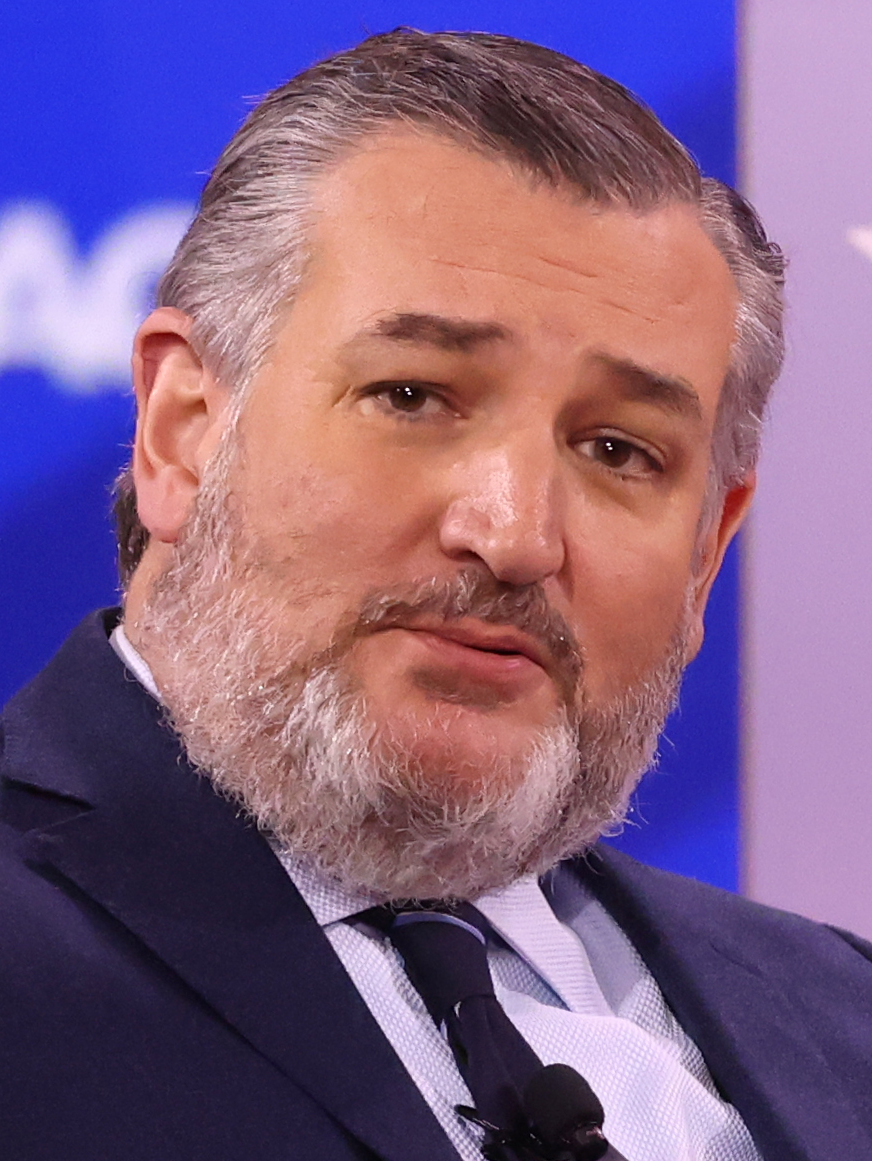
US Senator Ted Cruz (R-TX) made clear recently that he sees no realistic path to slowing down artificial intelligence development in the United States — and that anyone who thinks otherwise is missing the bigger picture entirely.
Cruz chairs the Senate Commerce Committee, which puts him squarely in the middle of every major policy fight over how Washington handles AI regulation.
His argument is blunt: if American companies don’t build this technology, someone else will.
“I’d rather they be American killer robots than Chinese killer robots,” Cruz said.
That’s not a throwaway line. That’s the core of his position, and it’s one that a lot of people in Washington are going to have strong feelings about — on both sides.
Cruz went further, saying the United States “can’t” slow the growth of artificial intelligence. Not won’t. Can’t.
The distinction matters. He’s not framing this as a policy preference. He’s framing it as a geopolitical reality that doesn’t bend to the wishes of regulators or nervous lawmakers.
The China Argument Driving the Whole Debate
The argument Cruz is making isn’t new, but it’s getting sharper as Communist China’s AI ambitions become harder to ignore.
Beijing has poured enormous resources into AI development and has made no secret of its intention to lead the world in the technology by the middle of this century. The Chinese Communist Party views AI supremacy as inseparable from military and economic dominance — and it isn’t waiting around for an international regulatory consensus to emerge before moving forward.
Cruz is essentially saying that American hesitation doesn’t create a pause in AI development globally. It just creates an opening for the CCP.
And that framing puts a lot of the domestic hand-wringing about AI in a different light. The people calling for guardrails, slowdowns, and regulatory frameworks may have legitimate concerns about the technology. But those concerns exist in a vacuum if the alternative is ceding the field to a regime that has no interest in the values, safeguards, or constitutional limits that American-built systems would at least theoretically be subject to.
That’s the argument Cruz is pressing. Whether Washington listens is another question.
It’s also worth noting what Cruz did not say. He didn’t dismiss concerns about AI outright. He didn’t claim the technology is without risk. He made a comparative judgment: the risks of American AI are preferable to the risks of Chinese AI filling the void.
That’s a harder position to argue against than a simple “AI is good, regulate nothing.”
What the Rush to Build Actually Costs Ordinary Americans
Here’s where the picture gets more complicated, and where Cruz’s framing — while strategically sound on the geopolitical level — leaves some important questions unanswered.
The AI boom is not consequence-free for working Americans. Anthropic CEO Dario Amodei has warned that artificial intelligence could eliminate half of all entry-level white-collar jobs and drive unemployment to somewhere between 10 and 20 percent within the next one to five years. That warning came from inside the industry itself — from someone who builds this technology for a living.
That’s not alarmism. That’s an industry insider telling the public what the trajectory looks like.
And the infrastructure required to power AI expansion is already hitting American families in the wallet. Big Tech is racing to build massive data centers across the country — many of them in red counties and rural communities — driving up electricity bills for local residents while the profits flow back to coastal headquarters. The same companies building those facilities are the ones that spent years censoring conservatives on COVID policy, the 2020 election, and the events of January 6.
So when Cruz talks about American AI versus Chinese AI, the question worth asking is: which Americans benefit, and which ones pay the price?
The senator from Texas is right that ceding AI leadership to Communist China would be a strategic catastrophe. But “don’t let China win” is not a complete industrial or workforce policy. The families whose jobs get automated away and whose electricity bills climb to power server farms aren’t going to find much comfort in knowing the algorithm that displaced them was built in San Francisco instead of Shenzhen.
Cruz hasn’t addressed that gap publicly, at least not in ways that have gotten much attention.
There’s also the national security dimension that goes beyond the China competition. AI systems capable of operating autonomously in military contexts — the “killer robots” Cruz referenced — raise questions about accountability, rules of engagement, and the kinds of errors that can’t be undone. Cruz acknowledged this implicitly by saying he’d prefer American systems. But preference isn’t a safeguard.
Congress hasn’t exactly distinguished itself when it comes to understanding the technologies it’s supposed to oversee. The same body that spent years asking Facebook executives basic questions about how the internet works is now being asked to set the boundaries for autonomous weapons systems and large language models.
That’s a sobering thought, regardless of where anyone lands on the underlying policy.
But Cruz’s broader instinct — that the United States has to compete and compete aggressively — reflects something real about the moment. The window for establishing American leadership in AI is not indefinitely open. Every month of regulatory paralysis, every committee hearing that produces a white paper instead of a decision, is time that Beijing is using productively.
The debate over how to handle AI in America is just getting started. Cruz is planting a flag early and loudly. The people who disagree with him are going to have to offer something more than caution if they want to be taken seriously — because “slow down” is not a strategy when the other side isn’t slowing down at all.
And the voters who sent Republicans back to Washington in 2024 didn’t do it because they wanted their government to sit on its hands while China built the future.
Source: Mediaite, “Ted Cruz Says U.S. Can’t Slow AI Growth: ‘I’d Rather They Be American Killer Robots'”