

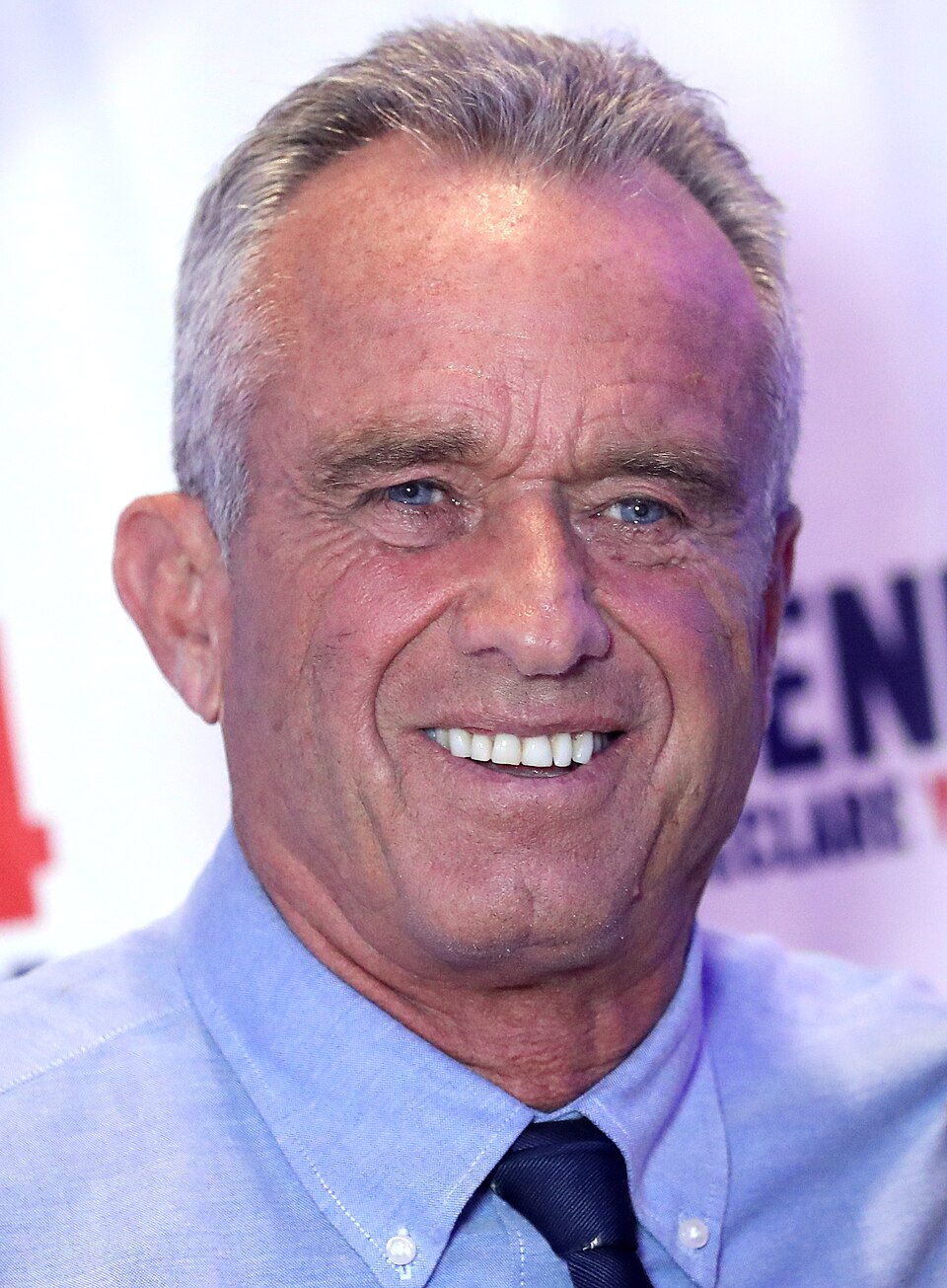
The New York Times took a shot at one of the most consequential Cabinet secretaries in Washington, DC.
RFK Jr. was not about to let it stand.
And what he fired back at the Times reporter who wrote it is something every American fed up with dishonest media needs to read.
The Hit Piece That Set Kennedy Off
Times correspondent Sheryl Gay Stolberg published a piece recently titled “Kennedy Shows Minimal Engagement With Vast Health Portfolio,” and it landed like a grenade inside the Department of Health and Human Services.
The report, according to Stolberg, drew on accounts from a dozen people with direct contact with Kennedy during his tenure, all of whom spoke anonymously, citing fear of retribution.
The Times claimed that Kennedy arrived at HHS headquarters in Washington, DC, around 10 a.m. after going to the gym, spent much of the day “disengaged” and “scrolling on his phone,” and left around 4 p.m.
Stolberg wrote that Kennedy “has shown little interest in managing the details of work in his department, according to multiple colleagues.”
The piece alleged he is “single-mindedly focused on his top priorities, including food recommendations and pesticide exposures, and hunting for evidence to support his long-held beliefs that vaccines are harmful.”
The Times also noted that Kennedy has made only one known visit to Centers for Disease Control and Prevention headquarters, and that visit came after a gunman opened fire there and killed a police officer.
And the report raised the Ebola outbreak in Africa as a pressure point, noting that six Americans had been exposed to the virus and that Kennedy had made no public comments about the spreading outbreak.
Kennedy Comes Out Swinging
Kennedy did not quietly absorb the story. He posted an 870-word response on X directed personally at Stolberg, and he did not pull punches.
“Sheryl, Your article exemplifies the biased reporting we have come to expect from you and @nytimes,” Kennedy wrote. “It was unfair, inimical, and inaccurate.”
He told Stolberg that anyone could refute her argument simply by checking his publicly available calendar. “All one needs to refute your argument is to glance at my publicly available calendar and to review my unprecedented list of accomplishments on a wide range of issues, all of which I drove.”
Kennedy went straight after her sourcing. “In order to prove your preconceived case for my disengagement, you quote anonymous employees, some of whom I fired or who quit to avoid being fired,” he wrote. “You also deceptively quote HHS employees without identifying whether they were among those I fired, thereby depriving your readers of the opportunity to make an independent judgment about their credibility.”
He did not apologize for the firings. “I came into this job to change the culture of a broken agency that has presided over the worst decline in public health in American history. Of course I fired people — lots of them!”
Kennedy pushed back on the characterization of his schedule, too. “I am knowledgeable and active on every issue in every division of my department, and I always make the final decisions. I meet with the principals at FDA, NIH, CDC, and my senior counselor every morning, something, I’m told, is unprecedented in HHS history.”
On the question of his hours, he told Stolberg: “I try to get out of the office between 4:30 and 6:00 p.m., so that I can spend three hours, in quiet, responding to emails. I normally work until 11 p.m. every night, mostly on phone calls to staff.”
He addressed the missed counselor meetings directly. “You fault me for missing a couple of monthly counselor meetings. However, I meet one-on-one with my counselors every day to decide policy and strategy. We schedule the monthly meetings to give the divisions a chance to keep each other informed about HHS-wide policies with which I’m already intimately familiar.”
Kennedy Turns the Tables on Biden’s HHS
But the sharpest part of Kennedy’s response was the part that pointed the finger back at the Biden years.
“When I took this job, the building was empty. About 90% of the employees were not coming to work. I changed that, but your newspaper never covers my reforms,” he wrote. “Nor did you cover the fact that my predecessor almost never showed up for work here during his four years in office.”
He was referring to former HHS Secretary Xavier Becerra, who served under President Biden. Kennedy added, “Just as Rochelle Walensky spent her entire term as CDC Director in Cambridge, Xavier Becerra reportedly spent most of his term as HHS Secretary in California. (I live in California, but I’ve only been there once in fifteen months).”
The Times never ran that story. Not once.
Kennedy closed with a broadside at the paper’s credibility. “The fact that you have minimal access to decision makers leaves you covering trivia and relying on your own capacity for invention.” He also wrote, “Standards have devolved, and journalism is dead.”
What the Times Did Not Bother to Ask
The Times confirmed in its own reporting that Kennedy declined an interview request and did not address detailed questions about his leadership approach before the piece went live. Kennedy’s office says that’s because HHS stopped cooperating with the paper.
“Your capitulation to partisanship further compounds your journalistic challenges; since we all are aware of your predictable bias, we at HHS are unwilling to talk to you about the topics that are important,” Kennedy wrote.
The paper defended Stolberg’s work in a statement, saying the article was “based on conversations with a dozen people who have worked directly with Mr. Kennedy during his tenure as secretary.”
A dozen anonymous people. Some of whom, by Kennedy’s own account, he fired.
You can decide for yourself how much weight to give that sourcing.
The Bigger Picture
Kennedy is doing something at HHS that no secretary in recent memory attempted. He is trying to reform a department that spent decades captured by the same pharmaceutical and regulatory interests that the Make America Healthy Again movement was built to challenge.
The people most eager to see him fail are the same people who were comfortable with Xavier Becerra phoning it in from California and Rochelle Walensky running the CDC from Cambridge, Massachusetts. Those arrangements never generated a single breathless New York Times investigation.
But Kennedy shows up, fires the dead weight, pushes the building back to in-person work, and holds daily meetings with the heads of FDA, NIH, and CDC — and somehow he is the one the Times decides needs a “minimal engagement” headline.
“You had a preconceived thesis, and you set out to prove it,” Kennedy told Stolberg.
Hard to argue with that.
Sources: Mediaite, Fox News, The Hill, ABC News 4, The Daily Beast