

Anthony Fauci just pleaded the Fifth more than 100 times in front of a Senate committee. His private diary is out. And the press corps that spent years running interference for him is still pretending it never happened.
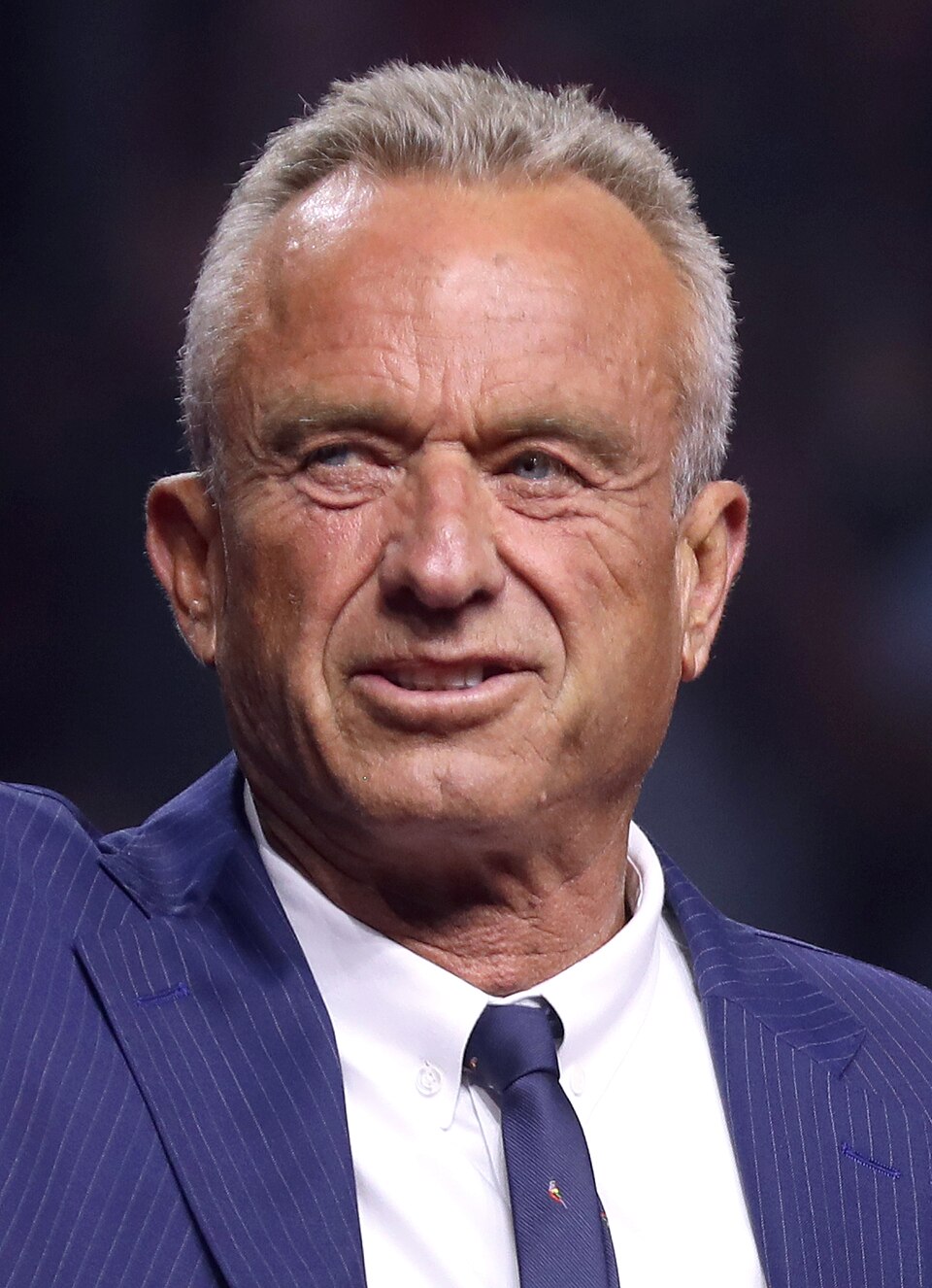
So when Health and Human Services Secretary Robert F Kennedy Jr sat down with CNN’s Dana Bash on State of the Union, it was never going to stay polite for long.
What followed was more than 20 minutes of some of the most honest television you’ll see on a Sunday morning — and Bash did not come out of it well.
Kennedy Calls Out the Media’s COVID Role — To Their Face
Kennedy appeared on State of the Union and was asked what his department could do to prepare for another public health crisis. He gave a direct answer: protect constitutional rights this time.
Bash pushed back, saying, “Forgive me, but you’re just talking about rights and I’m asking about a potential public health crisis that is coming,” after Kennedy launched into a defense of constitutional rights that he claimed were “dismantled” during COVID-19 lockdowns.
That’s a revealing thing to say out loud. Rights are apparently a distraction from public health preparedness, not the foundation of it. Kennedy wasn’t going to let that slide.
Bash added, “I really want to move on,” as Kennedy repeatedly interrupted to continue his argument. That appeared to set him off. “Of course you do, because you were part of the problem!” Kennedy shot back, pointing at the host.
Bash replied, “No, I wasn’t part of the problem.” But that denial lands a little differently when you know what’s in Fauci’s diary.
Fauci wrote in his diary that he received a text from Dana Bash pointing out that Vanity Fair recently had a headline that said: “Jim Jordan trips over his own a$$hole trying to debate Anthony Fauci.” That’s not journalism. That’s a cheerleader texting the quarterback before the big game.
And Kennedy knew it. He continued: “There was absolute press malpractice. You weren’t allowing –” and as Bash tried to interject, he kept going: “Your job is fierce skepticism toward authority.”
“And you weren’t doing that. You were beating up the people who were dissenting.” By then, the two were talking over each other before Bash calmly asked: “Do you want to sit here and attack me, or do you want to have a conversation about public health?”
“You’re sitting here attacking me!” Kennedy fired back. The exchange captures something that’s been building for years.
The Fauci Diary Changes What “No, I Wasn’t” Actually Means
Bash’s denial might have worked in 2021. It doesn’t work now.
Fauci appeared under subpoena days after Senator Rand Paul’s office released a trove of diary entries Fauci wrote during his time as a leader in the Trump and Biden administrations’ response to COVID-19. Those pages did not paint a flattering picture of the press-Fauci relationship.
Fauci, the face of America’s COVID response, repeatedly invoked his Fifth Amendment right before a Senate committee. The hearing, chaired by Senator Rand Paul (R-KY), was meant to probe the origins of COVID-19 and whether Fauci misled Congress and the public.
He took the Fifth more than 100 times to protect himself from self-incrimination. A man who spent years telling the American people to trust the science now won’t answer a single question under oath. That’s the backdrop Kennedy walked into CNN with.
Kennedy had already been direct about what the diary reveals. “The press was part of this collaboration,” RFK Jr said. “It was corrupt, and it did tremendous damage to the media in this country and to Americans’ faith in that very important democratic institution. It also did incalculable damage to public health.”
And the diary isn’t the only evidence. Kennedy told USA Today that the biggest surprise in the 1,141 pages of Fauci’s diary was that the nation’s former top infectious diseases official fell ill after getting the vaccine. “He got the vaccine to tell the Americans it’s safe. And then when he got an adverse event that could have been related to the vaccine, he didn’t tell anybody about it,” Kennedy said.
“That’s an inexcusable deception,” Kennedy added.
But CNN never asked about any of that. Bash’s line of questioning treated Kennedy’s defense of civil liberties as an evasion rather than a policy position. That’s telling.
What This Interview Actually Revealed
The real story here isn’t that Robert F Kennedy Jr got heated on television. It’s that a sitting Cabinet secretary sat across from a CNN anchor whose own private communications with Fauci are now part of the public record — and she still denied being part of the problem.
Kennedy’s position isn’t radical. He served as Secretary of Health and Human Services under a president who won a landslide election in part because millions of Americans were furious about lockdowns, mandates, and the suppression of dissent. His argument that constitutional rights don’t disappear during a public health emergency is not a fringe view — it’s the view that most Americans came around to, even if the media never did.
Bash’s framing — “you’re just talking about rights” — gives the game away. Rights aren’t a detour from the pandemic preparedness question. They’re the whole point. The COVID era demonstrated what happens when government officials, insulated by a compliant press, decide that emergency powers have no limits and that anyone who pushes back is dangerous.
“[Fauci’s] focus was on promoting himself, on getting on TV and not doing public health,” Kennedy said on Fox News. That’s a serious charge — and it’s backed by the diary entries Rand Paul released, which show a man more interested in media relationships than in getting the science right.
And yet CNN’s response to all of this is to ask Kennedy why he keeps talking about rights instead of offering the kind of pandemic response the network spent four years demanding.
Kennedy told her directly: “Your job is fierce skepticism toward authority.” That’s not an attack. That’s a job description. The problem is that CNN spent the pandemic years doing the opposite — treating Fauci as an oracle, dismissing critics as dangerous, and texting supportive headlines to the man they were supposed to be covering independently.
But here’s the thing that gets lost in the clip-sharing and the outrage cycle. Kennedy didn’t go on CNN to fight with Dana Bash. He went to make a case for a different approach to public health — one grounded in informed consent, medical freedom, and the principle that government doesn’t get to override individual rights just because a crisis is declared. That’s a legitimate policy position held by millions of Americans who remember what the lockdown years actually cost them.
Bash tried to redirect the interview at least twice. Kennedy kept bringing it back to the same point: you cannot have a credible national health policy built on the suppression of dissent. The press was part of that suppression. And the diary proves it.
She said she wasn’t part of the problem. The diary says otherwise. At some point, denying something in the public record stops being a rebuttal and starts being something else entirely.
Sources: The Daily Beast, Fox News, USA Today via Central Oregon Daily, Twitchy, Newsbusters, PBS NewsHour, NPR, Time