

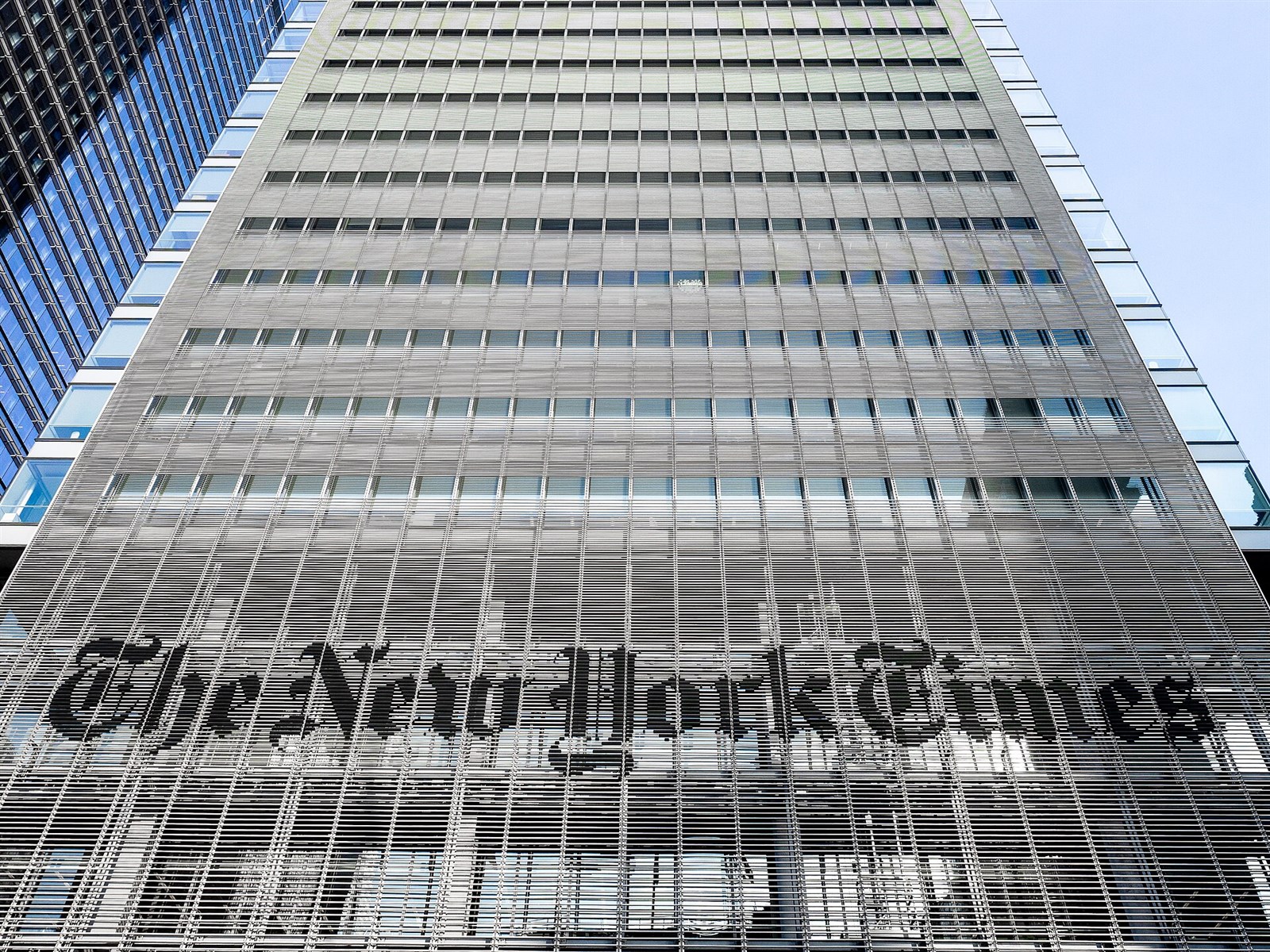
The New York Times keeps branding Donald Trump a tax cheat, and every time he sues, the paper hides behind the First Amendment.
Its lawyers begged a federal court to toss the President’s $15 billion lawsuit.
And one judge just wrote a sentence the Times can’t laugh off.
Judge Merryday Kept the Heart of Trump’s Case Alive
US District Judge Steven D Merryday recently refused the New York Times’ request to throw out President Trump’s $15 billion defamation lawsuit against the paper, two of its reporters, and Penguin Random House.
The ruling keeps four of Trump’s six counts in play. Those counts rest on seven statements accusing Trump of criminal conduct, and six of them come straight out of Lucky Loser: How Donald Trump Squandered His Father’s Fortune and Created the Illusion of Success, the book Times reporters Susanne Craig and Russ Buettner published in 2024.
The seventh came from a Times article claiming authorities had looked into Trump’s ties to the Mafia.
Trump’s lawyers argued the reporters and their publisher acted with reckless disregard for the truth. Merryday found that argument plausible enough to move forward. Trump still has to prove it, and the Times will fight him on every inch.
But the paper now has 28 days to file a formal answer. That starts the clock toward the stage of a lawsuit every newsroom dreads, the one where lawyers get to ask questions under oath.
“These Defendants will now have to answer for intentionally and maliciously defaming President Trump,” a spokesman for Trump’s legal team told Fox News Digital.
A Pulitzer Crew Leaned on a Sniff Test and a Thank-You Note
Craig and Buettner aren’t rookies. Along with former Times reporter David Barstow, they won the 2019 Pulitzer Prize for Explanatory Reporting for an 18-month dig through the Trump family’s finances, and the Pulitzer board praised the series for exposing what it described as an empire full of tax dodges.
So when the Times had to show what backed up the book’s tax fraud accusations, a reader might expect a stack of forensic audits and a thick legal memo.
Not quite.
The defense pointed to outside voices quoted in the paper’s 2018 investigation. A former investigations chief from the Manhattan district attorney’s office said one Trump family arrangement “smells like a crime.” A professor called a transaction “suspicious.”
And when pressed on what the tax crime accusations rested on, the defendants also pointed to the book’s acknowledgments page, which thanked a New York estate lawyer for his help.
The acknowledgments page. The part of a book most folks flip past on the way to chapter one.
Merryday called that kind of input “far from a formal legal opinion.” People who publish accusations like these without one, he wrote, “know that they don’t know, but they are undeterred.”
He also found that Trump’s complaint supports a plausible inference that the authors and publishers “knew that no reliable conclusion about violations of the tax laws . . . is possible without reliance on qualified opinion” and never bothered to get one.
“Knowing of the necessity for that opinion but failing to procure that opinion is a fine example of the purposeful avoidance of the truth, a knowing failure that remains actionable,” Merryday wrote.
Purposeful avoidance of the truth. A federal judge used that phrase while weighing the allegations against a Pulitzer team’s work. That one won’t make the dust jacket of the paperback.
This Judge Gave Trump’s Lawyers Plenty of Grief Before
Here’s the part the Times’ cheerleaders will have trouble spinning. Merryday, an appointee of President George H W Bush, didn’t roll out a welcome mat for Trump.
He threw out Trump’s original 85-page complaint in September 2025, called it “decidedly improper and impermissible,” and capped any rewrite at 40 pages. In July, he put off ruling on the Times’ motion and sent Trump’s team back to the drafting table again.
He didn’t hand Trump everything this round either. Merryday tossed two counts, threw out 27 other challenged statements under First Amendment protections, and refused to let Trump amend his complaint a third time.
Those 27 statements fall outside the reach of a lawsuit, the judge wrote, “even if untrue, even if published with ill-will or evil intent.”
Chew on that standard for a minute. A newspaper can print something false about the President of the United States, out of pure spite, and the law shrugs its shoulders. That’s how wide the Times’ legal cushion runs.
And seven statements still made it through anyway.
The Times put on a brave face. “The Times is encouraged to see Judge Merryday’s dismissal of almost all claims against us,” a spokesperson told Fox News Digital, adding that the paper still believes what’s left of the case has no legal merit and calling it a “baseless attack on The Times and the rights of the free and independent press in this country.”
Encouraged. A newspaper staring down a $15 billion case that just survived its best shot at dismissal says it feels encouraged. Somebody in that press office has earned a holiday bonus.
The Paper That Wrote the Rulebook Already Lost Once in Alabama
The irony here runs about a mile deep. The legal shield the Times keeps waving around carries the paper’s own name.
New York Times Co v Sullivan, the 1964 Supreme Court decision, forces public figures to prove a publisher knew a claim was false or acted with reckless disregard for whether it was true. For more than half a century, that standard worked like a moat around the Gray Lady.
But the moat sprang a leak in August. A federal jury in Alabama ordered the Times to pay $9.25 million to Kai Spears, a former University of Alabama basketball player the paper wrongly placed at the scene of a deadly 2023 shooting. By the Times’ own reporting, the paper hadn’t lost a US defamation suit over one of its articles in more than 50 years.
The reporter on that story testified that his article “had a mistake, no question.” The Times still insisted the jury punished “an honest mistake.”
Spears won as a private figure, so he only had to show the paper got careless. Trump faces the steeper climb. Yet Merryday found Trump’s allegations strong enough to keep going under the tougher standard the Times itself helped create.
Where the Free Press Outrage Goes Missing
Expect the usual chorus to call this ruling a dark day for press freedom.
That chorus found its voice a lot more slowly when Dominion Voting Systems squeezed $787.5 million out of Fox News in 2023. Plenty on the Left treated that payout as long-overdue accountability for a conservative network.
Defamation law doesn’t check anybody’s party registration. If false claims about a voting machine company can cost a network nearly a billion dollars, accusations of tax fraud against a President deserve the same scrutiny, and a jury gets to decide whether the publisher knew better.
ABC News and Paramount already looked at Trump’s claims against them and chose to settle, paying $15 million and $16 million.
The Times chose to fight instead. That means Craig and Buettner could end up explaining under oath what that estate lawyer actually told them, which experts they relied on, and whether anyone at the paper or at Penguin Random House ever asked for the formal legal opinion the judge says was missing.
Maybe the Times has a tidy answer for all of it. Maybe a jury buys it. Maybe.
But a newsroom that leaned on “smells like a crime” to accuse a man of fraud shouldn’t act stunned when a federal judge asks for something stronger than a sniff test.
The Sullivan case grew out of a 1960 fundraising ad the Times printed that got several facts wrong about police in Montgomery, and the Supreme Court ruled unanimously that honest errors about public officials shouldn’t sink a newspaper.
Sixty-two years later, a judge read that same precedent and found room for a President to argue the errors weren’t so honest.
<small>Sources: Fox News, “Trump clears hurdle in $15 billion lawsuit against New York Times”; Raw Story, “NYT’s ‘smells like a crime’ defense collapses in Trump’s $15 billion defamation lawsuit”; CBS News, “Federal judge tosses Trump’s lawsuit against New York Times, calls complaint ‘decidedly improper and impermissible’”; USA Today via AOL, “Judge throws out Trump’s $15 billion lawsuit against New York Times”; TheWrap, “Judge Declines to Dismiss Trump’s $15 Billion Suit Against New York Times, Orders Amended Complaint”; CBS News, “New York Times defamed ex-college basketball player Kai Spears, must pay him $9.25 million in damages, jury says”; Deseret News, “The New York Times ordered to pay Alabama basketball player millions in defamation payment”; Daily Wire, “NYT Ordered To Pay Millions To College Athlete In Defamation Judgement”; The Pulitzer Prizes, “David Barstow, Susanne Craig and Russ Buettner of The New York Times”