

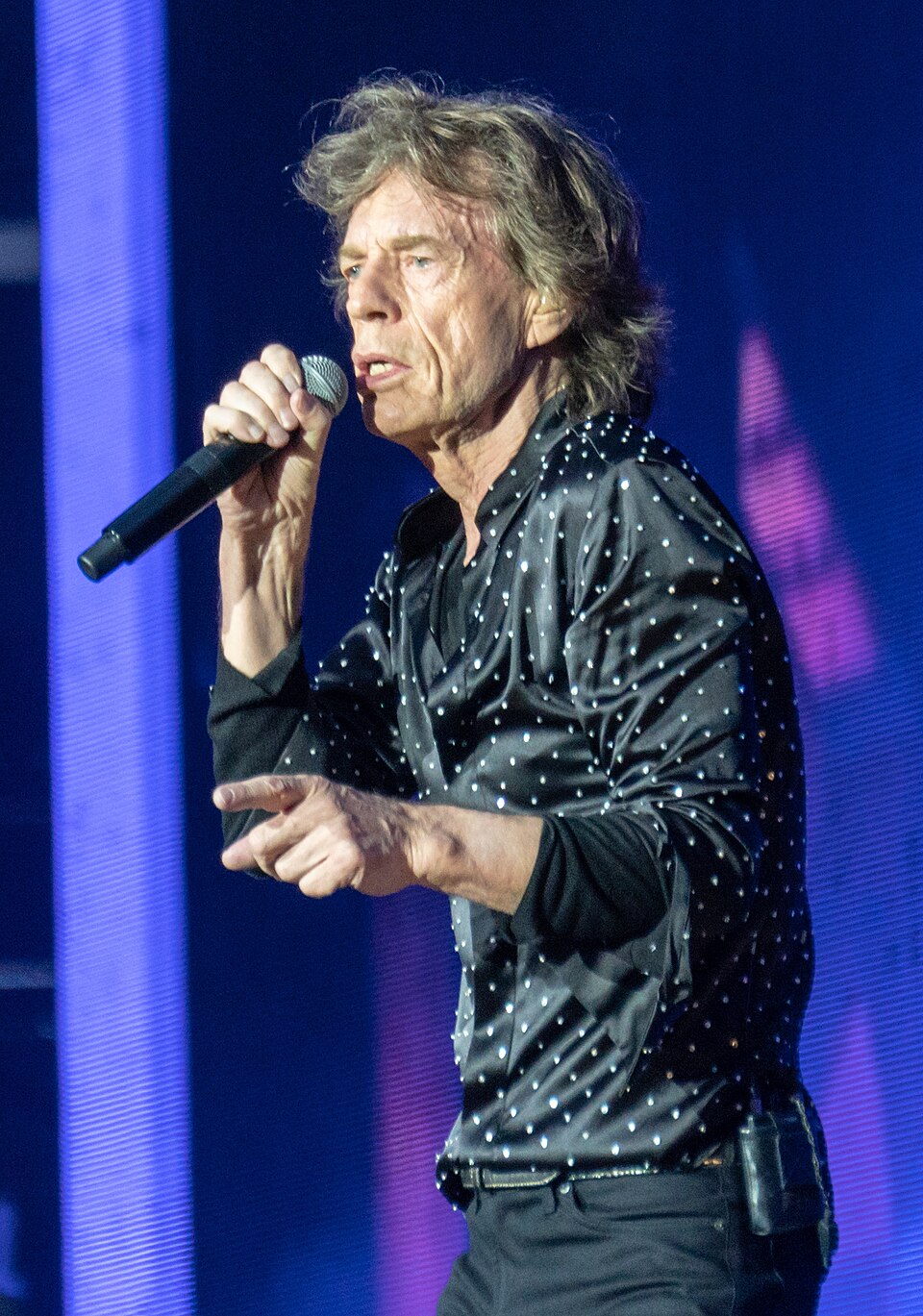
Mick Jagger just said out loud what millions of concert-goers have been thinking for months.
Bruce Springsteen spent the better part of 2026 turning his tour into a rolling anti-Trump rally, and the reviews from actual ticket-buyers have been mixed at best.
And now the Rolling Stones frontman dropped a line that should have Springsteen reconsidering his whole approach.
Jagger Draws the Line at the Stage Door
Jagger sat down recently with David Marchese on The New York Times podcast The Interview and laid out his philosophy on performing in plain, unambiguous terms.
Marchese set the table by describing Springsteen as a performer who “clearly sees his job as engaging in a meaningful back and forth” with his audience, then asked Jagger what the crowd means to him.
Jagger’s answer was about as far from a political manifesto as you can get.
“The bottom line… my job in the live music world is [for] the people that come to have the best time they possibly can,” Jagger said.
“And for two hours or whatever it is to forget all their problems and the problems of the world and their mortgages and whatever.”
He compared a great concert to a great sporting event — the kind of experience where the noise of daily life goes quiet and you’re just present, fully absorbed in something bigger than your to-do list.
And then came the line that cut straight to the point: “You don’t want to lecture them.”
Jagger also addressed songwriting, saying he occasionally slips political commentary into a verse here or there. But he draws a hard line at turning the whole thing into a sermon. “Nobody wants to hear a whole song about politics,” he said.
What Springsteen Has Been Doing Instead
Springsteen’s “Land of Hope and Dreams American Tour” — dubbed the “No Kings” tour — kicked off in the spring of 2026 and made no secret of its purpose.
At shows across the country, Springsteen opened with lengthy speeches targeting President Donald Trump directly.
At one stop, he told the crowd: “This White House is destroying the American idea and our reputation around the world.”
At the Kia Forum in Los Angeles, he called Trump “corrupt, incompetent, racist, reckless, and treasonous.”
He later branded Trump a “racist” and said he was “treasonous” at a show in Washington, DC as well.
Trump fired back on Truth Social, calling Springsteen “a bad and very boring singer” who “looks like a dried up prune” and urged his supporters to boycott the tour entirely.
Some Republican fans who had bought tickets before the political speeches began listed them for resale at a loss rather than sit through the lectures, according to reporting from Notus.
And the ticket prices weren’t exactly working-class friendly — best seats reportedly ran as high as $2,900 retail, while the arena concourse sold “No Kings” branded flags for $90 a piece.
But Springsteen kept going. He released a new song, “Streets of Minneapolis,” targeting Trump and ICE, and performed at anti-Trump rallies in addition to his ticketed shows.
What Jagger’s Restraint Actually Tells You
Jagger has been performing in front of massive crowds since 1962 — through the Vietnam era, three political assassinations, Watergate, oil shocks, and every cultural upheaval in between.
And in all that time, he never felt the need to turn a Rolling Stones show into a campaign event.
There’s something worth sitting with there.
Springsteen has built his entire brand around being the working man’s rock star — the guy who speaks for the forgotten, the downtrodden, the blue-collar neighborhoods of New Jersey. But somewhere along the way, he started charging nearly three thousand dollars for a front-row seat and selling branded protest merchandise in the concourse.
The working man Springsteen claims to champion can’t afford any of that.
Jagger, for all his rock star excess, at least understands one basic truth: the people in those seats paid good money to feel something, not to be assigned a political position before the first song ends.
And the reaction to Jagger’s comments has been telling. Fans and commenters across social media praised him for understanding what an entertainer’s job actually is. One observer noted that Jagger has toured through some of the most turbulent decades in American history and still just played the show.
Smart man.
The broader pattern here deserves some attention. Hollywood, the music industry, and the mainstream media have spent years pressuring celebrities to “use their platforms” for political advocacy — which almost always means left-wing political advocacy. Celebrities who stay quiet get accused of complicity. Those who speak up on the wrong side face professional consequences.
Jagger didn’t take the bait. The New York Times interviewer clearly wanted him to weigh in on the political moment, and he redirected the conversation back to his actual job: giving people two hours of relief from a world that already has plenty of problems.
That’s not a small thing. In an entertainment industry that increasingly treats concerts as opportunities for ideological instruction, Jagger’s refusal to play along is practically an act of rebellion.
Springsteen, meanwhile, wrapped his tour and picked up an award at the Tribeca Film Festival for his “commitment to political advocacy.” The honor came with tributes from Robert De Niro and Bono — two more celebrities who have never met a microphone they didn’t want to lecture someone through.
But audiences vote with their feet and their wallets. And the fans who showed up to a Rolling Stones show over the last six decades knew exactly what they were getting: one of the greatest live acts in the history of rock and roll, not a campaign rally with a house band.
Jagger is 82 years old and still packing arenas. He’s earned the right to tell the rest of the entertainment world how it’s done.
Sources: The New York Times (podcast: “The Interview” with David Marchese); Mediaite; Fox News Digital; New York Post; Notus; Wikipedia (Land of Hope and Dreams American Tour); BizPac Review; HollywoodInToto