

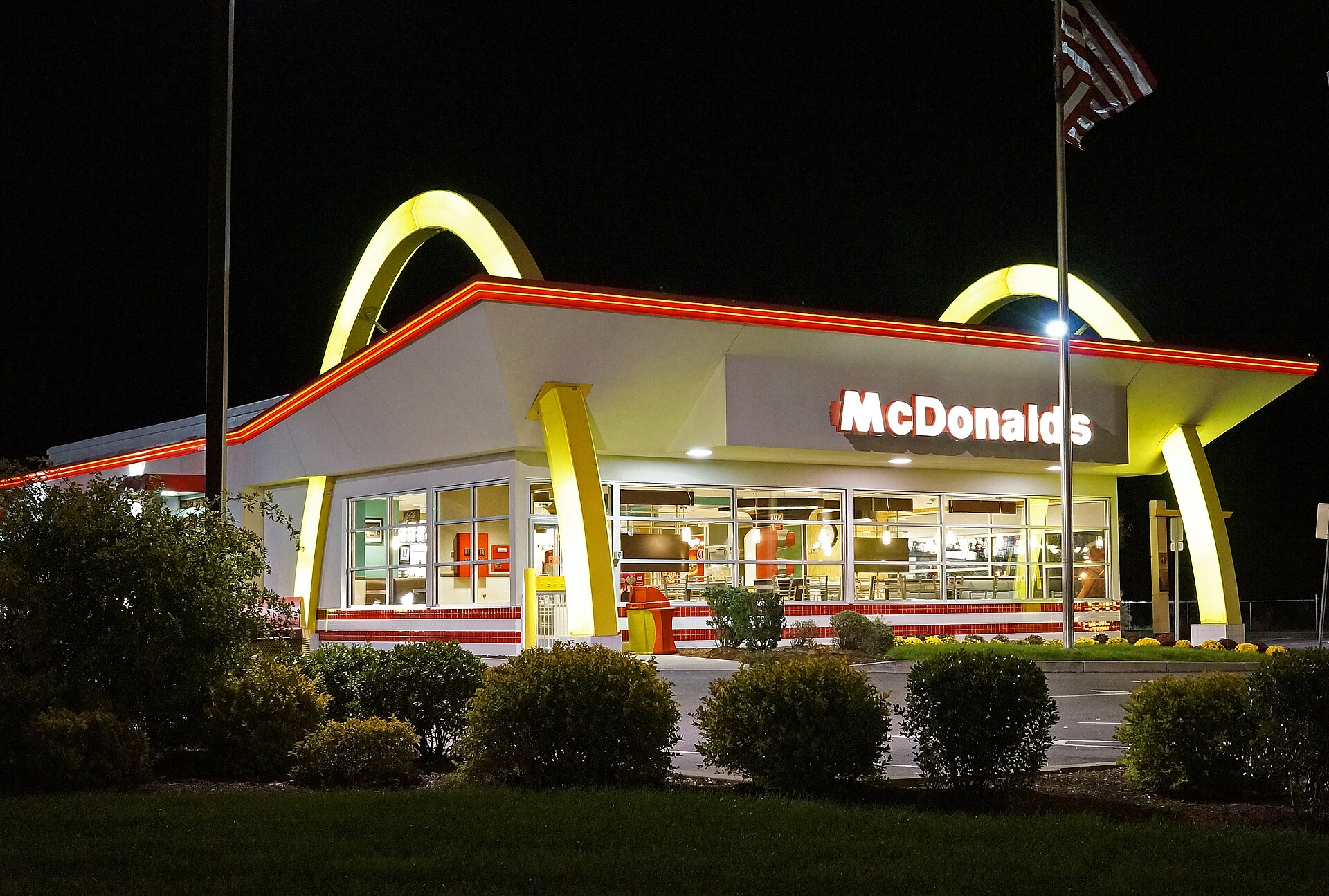
Few things feel more American than a cheap burger and a Coke at the Golden Arches.
That cheap burger hasn’t felt cheap in a long time. Plenty of folks have quietly wondered why.
And a federal lawsuit just pointed the finger at one piece of technology McDonald’s insists has nothing to do with it.
A Quarter Pounder Lands in Federal Court
Michael Thomas of DeKalb, Illinois, is a regular. According to the complaint, he usually orders a Quarter Pounder with cheese, french fries, and a Coke.
He also noticed something odd. The McDonald’s restaurants near his home charged different prices, the lawsuit says.
Lawyers representing Thomas sued the Chicago-based chain in federal court in Illinois on October 2, 2026. The complaint accuses McDonald’s of breaking antitrust law through an AI-enhanced pricing tool the company offers its US franchisees.
Here’s the heart of the claim. The suit alleges the tool gathers information that competing franchise owners would never normally hand each other, like store-level sales figures. Then it feeds recommendations back out to restaurants that may compete in the same market.
The complaint doesn’t mince words. “The result is algorithmic price-fixing aimed at customers who are already stretched thin,” it states.
The lawsuit also blames the system for driving up McDonald’s prices across the country. It argues the company holds “significant leverage over its franchisees” and can lean on them to follow its numbers.
None of that has been proven. These are allegations in a civil complaint, and no court has ruled on them.
McDonald’s Fires Back
McDonald’s isn’t taking it quietly. The company told the Associated Press the suit is “filled with inaccuracies” and promised a vigorous defense.
“Optional tools are available to franchisees to help them make the best decisions for their businesses and customers, but these tools do not automate, coordinate or fix pricing in any way,” the company said in its statement.
A company spokesman put it more bluntly to the AP. “All we do is provide the context of what’s going on,” he said. “We don’t have any way to affect the menu pricing in a restaurant.”
That’s a fair point on its face. Franchisees own and run about 95% of the roughly 14,000 McDonald’s locations in the United States, according to the AP. Those are independent business owners, many of them families who have run stores for decades, and they set their own menu boards.
McDonald’s says it has used the AI-enhanced tool for more than a decade. The program weighs a store’s sales, its location, competitors’ prices, and other factors to spit out what it considers the best price for each item. And the company says it recommended prices to franchisees long before any AI got involved.
The AP reached out to the National Owners Association, the group that represents McDonald’s franchisees. The AP’s report included no response from the group.
The Machine Nobody Asked For
But set the legal question aside for a moment. The bigger issue here goes well past one burger chain.
Ordinary Americans have spent years watching prices at the drive-thru climb. McDonald’s itself has spent several years tinkering with value deals because lower-income customers started showing up less often, the AP reported. Those are the folks rising menu prices hurt most.
And now the conversation has shifted to software. A program that hoovers up millions of transactions and spits out a “best” price. Best for whom, exactly?
This isn’t the first time an algorithm has landed in this kind of trouble. The US Department of Justice sued RealPage in August 2024, accusing the company’s rent-pricing software of helping landlords coordinate rents. That case rested on the same basic theory: competitors don’t need a smoke-filled back room to fix prices if one program can do the talking for them.
Whether the McDonald’s tool works that way is a question for a judge. But the pattern deserves attention.
Here’s where it gets uncomfortable. The same AI wave pushing into menu pricing is the one Big Tech keeps selling as pure progress. Anthropic CEO Dario Amodei, whose company builds AI, told Axios in May 2025 that the technology could wipe out half of all entry-level white-collar jobs. Unemployment woukd skyrocket to over 20 percent.
So the pitch to working families runs something like this. The machines may take the job. Then they might help set the price of lunch.
Data matters too. A system that knows what every customer buys, where, and when holds a lot of power over that customer. Plenty of conservatives remember how Big Tech companies treated people who questioned COVID mandates or the 2020 election, and they have little reason to trust giant data operations with even more information about how Americans live. A tool that optimizes prices today could just as easily nudge behavior tomorrow, depending on who controls it.
None of that appears in this lawsuit. Still, it hangs over every story like this one.
What Comes Next for the Golden Arches
Anyone who likes free markets faces an honest tension here. Franchise owners deserve the freedom to price their own food, and a company sharing market data with its operators isn’t automatically sinister. Antitrust law exists to protect real competition, not to punish businesses for using spreadsheets.
But competition only works when competitors actually compete. If thousands of stores lean on the same black box, the customer standing at the counter loses the one weapon he has, which is the option to walk down the street and find a better deal.
The case will turn on facts nobody has tested yet. How much data does the tool actually share? Do franchisees really feel free to ignore it? And does McDonald’s pressure owners as hard as the suit claims?
McDonald’s says no on all counts. Thomas’ lawyers say otherwise.
Either way, a guy from DeKalb who just wanted his Quarter Pounder at a fair price may have kicked off a fight that reaches every company handing pricing decisions to a computer.
And the rest of corporate America is almost certainly watching.
Sources:
“McDonald’s sued over AI tool that recommends prices to US franchisees,” Associated Press
“Behind the Curtain: A white-collar bloodbath,” Axios
“Justice Department Sues RealPage for Algorithmic Pricing Scheme that Harms Millions of American Renters,” US Department of Justice