

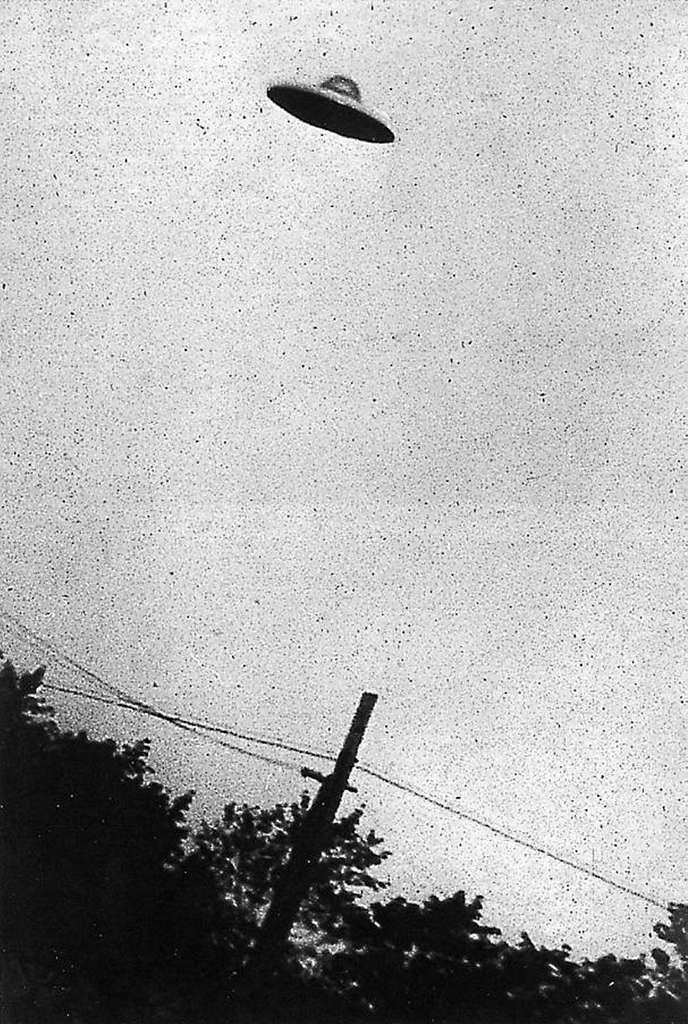
For years, the UFO question has hovered over America.
President Trump wants the truth out there.
And now Marco Rubio just pulled back the curtain with one revealing answer.
Rubio: “They’re Not Ours, and We Should Look Into This”
Rubio sat down recently with Katie Miller on The Katie Miller Podcast and got candid about UAPs in a way that official Washington rarely does.
“I don’t know who it is. I don’t know what it is,” Rubio said. “But there are things flying over our military installations, and they’re not ours, and we should look into this.”
That’s not a fringe activist talking. That’s the US Secretary of State, on the record, saying unidentified objects are operating over American military sites and the government doesn’t know what they are.
Katie Miller asked Rubio in the interview about a conspiracy theory he believed in, and he brought up UAPs, but clarified he didn’t think it was a conspiracy theory. He’s been consistent on that point going back to his Senate days.
Rubio also addressed the cover-up allegations head on. He acknowledged that “people do believe we’re covering something up,” but said that “if we knew, the president would be all over it. Like, there would be, you know, (a) prime time address. He’d be showing the pictures and the videos.”
That’s a pretty direct answer. If the Trump administration had definitive proof, Rubio is saying, the President wouldn’t sit on it. Donald Trump is not exactly known for keeping good news to himself.
Rubio also let something else slip that raised eyebrows. He admitted that during his Senate years, UAPs served a dual purpose. He said he pursued the topic in the Senate for two benefits: “The first is that, obviously, it’s a legitimate topic. And the second is, whatever the news of the day was, it was controversial. And if a reporter comes up to you and you say to them, ‘Look, I don’t have time for these questions about politics. Do you realize there’s things flying over our airspace, we don’t know what they are?’ And the reporter’s like, ‘Oh, what do you know? Tell me more.’ So it was extraordinarily effective as a diversionary tactic in addition to.”
That admission generated its own reaction. Critics of the UAP disclosure effort noted the tension between Rubio spending years warning about stigma that kept pilots from reporting sightings, and then joking that he personally used the topic to dodge reporters.
One analyst put it plainly: “This is the same guy who spent years saying the stigma is the problem, that guys won’t report what they see because they’ll get laughed at. And now the Secretary of State is on a podcast saying he used it to change the subject. Pilots hear that. Witnesses hear that. That’s the exact thing he was trying to fix.”
Fair point. But Rubio’s broader record on this issue suggests the jokes don’t erase the substance.
The Trump Administration Has Already Moved on Disclosure
President Trump recently directed the Department of War and the intelligence community to allow former government employees or contractors that have relevant information about the disclosure of UAP to come forward to meet with designated government representatives, including AARO or the President’s UAP taskforce known as “PURSUE,” and have their prior NDAs abrogated.
That’s a significant move. For decades, people who worked on classified programs and witnessed things they couldn’t explain had no legal path to speak. The NDA question has been one of the central obstacles to disclosure, and the Trump administration just cleared part of that path.
A senior administration official emphasized the move was not a “declassification directive” and only allowed employees to come forward through government channels. So it’s not a free-for-all. But it’s a real step.
Earlier this year, President Trump ordered the Department of Defense to begin making public some of its UAP files. Since then, batches of documents, eyewitness accounts and cockpit videos showing fast-moving, hard-to-explain objects have been posted online.
And Rubio noted that he’s handed off the UAP portfolio inside the administration. He nodded to the fact that Miller’s husband, deputy White House chief of staff Stephen Miller, now has the portfolio overseeing UAPs. That’s not a minor detail. Stephen Miller is one of the most powerful people in the Trump White House, and putting the UAP issue in his hands signals the administration is treating it as a serious matter rather than a curiosity.
The Whistleblower Question Rubio Can’t Fully Answer
Here’s where things get complicated. Rubio’s assurance that Trump would go on primetime if the government knew more assumes the President would actually be told.
As one critic of the disclosure effort put it: “That assumes he’d be told. Intelligence whistleblower David Grusch testified under oath that these programs were kept from Congress, kept from AARO, the office we built to look into it. Rubio himself said whistleblowers came to him scared of retaliation. So ‘I wasn’t briefed’ doesn’t mean there’s nothing there.”
That’s a serious argument and it tracks with what Grusch actually said under oath. Grusch served on the Pentagon’s Unidentified Aerial Phenomena Task Force and later as the National Reconnaissance Office’s representative to the task force, first gaining national attention in 2023 when he testified before Congress about alleged government efforts to recover and study unidentified craft.
Three former military officials testified before Congress in July 2023. They were whistleblower David Grusch, Ryan Graves, and David Fravor. They told the House Oversight panel that the government holds far more UAP data than it has shared. They also named secret “Legacy Programs” that were funded with misused public money and hidden from lawmakers.
AARO, for its part, has stated it has not found verifiable information to substantiate claims about possession or reverse-engineering of non-human materials. But the fact that programs were allegedly structured specifically to avoid AARO’s oversight is exactly what makes that denial complicated rather than conclusive.
Rubio himself has acknowledged the whistleblower concern. He acknowledged that his own UAP advocacy as a senator doubled as a way to redirect reporters from political questions, a comment that adds context to his earlier statements in which he said whistleblowers, including Navy pilots, admirals, and generals, had come to his committee seeking protection.
So Rubio knows people came to him scared. He knows programs may have been structured to stay hidden from the very oversight offices created to find them. And he’s now saying Trump would go on TV if the administration knew more. All of those things can be true at the same time. The question is whether the administration’s current disclosure push actually reaches the programs that were designed not to be found.
The Trump administration has done more in the direction of UAP transparency than any previous administration. The NDA abrogation directive, the Pentagon file releases, the creation of the PURSUE taskforce — these are concrete actions, not press releases.
But Rubio’s own framing raises the harder question. If the most classified programs were deliberately hidden from AARO, from Congress, and possibly from the President himself, then the standard for “we would have told you if we knew” requires first knowing where to look. That’s not a knock on the Trump team. It’s the nature of the problem. And it’s precisely why the whistleblower pipeline Rubio helped open in the Senate, and that Trump just expanded through executive action, matters more than any single press conference ever could.
The objects are real. The government has confirmed that much. What they are, where they come from, and whether anyone in any administration has ever held definitive answers — that remains, for now, genuinely unknown.
Sources: Fox News, The Katie Miller Podcast (US State Department transcript), Axios, NewsNation, IBTimes UK, RedState, Liberation Times, House Oversight Committee (Grusch testimony, July 2023), All-domain Anomaly Resolution Office (AARO)