

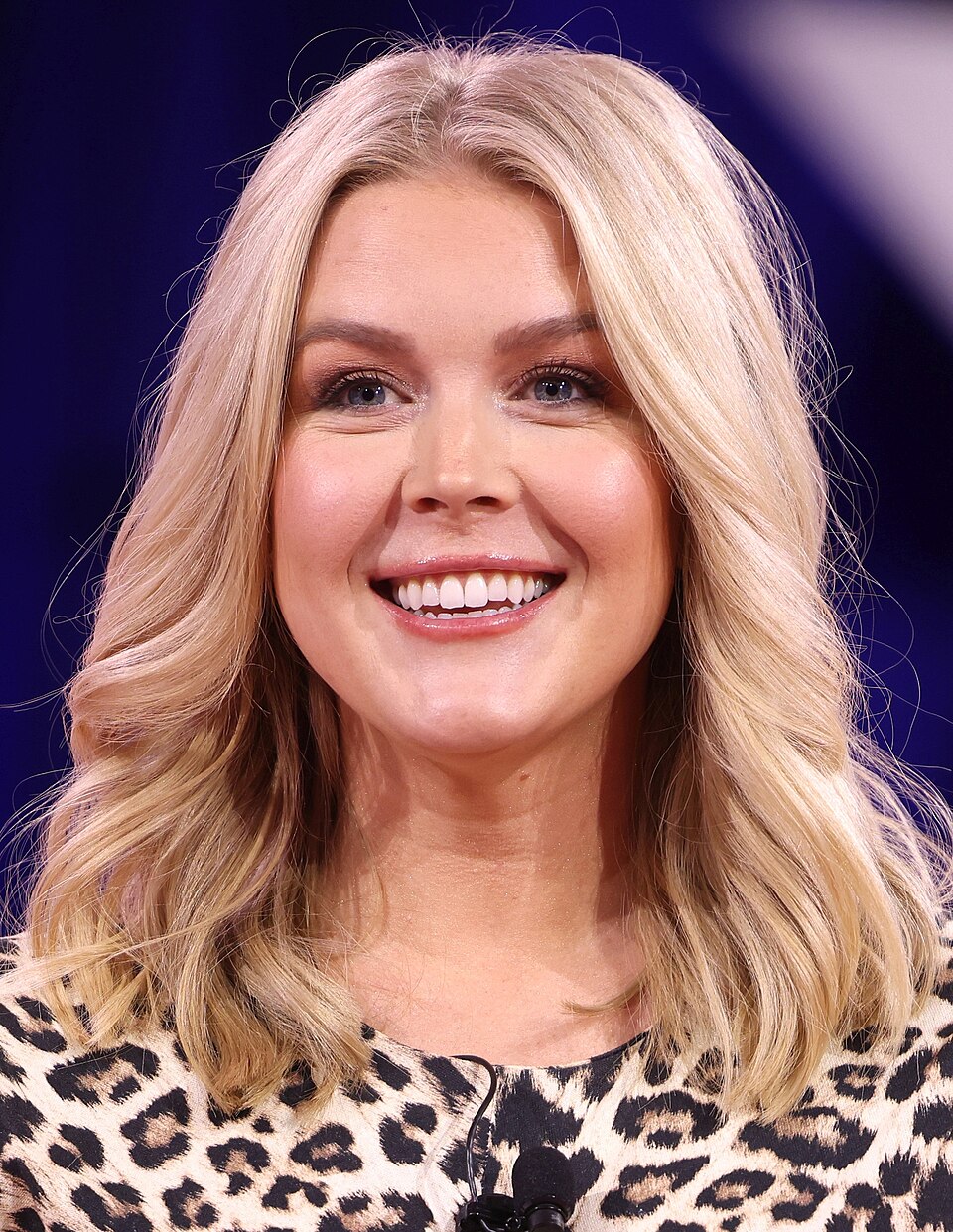
Karoline Leavitt walked back into the White House briefing room after maternity leave and wasted no time getting to work.
President Donald Trump had a major primetime address scheduled, and the mainstream media was already working overtime to either ignore it or bury it before a single word was spoken.
And the question that closed out that briefing may be the one that has the big networks squirming most.
Leavitt Back at the Podium, and the Room Felt It
White House Press Secretary Karoline Leavitt returned to the James Brady Press Briefing Room in Washington, DC recently for her first appearance since welcoming her second child in May. She did not ease back in gently.
Trump had announced a primetime address focused on election integrity, set for 9 p.m. ET, and the press corps spent most of the briefing trying to get Leavitt to spill details before the speech aired. She did not take the bait.
NBC News correspondent Garrett Haake pressed her on why the President could not let the 2020 election go. Leavitt did not flinch.
“First of all, Garrett, I think part of the problem is that the media has refused to acknowledge that tens of millions of Americans across the country share the concerns of this president about the sanctity of our elections,” she told Haake. “I think that everyone should tune in tonight, including the people in this room, and you should report on the president’s speech and the findings that he’s going to reveal in this speech with a little bit of honesty and a little bit of integrity because it does — it will shock you if you have an honest eye listening to the president tonight and everything he is saying will be backed by facts and by evidence that will be provided this evening.”
CNN anchor Kaitlan Collins tried a different angle, pointing out Trump had been in office over 540 days and demanding to know why no one had been charged if the evidence was real. Leavitt shut that down cleanly. “He hasn’t revealed it yet. He hasn’t declassified the documents yet, and you will see what he says tonight, and then we’ll move forward appropriately from there.”
Collins pressed further, asking whether the Justice Department would weigh in that night. Leavitt was done entertaining the premise. “You’ll have to ask the Justice Department. I don’t charge people. I just speak on behalf of the president.”
But the moment that may matter most came at the very end of the briefing. A reporter in the new media section asked Leavitt directly why the mainstream media was so fearful of the speech and why they were attempting to discredit it before they even aired it. The question also put AOC on the spot, asking what Leavitt’s message was to the congresswoman who had been publicly demanding networks censor the President’s address.
Leavitt did not hesitate. “I think that the mainstream media should air the president’s speech and allow the American people to draw their own conclusions from it,” she said. “Again, I think it’s important that the American public hears directly from the president of the United States. On a topic that, to your point, is very near and dear to the hearts of many Americans across the country, the integrity of our elections.”
AOC Wants to Be the Gatekeeper of What You’re Allowed to Hear
Before the briefing even started, Representative Alexandria Ocasio-Cortez (D-NY) had already gone public with a demand that television networks refuse to carry Trump’s speech. Her reasoning was that networks have, in her words, “an ethical obligation not to air things that undermine our elections and are not rooted in fact.”
Think about what that actually means for a moment.
A sitting member of Congress, one who has been discussed as a potential 2028 presidential candidate, called on the American media to pre-screen and suppress a sitting president’s address to the nation. Not after hearing it. Not after reviewing the declassified intelligence Trump planned to present. Before any of it was public.
Former CNN anchor Jim Acosta joined the chorus from his independent streaming show. “In dictatorships, the state media have to go along with the government, and they have to air these crazy lies to the public to brainwash people,” he said on *The Jim Acosta Show*. “We have a choice in this country.”
Acosta comparing a presidential address on election security to state propaganda in a dictatorship tells you everything you need to know about where the media’s head is. The irony of a man who spent years demanding access to the White House briefing room now urging that same access be denied to the American public apparently escapes him entirely.
And the networks largely obliged. ABC and NBC confirmed they would carry the speech only on their respective streaming platforms, ABC News Live and NBC News NOW, rather than on their broadcast channels. CNN announced it would not air the speech live either, offering instead to stream it on CNN.com and its paid All Access platform. Those streaming audiences are a fraction of what the broadcast networks reach on a given evening.
ABC’s broadcast channel ran a new episode of a game show. NBC ran a nature documentary. The President of the United States was giving a primetime address on election integrity, and the networks put on their regularly scheduled entertainment programming instead.
The Real Question the Media Does Not Want to Answer
The White House confirmed that Trump planned to discuss declassified intelligence related to foreign interference in the 2020 election, as well as the SAVE America Act, which would require proof of citizenship to register to vote in federal elections. Leavitt also said it was possible the President would address the situation with Iran and the economy.
“Again, this is all the more reason for all of you to carry the speech live and for the American people to tune in tonight, so they can hear directly from the president and draw their own conclusions,” Leavitt told the room.
That is a reasonable position. Let the people decide.
But the media has a long pattern of deciding what the people are allowed to hear before the people get the chance to hear it. In 2022, ABC, CBS, and NBC all declined to air a primetime address by then-President Joe Biden in which he warned about threats to democracy and attacked Trump supporters. That speech ran on CNN and MSNBC but not on the broadcast networks, which deemed it too political for live coverage. In 2014, the same broadcast networks passed on airing a primetime address from President Barack Obama on immigration reform.
The precedent exists. Networks have always had the right to make these calls.
But the coordination between Democrat politicians and the press corps is something different. AOC does not have editorial authority over ABC News. Jim Acosta runs a streaming show. Chuck Schumer, who took to the Senate floor to denounce the speech before it aired, does not run a broadcast network. And yet all of them were working in concert to ensure that as few Americans as possible could hear what the President had to say — before he said a single word.
Tens of millions of Americans have raised serious questions about how the 2020 election was conducted. The last-minute changes to voting rules made under the cover of COVID, the flood of private money into election offices, the coordinated suppression of the Hunter Biden laptop story by Big Tech and legacy media in the weeks before the election — these are documented facts, not fever dreams. The concerns are legitimate, and the people who hold them deserve to hear their president speak without the media deciding in advance that the speech does not meet their editorial standards for airing.
FCC Chairman Brendan Carr had already weighed in before the networks announced their decisions. “This is something that the American people have every right to be able to get over the airwaves,” Carr said in an interview.
The networks heard that and still pushed the speech to streaming.
And the question that closed out Karoline Leavitt’s briefing — why is the mainstream media so fearful? — is one that ABC, NBC, and CNN have not answered. Probably because the honest answer does not reflect well on them.
Sources: Mediaite, Deadline, Reuters via AOL, Washington Examiner, Washington Times, Axios, RedState, Townhall, Eric Daugherty on X