

Anthony Fauci spent years as the most protected man in American media.
His friends in the press made sure of that — and now one of them is getting called out by name.
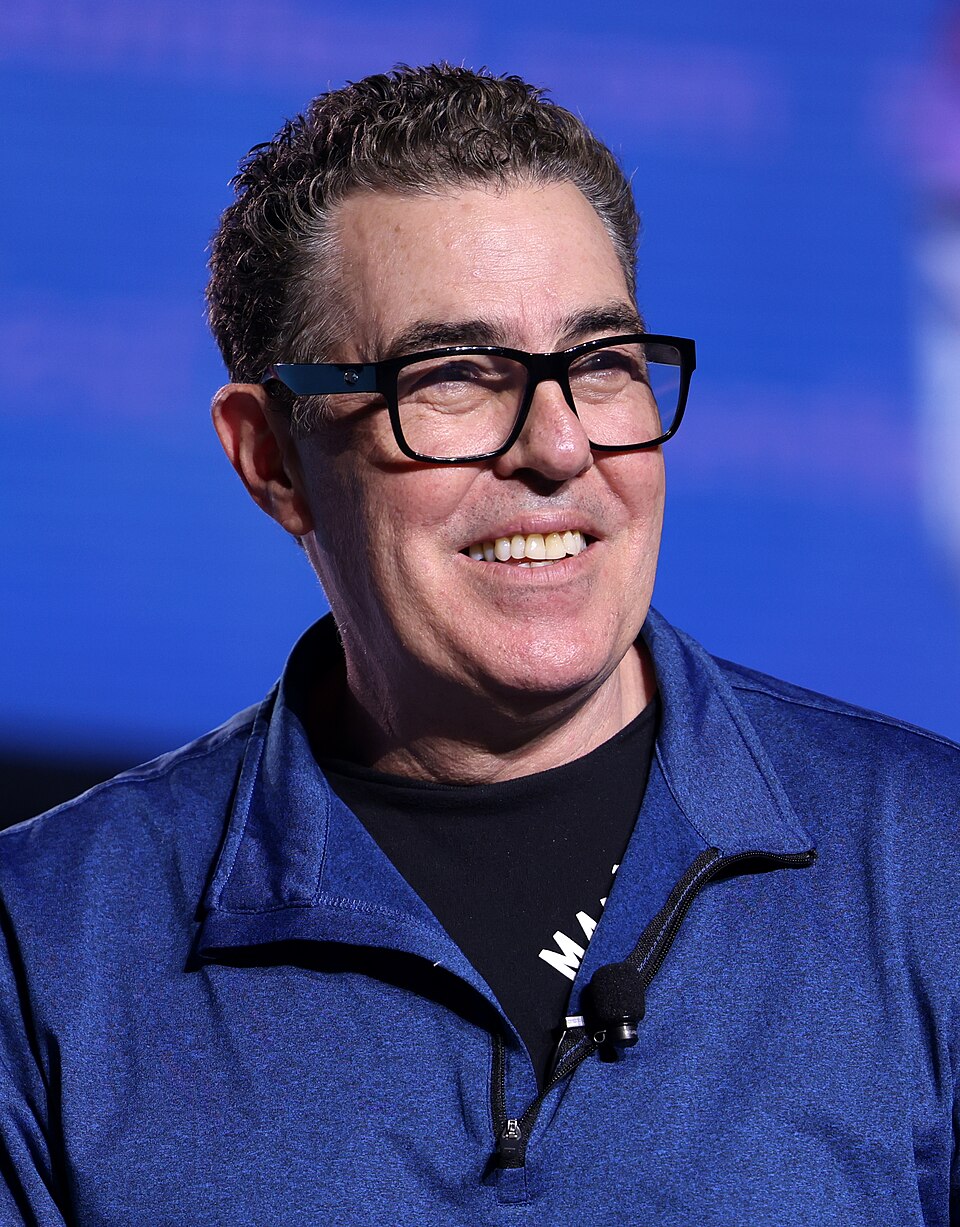
Adam Carolla went nuclear on two of CNN’s biggest names, and what he said about their relationship with Fauci is going to be hard for them to walk back.
Carolla Calls Out Tapper and Gupta by Name
Adam Carolla co-hosted The Man Show on Comedy Central with Jimmy Kimmel.
The two went their separate ways politically and professionally.
Now Carolla is among the many conservative podcaster comedians who made savaged the Dr. Fauci and the media’s response to the COVID pandemic
Carolla unloaded on CNN anchor Jake Tapper and network medical correspondent Dr Sanjay Gupta during a recent appearance, targeting both men for what he described as a cozy personal relationship with Fauci that compromised any pretense of journalistic independence.
The comedian and podcast host did not mince words about what he thought that relationship looked like from the outside.
“They were literally sucking his d**k,” Carolla said flatly, describing how CNN’s top names treated Fauci throughout the pandemic.
That’s a blunt way to put it. But Carolla’s broader point lands whether you like the phrasing or not.
Tapper and Gupta weren’t just covering Fauci. According to reporting that surfaced through Fauci’s released emails and various media accounts, they were friendly with him in ways that went well beyond the standard source relationship. Gupta, a practicing neurosurgeon and CNN’s most prominent medical voice, had the kind of access to Fauci that would make any editor nervous if they were paying attention.
And the question Carolla is raising — even if he’s raising it in the most combustible way possible — is a legitimate one: can you hold someone accountable when you’re also their friend?
What the Fauci Coverage Actually Looked Like
For roughly two years, questioning Fauci’s policy positions on lockdowns, school closures, or mask mandates was treated by most major outlets as tantamount to denying science itself. CNN was among the loudest enforcers of that framing.
But the critics weren’t cranks. Epidemiologists, public health scholars, and physicians raised serious objections to the lockdown approach from early on. The Great Barrington Declaration, signed by thousands of credentialed scientists, argued for a focused protection model rather than blanket societal shutdown. Those voices got almost no airtime on CNN.
Fauci’s record on school closures alone deserves scrutiny. The data from European countries that kept schools open told a different story than what American parents were being sold. And the learning loss suffered by children — particularly lower-income children — during extended closures represents one of the most consequential and least examined policy failures of the entire pandemic period.
None of that got the kind of sustained, skeptical coverage it warranted. Not on CNN. Not while Tapper and Gupta were treating Fauci like a trusted colleague rather than a public official whose decisions affected hundreds of millions of people.
Carolla’s critique is really about that failure. The profanity is the packaging. The substance underneath it is a conflict-of-interest argument that journalism schools used to take seriously.
The Bigger Problem With How Media Handled COVID Dissent
There’s a pattern here that goes beyond Fauci specifically. Throughout the pandemic, anyone who questioned the official public health line — on lockdowns, on school closures, on the origins of the virus, on natural immunity — got labeled a misinformation spreader by the same press corps that was socializing with the people making those policies.
That’s not journalism. That’s access preservation dressed up as public health advocacy.
And the people who paid the price weren’t Tapper or Gupta. They were small business owners who watched their livelihoods evaporate under lockdown orders that turned out to have no clear scientific basis. They were parents of kids who fell behind by years in school. They were workers who lost jobs over vaccine mandates that courts later found legally questionable.
Carolla has been consistent on this. He spent the pandemic pushing back on the lockdown consensus when it wasn’t popular to do so, and he’s been willing to name names in a way that most commentators still aren’t.
But the Tapper and Gupta angle is worth sitting with a little longer. Gupta, in particular, had a moment in 2021 when he appeared on Joe Rogan’s podcast and was pressed on CNN’s coverage of ivermectin. He eventually acknowledged that CNN’s characterization of the drug as purely a “horse dewormer” was misleading. He said so on air. Then he went back to CNN and the network’s coverage barely changed.
That tells you something about the institutional pressure these anchors operate under — and why personal friendships with the people they’re supposed to cover make the whole thing worse, not better.
Fauci retired from his position as director of the National Institute of Allergy and Infectious Diseases in late 2022 after more than five decades at the agency. He has since given interviews defending his pandemic record, pushing back on critics, and arguing that the attacks on him represent attacks on science itself.
That framing — that criticizing Fauci equals attacking science — is exactly what Carolla is rejecting. And it’s exactly the kind of framing that friendly journalists helped build and sustain for years.
The released Fauci emails showed a man who was managing his public image as carefully as he was managing public health policy. Some of those emails showed deference from prominent scientists who privately expressed doubts about certain positions while publicly supporting them. That’s a story. It got covered, briefly, and then largely disappeared from the networks that had the most invested in the Fauci-as-hero narrative.
Carolla isn’t a journalist. He’s a comedian and a podcaster with a large audience and a low tolerance for what he sees as institutional dishonesty. His language is going to offend people who think public figures deserve more decorum in their criticism.
But decorum didn’t exactly serve the public well between 2020 and 2022. And the anchors who were too close to their sources to ask the hard questions don’t get to complain now when someone asks those questions loudly.
Sources: Mediaite