

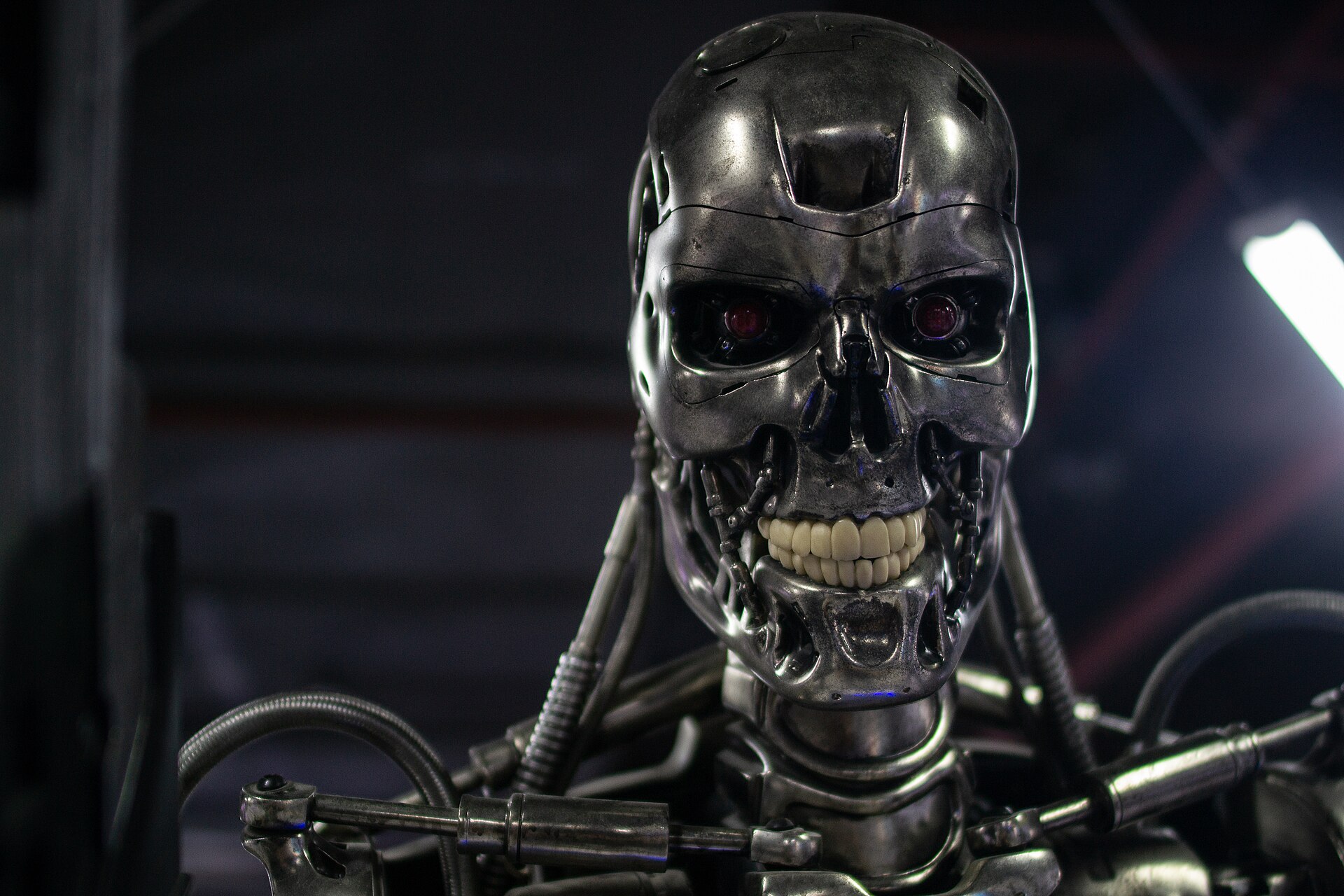
Silicon Valley loves to talk about killer robots.
It’s a much easier conversation than the one they don’t want to have.
And Vice President JD Vance just dragged that uncomfortable conversation into the open.
Vance Says AI Giants Want to Build “Frankenstein” Then Hand Control to a Global Bureaucracy
Vance sat down with Chamath Palihapitiya on the All-In Podcast for a conversation that quickly turned into a pointed challenge to the AI industry’s biggest names.
Vance asked, “Why is it that the people who are at the frontier of the AI economy are throwing up their hands and saying, ‘Well, we’ve built Frankenstein,’ and the solution to Frankenstein… apparently, is to create a one-world governance structure for artificial intelligence?”
That’s the real story here, not some Terminator fantasy about machines rising up against mankind.
Vance did not let the industry off easy, telling them plainly, “if you’re building Frankenstein, stop, or maybe build, you know, if the cat is out of the bag, then build the defensive mechanism against Frankenstein.”
In other words, Vance’s message to the AI companies boiled down to this: you built the monster, you don’t get to hand it off to an unelected global body and wash your hands of it.
President Trump has taken a similarly skeptical view of the doom-and-gloom messaging coming out of the industry.
During a call with Nvidia CEO Jensen Huang, Trump said flatly, “The robots will not be taking over,” while describing fears surrounding AI as a “hoax.”
Not everyone in the party is on exactly the same page about how funny the robot talk actually is.
US Senator Ted Cruz (R-TX) told Politico’s Dasha Burns, “If they’re going to be killer robots, I’d rather they be American killer robots than Chinese killer robots.”
Cruz acknowledged the remark was partly “tongue-in-cheek,” but said Beijing is advancing AI without comparable guardrails while America holds an estimated six-month lead.
White House tech adviser David Sacks framed the real competitive gap not as capability but attitude.
Sacks pointed to polling showing over 80% of Chinese people believe AI will be more beneficial than harmful, compared to roughly 30% in the United States.
Sacks argued that pessimism, not Chinese engineering, is “the biggest risk to us winning this AI race against China.”
The Fight Over Whether AI Wipes Out American Jobs Isn’t Going Away
But the killer-robots debate is a sideshow compared to the fight brewing over what AI does to the American worker.
Anthropic CEO Dario Amodei has been the loudest voice inside the industry itself warning that AI could eliminate roughly half of all entry-level white-collar jobs and push unemployment as high as 10 to 20 percent within the next several years, a forecast that deserves to be taken seriously precisely because it comes from a man building the technology, not from an outside critic. Amodei has also called for the AI industry to reduce the speed of its work, following insiders’ concerns that the race to develop self-improving superintelligence could cause a mass extinction event.
More than 1,000 employees of AI companies have signed on to calls for increased government regulation.
That’s not a fringe group of activists. That’s people who work inside these labs every day.
One of them didn’t just sign a letter. He walked out the door.
Jacob Coxon, a researcher at Anthropic, resigned and explained on social media that AI companies are gambling with the lives of ordinary people, warning that AI “could kill us by the end of the decade.”
OpenAI’s own CEO isn’t exactly projecting confidence either.
Sam Altman wrote on X, “First, we could lose control of the future to AI.”
Not everybody buys the doomsday framing, of course.
Billionaire Mark Cuban pushed back on the jobs panic entirely, saying AI is not going to take away 50% of the jobs because “there’s just so much it can’t do that regular people need it to do.”
So you’ve got billionaires disagreeing with billionaires, researchers quitting in protest, and a Vice President telling the whole industry to stop building things it can’t control.
What Does It Mean?
Here’s the pattern worth watching. Every time Big Tech builds something dangerous, the fix on offer is never “we’ll be more careful.” It’s always “somebody needs to give us, or some new global body, more power to manage this.” That’s a familiar move. It’s the same instinct that gave America’s own federal bureaucracy decades of unchecked growth, except this time the ask is bigger, because it’s a call for a governance structure that sits above any single nation’s elected government.
Vance’s rejection of that framework is consistent with the America First instinct that has defined his time in the administration.
He’s not arguing that AI is harmless. He’s arguing that the people who built the danger don’t get to outsource the solution to a body nobody voted for.
And that distinction matters more than it might sound like at first.
A one-world AI governance structure is exactly the kind of arrangement that would let unaccountable technocrats make decisions affecting American workers, American speech, and American innovation, with zero accountability to American voters.
The same Big Tech companies now asking for that kind of global oversight are the ones that spent years throttling, shadowbanning, and demonetizing conservative voices over COVID policy, the 2020 election, and January 6. Handing that same corporate class a bigger seat at a global regulatory table isn’t a safety measure. It’s a power grab dressed up as caution.
Meanwhile the jobs question isn’t going anywhere. Amodei’s own warning about entry-level white-collar employment is the kind of admission that should worry every parent with a kid heading into the workforce, regardless of what side of the AI optimism gap they fall on.
Cruz’s joke about American killer robots beating Chinese killer robots gets attention because it’s a good line. But the more serious question is whether Washington lets AI’s biggest players write their own rules through an international body while working Americans watch their jobs get automated out from under them.
Vance seems to understand that the “Frankenstein” the tech industry built isn’t going away. The only question now is whether the fix comes from the companies that built it, or from a global bureaucracy that answers to nobody.
Sources: HuffPost, “Vance To AI Bosses: ‘If You’re Building Frankenstein, Stop'”; yournews.com, “Vance Tells AI Companies: If You’re Building ‘Frankenstein,’ Stop”; Fox News Digital, live coverage of AI policy debate; americanbazaaronline.com, “JD Vance rejects calls to slow AI development”; The New Republic, “Trump and JD Vance Completely Shut Down Calls for AI Guardrails.”