

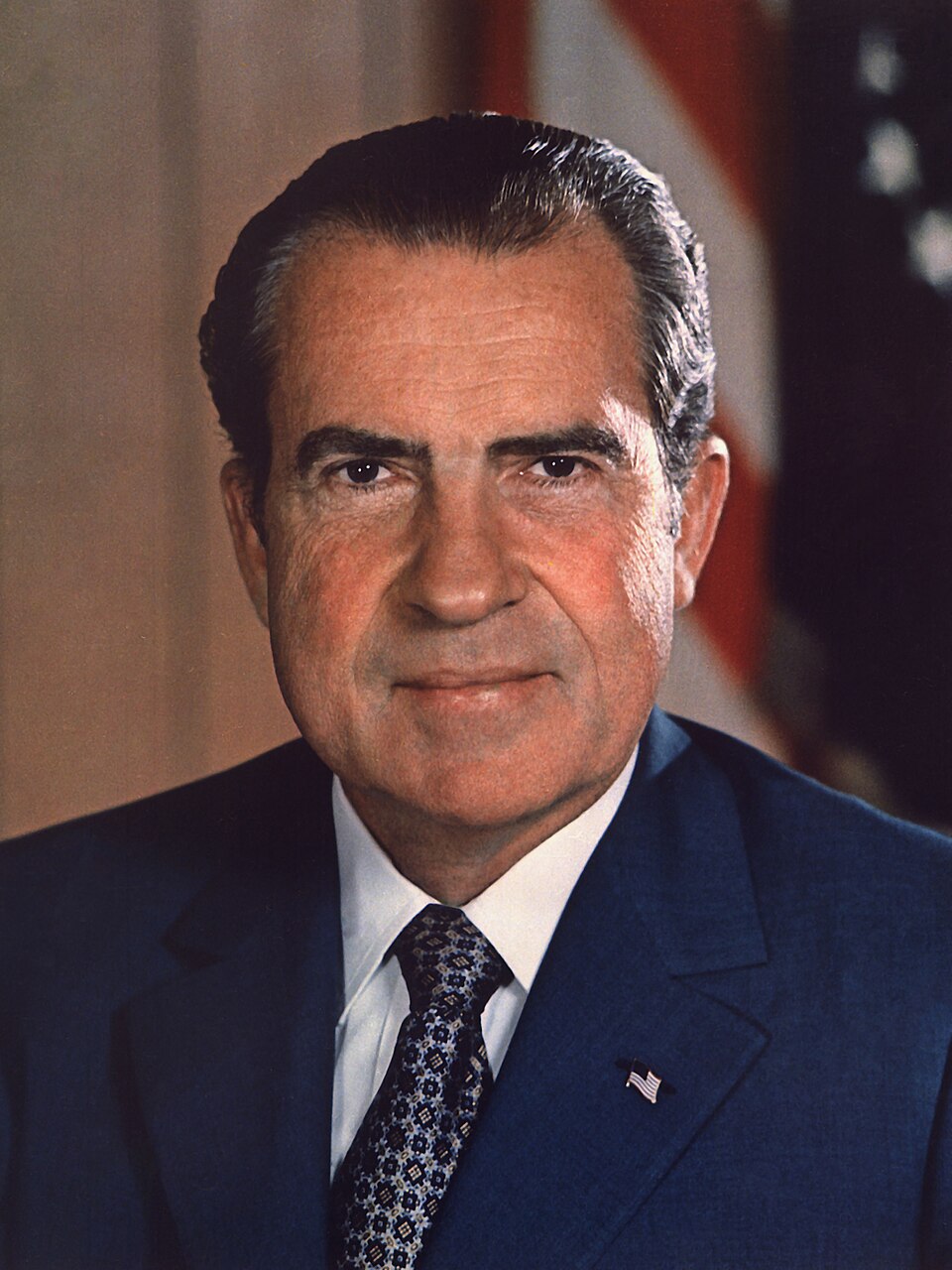
JD Vance walked into the Richard Nixon Presidential Library and said something the media class has spent 48 hours trying to laugh off.
They can’t quite do it.
Because one of their own just broke ranks and admitted the Vice President had a point.
MSNBC contributor Sam Stein said on a recent broadcast that JD Vance “has a point,” referring to Vance’s comments at the Richard Nixon Presidential Library that Watergate “would be like a 12-hour news story” if it happened today. Stein, who also serves as managing editor at The Bulwark, made the concession on *All In with Chris Hayes*, saying flatly, “Honestly, I think he’s right.”
Let that sit for a second.
Stein said, “It’s shocking that JD Vance thinks this is sort of a politically advantageous thing to say out loud, but I do have to say I think there is some validity to the idea that we’ve become so calloused by this stuff.”
That’s a remarkable thing to hear on MSNBC. But Stein wasn’t done.
He went on to note that “the key to bringing down Richard Nixon was not just the FBI — what JD Vance would call ‘the deep state’ — but dogged reporting from The Washington Post, predominantly Bob Woodward and Carl Bernstein.” He said The Post still has talented reporters who would do similar work “if the occasion arose,” adding, “In fact, I know people there would do it.” But he couldn’t ignore the elephant in the room: “You can’t remove the fact that the ownership of The Post right now is Jeff Bezos, who has gone out of his way to try to curry favor with Donald Trump.” His conclusion: “Yeah, maybe JD Vance has a point here.”
So what exactly did Vance say that set all this off?
Vance appeared at the Nixon Presidential Library in Yorba Linda, California, while promoting his new book, *Communion*. After discussing his faith journey, he turned to Nixon and said the 37th president’s legacy is “enjoying a bit of a renaissance.”
Vance told the audience, “If Watergate happened tomorrow, it would be like a 12-hour news story. The idea that it would have taken down a presidency is crazy.” He then added, “If you look at the story of how the deep state took down Richard Nixon, it’s not all that different from what the same groups of people, the same institutions, tried to do to Donald Trump.”
The media went predictably berserk. But here’s the thing — Vance isn’t wrong about the institutional rot that surrounded Nixon, and he’s not wrong about what happened to Trump either.
Deep Throat, the anonymous source who fed damaging information to the Washington Post during Watergate, was later revealed to be Mark Felt, the FBI’s Associate Director. Felt had been passed over for the FBI directorship after J. Edgar Hoover died in 1972. He didn’t go to the press out of civic virtue. He went because he was angry, and he used the country’s most powerful newspaper to settle a personal score with the Nixon White House. That detail has never fully registered in the standard Watergate mythology, and the press has never been eager to examine it too closely.
The same playbook — career bureaucrats, intelligence figures, and a cooperative press corps working in concert to damage a president they opposed — got dusted off and run again during Trump’s first term. That’s not a fringe view. That’s documented. The Russia collusion narrative was built on a dossier funded by the Hillary Clinton campaign and pushed by FBI officials who knew its sourcing was garbage. The FISA warrants used to spy on the Trump campaign were obtained through information the FBI knew was unverified. None of the people responsible for that faced serious consequences.
Vance drew the parallel plainly. He said, “If you look at the story of how the deep state took down Richard Nixon, it’s not all that different from what the same groups of people, the same institutions, tried to do to Donald Trump in the first Trump administration.”
And he wasn’t shy about seeing a little of himself in Nixon either. Vance told the crowd, “Young senator, vice president, writes some bestselling books, is hated by the media — it kind of sounds like JD Vance.”
Vance was at the Nixon library specifically to promote his new book, *Communion: Finding My Way Back to Faith*, which explores his journey from his upbringing as a Protestant to his conversion to Catholicism in the summer of 2019.
But the Nixon comments overshadowed the book tour. The left-wing press treated Vance’s remarks as scandalous. Which is exactly what you’d expect from people who have spent decades treating the standard Watergate narrative as sacred text.
What they can’t explain is why their own contributor just agreed with him.
Stein’s concession wasn’t just about media fragmentation or shortened attention spans. He pointed to something more specific and more uncomfortable for his audience: the owner of the Washington Post, the very paper that broke Watergate, has reportedly been working to stay in good standing with the Trump White House. If the institutional watchdog that took down Nixon is now managed by someone with business interests that depend on presidential goodwill, what exactly is left of the accountability infrastructure Stein was trying to defend?
That’s a real question. And it’s one the left doesn’t have a clean answer to.
Vance understands something the pundit class keeps refusing to absorb: the conditions that made Watergate a presidency-ending scandal no longer exist in the same form. The Washington press corps that operated as a unified force against Nixon has fractured. The FBI’s credibility as a neutral institution is in tatters after years of documented political targeting. And the Democrat Party’s own media allies have spent so much time manufacturing outrage over every Trump sneeze that actual accountability journalism — if any exists — gets buried in the noise.
The permanent Washington establishment didn’t just go after Nixon because of the break-in. They went after him because they could, because the institutions aligned against him were unified and trusted. Those same institutions tried the same thing with Trump, and it didn’t work. Partly because Trump fought back. Partly because enough Americans had already stopped trusting the referees.
JD Vance said all of that out loud at a presidential library, and an MSNBC contributor nodded along on live television.
The media will spend the next week explaining why Vance is wrong. But they’ll have a harder time explaining away Sam Stein.
Sources: Mediaite, NBC News, The Hill