

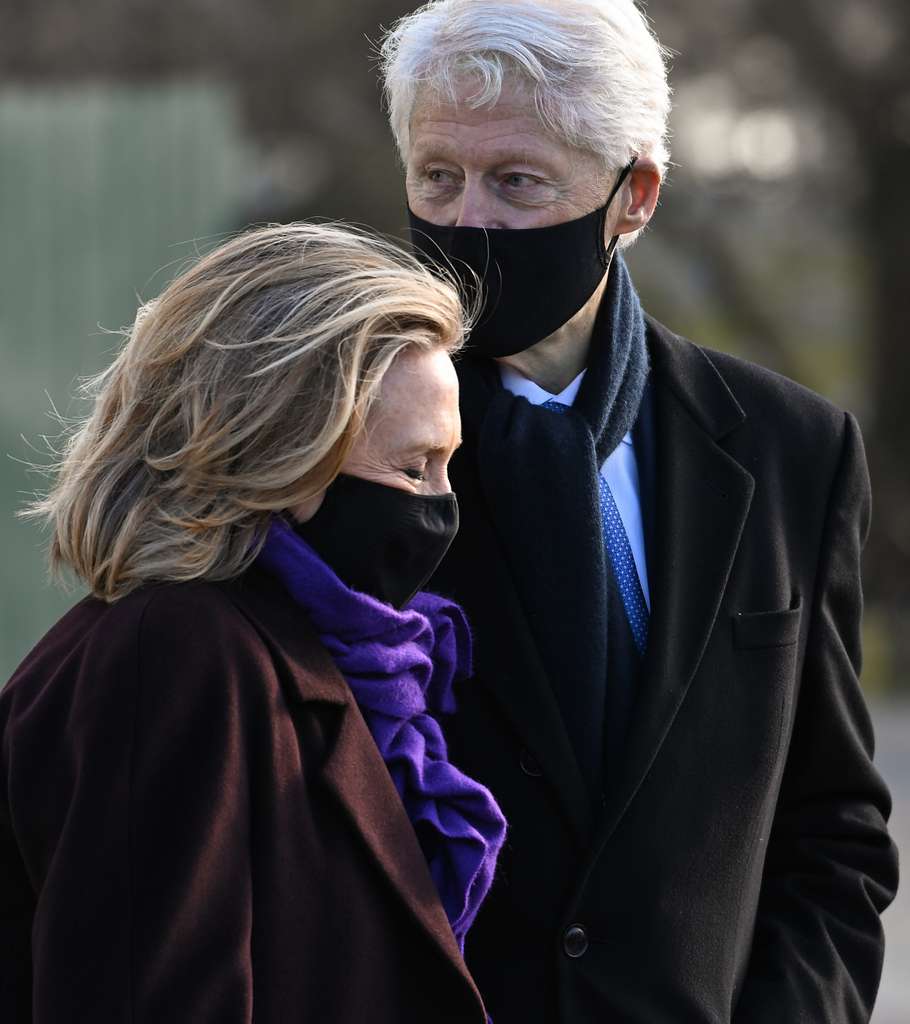
Hillary Clinton has spent the better part of a decade treating Donald Trump like a four-letter word.
So what she said recently at a New York City event stopped a lot of people cold.
And the Democrats who built their identity around hating everything Trump touches are not going to like this one bit.
Clinton Breaks Ranks in New York City
Clinton sat down with The New Yorker‘s David Remnick at 92NY, where the conversation turned to the Israel-Hamas war and the long-debated question of a two-state solution. Remnick pushed her on whether that idea still had any life left in it. Her answer took a turn nobody saw coming.
“I’m going to say something positive about Trump,” Clinton told the crowd, apparently feeling the need to brace them for impact.
“Trump’s 20-point plan for Gaza is actually a pathway to security for Israel, reconstruction for Gaza, and the possibility of self-determination, however defined, for the Palestinians,” Clinton said. “There are a lot of people who reject it because Trump did it, but it’s the only game in town.”
She didn’t stop there.
“There’s nothing else,” Clinton added, noting she had previously “engaged in some kind of track to diplomacy” with Israelis, Arab officials, political officials, and military intelligence.
“It’s a very painful discussion because these are experienced people with lots of scars to show for their efforts over many years, not just on peace, but on security, particularly for Israel,” Clinton continued.
What the Plan Actually Does
Trump’s Gaza peace plan, officially titled the Comprehensive Plan to End the Gaza Conflict, is a multilateral agreement led by President Trump and negotiated in consultation with Arab and Muslim countries. Trump announced it in September 2025 during a White House press conference alongside Israeli Prime Minister Benjamin Netanyahu.
The plan called for a ceasefire and release of all Israeli hostages held by Hamas within 72 hours of agreement, paired with a withdrawal of Israeli forces to pre-agreed lines and full humanitarian access for the people of Gaza. It also defined objectives for the stages to follow, including a disarmament, demobilization, and reintegration process.
A temporary technocratic Palestinian governing body would operate under international oversight, with a U.S.-led Board of Peace overseeing the process and a conditional path toward Palestinian self-determination built into the structure.
The first part of the peace plan was signed by Israel and Hamas in October 2025 in Sharm el Sheikh, Egypt. At the World Economic Forum in Davos in January 2026, President Trump stated that Hamas must disarm and release all remaining hostage remains “within weeks” or be “blown away very quickly.”
Clinton made clear she wasn’t giving Trump a blank check. She said the plan had to be implemented in full — not just the part about disarming Hamas. “But if you really took the whole approach that is embodied in that 20-point plan — and I know there are people who are working to try to move forward on that — there is a glimmer of a possible path forward,” she said.
The Part That Stings Most for Democrats
Clinton’s admission carries more weight than the average political pundit giving Trump grudging credit. She is the person Trump beat in 2016. She spent years insisting he was an existential threat to democracy. Her supporters built entire identities around opposing him.
And now she’s standing in front of a New Yorker audience — not exactly a MAGA crowd — and saying his Gaza plan is the only serious option on the table.
What she said next was the most revealing part. She acknowledged that plenty of people reject the plan for no reason other than Trump’s name is on it. That’s not a policy objection. That’s tribalism dressed up as principle, and Clinton, to her credit, called it out.
Trump’s critics in the foreign policy establishment have spent months looking for reasons to dismiss the 20-point plan. Some of those voices come from the same neoconservative tradition that brought the world the Iraq War, the Libya intervention, and two decades of failed nation-building that cost thousands of American lives and trillions of dollars. When those critics argue the plan is naive or insufficient, it’s worth asking what their alternative actually looks like — because they haven’t produced one.
Clinton also weighed in on Israeli Prime Minister Benjamin Netanyahu, saying he “believes that war is his friend because his political standing is under attack from a lot of different directions.” She added that Netanyahu “wants to contain the opposition by creating conflict so that he tries to rally the country behind him,” and suggested the Iran deal may create an opening for his departure in upcoming elections.
That’s a sharp observation, and not one that lines up neatly with the talking points of either party’s foreign policy wing right now.
Where the Plan Stands Today
The plan shifted to its second phase after Israel confirmed in January 2026 that Hamas had returned the remains of the last hostage from the October 7, 2023 attacks, fulfilling the agreed-upon terms of the first phase.
The second phase sketches out ambitious long-term goals, including standing up a stabilization force and transitional government to oversee Gaza. But the hard work is still ahead. The key issues of Hamas disarmament and Israeli withdrawal from Gaza remain frozen by both sides’ red lines.
President Trump, who chairs the Board of Peace, announced at its first meeting that the United States would commit $10 billion to the body. The plan has already drawn broad international backing. A powerful bloc of eight Arab and Muslim-majority nations endorsed it, with the foreign ministers of Saudi Arabia, the UAE, Egypt, Jordan, Qatar, Turkey, Pakistan, and Indonesia welcoming the proposal in a joint statement.
None of that happened by accident. Trump put American credibility and American diplomatic muscle behind a deal that previous administrations spent decades failing to produce. The foreign policy establishment that dismissed him in 2016 and again in 2020 has yet to reckon seriously with what he actually accomplished in the region.
Hillary Clinton, of all people, just did.
Whether that changes anything inside the Democrat Party is another question entirely. The base has been trained for years to treat any acknowledgment of Trump’s accomplishments as a kind of heresy. Clinton’s comments will probably be quietly ignored or explained away. But they’re on the record now, and they say something that a lot of people on the Left have been unwilling to admit out loud: the man they spent years calling a threat to world peace is the one who got Israel and Hamas to sign a ceasefire agreement, secured the return of hostages, and built a multinational reconstruction plan that has the backing of the Arab world.
That’s not nothing. Not even close.
Sources: Breitbart, Fox News, The Hill, Baker Institute for Public Policy, Council on Foreign Relations, The Soufan Center, Israel Policy Forum