

The Supreme Court just handed down a ruling that has election integrity advocates red with rage.
Two of President Donald Trump’s own appointees crossed the aisle, and the fallout landed squarely on Republicans heading into the 2026 midterms.
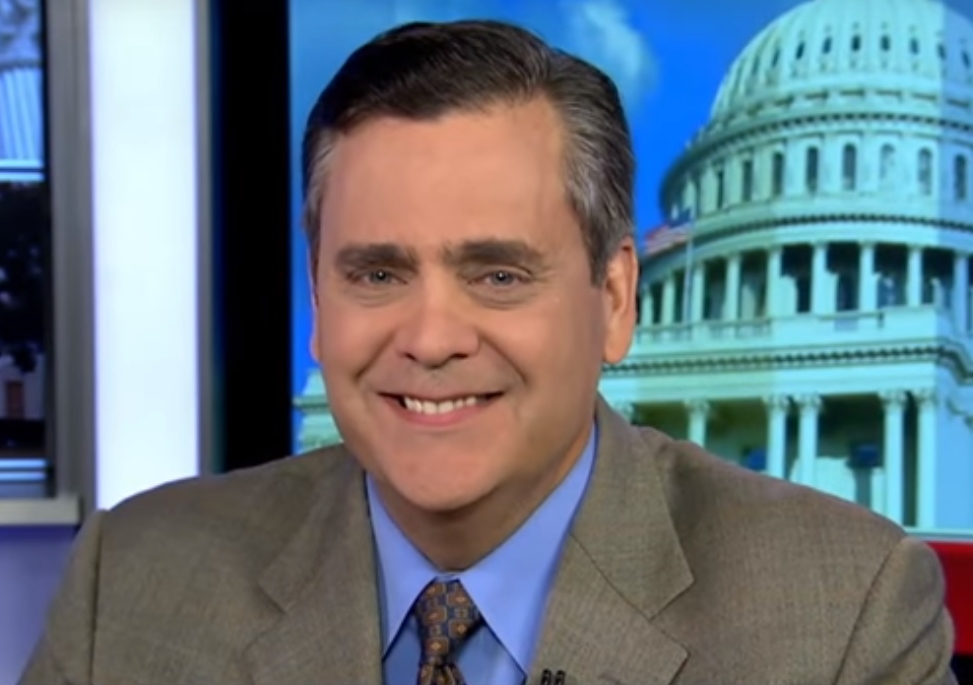
And Fox News legal analyst Jonathan Turley went on the air and told viewers exactly what this means — and it isn’t good.
Barrett and Roberts Side With the Left
The court split 5-4 in Watson v. Republican National Committee, ruling that states may count mail-in ballots received after Election Day so long as those ballots were postmarked by Election Day. Justice Amy Coney Barrett authored the opinion, joined in the majority by Chief Justice John Roberts and the court’s liberal wing of Justices Sonia Sotomayor, Elena Kagan, and Ketanji Brown Jackson.
Justices Samuel Alito, Clarence Thomas, Neil Gorsuch, and Brett Kavanaugh dissented.
The ruling came just months before November’s midterm congressional elections, and the timing made it sting even more. The ruling is a loss for the Republican Party, which brought the case. Eighteen states and territories, including GOP-led Mississippi, have such mail ballot grace periods.
Turley Doesn’t Sugarcoat It
Fox News legal analyst Jonathan Turley, a law professor at George Washington University, didn’t try to dress up the outcome. “I think this is a significant loss for Republicans who have wanted to try to rein in the way that we do our elections,” Turley said.
“California, of course, is the nightmare where you can go for weeks without a decision,” he added, referencing a concern President Trump has raised repeatedly about mail-in ballot counting dragging on long after Election Day.
But Turley didn’t stop there. He pointed out where the battle moves next. Turley said the ruling “shifts attention back to Congress, and also to the state legislators, to determine whether, politically, they want to go forward and say, ‘We need to clean this process up. We need to bring back a certain degree of certainty and clarity that doesn’t allow this open-ended process we see in California.'”
What Barrett Actually Said
Barrett’s majority opinion took a narrow, statutory approach. Barrett’s opinion held that Election Day, in the context of federal law, set a deadline for when voters must make a choice regarding their preferred candidate. Relevant laws, however, impose no standard for when ballots must be received to be considered valid.
She made clear this was a question for lawmakers, not judges. “Finally, plaintiffs assert that requiring ballots to be received by election day protects election integrity and increases voter confidence in election results,” Barrett wrote. “As we have said time and again, however, policy arguments are properly directed to legislatures, not courts.” “The question today is not whether requiring ballots to be received by election day is a good or bad idea; the question is whether the idea has made its way into the United States Code,” she added.
Alito Fires Back Hard
Justice Samuel Alito wasn’t having any of it. In his dissent, Alito argued that accepting late-arriving ballots “effectively postpones the date on which the electorate’s choice is made, and federal law precludes that postponement.” He said the majority was operating under a “flawed understanding of the election-day statutes,” and that the ruling “creates a serious risk of further undermining public confidence in our elections and our system of self-government.”
Alito also wrote that “it is undeniable that a prohibition on counting late-arriving ballots would provide an additional hurdle for bad actors seeking to stuff ballot boxes when early election results suggest a tight race. The majority incorrectly removes this safeguard from federal law.”
That’s a pointed warning. And it’s the kind of language that resonates with the millions of Americans who have never stopped asking hard questions about how elections get conducted in this country — questions the political establishment keeps trying to dismiss rather than answer.
The Mississippi Wrinkle
Here’s where this gets a little strange. The Mississippi law at the center of the case was passed in 2020 during the COVID pandemic. Mississippi passed the law at the center of the dispute in 2020, in response to the COVID-19 pandemic. And ironically, Mississippi Republicans — including the state’s own governor — want it gone now that the court has upheld it.
Mississippi Governor Tate Reeves, a Republican, disagreed with the opinion that upheld his state’s own law. He said the state legislature should “repeal the COVID-era law and require mail-in ballots to be received by the clerk by 5:00pm on Election Day in order to be counted.”
Mississippi Attorney General Lynn Fitch agreed. “With the bedrock constitutional principle of federalism now affirmed, I am hopeful that the Mississippi Legislature will take this opportunity to amend the law and require absentee ballots be received on the same day ballots are cast at the polling place,” she said.
Trump Calls It a “Tremendous Loss” and Points to Congress
President Trump didn’t mince words on Truth Social. Trump called the decision a “tremendous loss” and urged Congress to pass the SAVE America Act.
“There is no excuse for a politician, or otherwise, to be against the above three requirements. There is only one reason to oppose — CHEATING!” Trump wrote. “The House of Representatives has approved this vital Act, THREE TIMES. The United States Senate seems unable to do so.”
The SAVE America Act is exactly what election integrity supporters have been pushing for. The SAVE America Act would require proof of citizenship to vote and that voters show a photo ID at polling places. The photo ID requirement would also change the way voters cast ballots by mail. These are commonsense protections that the vast majority of Americans support — and that Democrats in the Senate keep blocking.
Democrats are dead set against the bill, which they say would effectively disenfranchise millions of Americans. Republicans would have to eliminate the filibuster to overcome Democrat opposition in the Senate. Funny how Democrats never seem to worry about disenfranchisement when it comes to the integrity of the count — only when Republicans try to verify who’s actually casting the ballots.
What This Really Means Going Forward
The court’s ruling doesn’t end the fight. Barrett herself made that plain — this is a statutory question, and Congress holds the answer. She added that concerns about election integrity and voter confidence “are properly directed to legislatures, not courts,” signaling that any nationwide deadline for receiving ballots would need to come from Congress.
Turley put it plainly: the ruling shifts the pressure onto lawmakers. State legislatures in Republican-led states can act right now to tighten their own receipt deadlines, regardless of what Washington does or doesn’t do. Mississippi’s own officials are already calling for exactly that.
But Congress is where the real battle is. “If we want fair and secure elections, Election Day should mean exactly what it says, which is why this decision makes it even more imperative that Congress pass the SAVE America Act,” RNC Chairman Joe Gruters said in a statement.
And the RNC made clear the fight isn’t over. “Republicans are not going to be deterred by this decision, and the RNC will keep fighting to have elections end on Election Day as Americans want,” Gruters said.
The same concerns that millions of Americans raised about the last-minute COVID-era rule changes in the 2020 election — the kind that allowed ballot windows to stretch for days and weeks — are still alive. The court just told Republicans they can’t fix it through litigation. That means the only path runs through the Senate, and right now, Senate Democrats are standing in the way.
The SAVE America Act is a commonsense measure. Proof of citizenship. Photo ID. Ballots in on Election Day. These aren’t radical ideas — they’re the standard in virtually every serious democracy on earth. Every day the Senate sits on this bill is another day the election integrity questions that keep millions of Americans up at night go unanswered.
Sources: Mediaite, Fox News, NPR, CBS News, SCOTUSblog, The Hill, Newsweek, Breitbart