

America lost one of its greatest treasures this week.
The whole country is grieving, and the media was supposed to honor her properly.
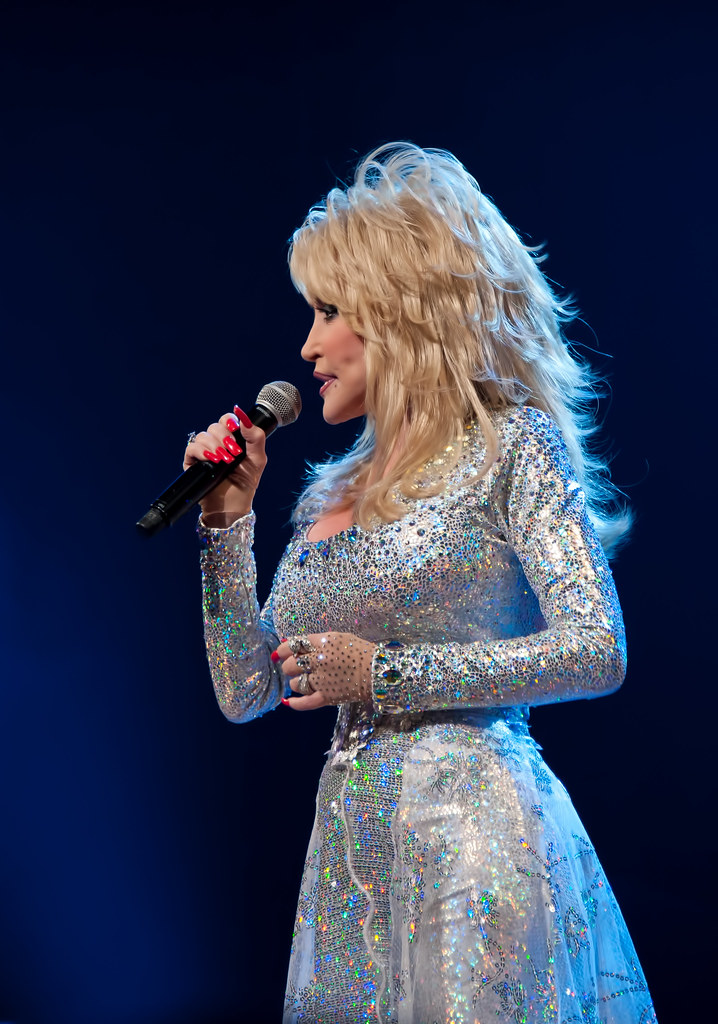
But CNN got caught airing a fake Dolly Parton photo during its tribute coverage, and the fallout has people furious.
A Legend Gone Too Soon
Dolly Parton died August 25 in Nashville at the age of 80 after a brief battle with cancer, according to her representatives.
Her nephew Bryan Seaver delivered the news in a video posted to her official Instagram on behalf of the Parton and Owens family.
The family released a statement that read, in part: “A rhinestone life that shone bright enough for the world to see, Dolly will forever stand as an inspiration not only through her timeless music and prolific songwriting, but also her wit, warmth, and kindness that made us all feel like family.”
Parton wrote and performed hundreds of songs across a career spanning seven decades, winning 11 Grammys and selling over 100 million records. Songs like “Jolene,” “9 to 5,” and “I Will Always Love You” became part of the fabric of American life. Her Imagination Library program mailed more than 300 million free books to children around the world in the three decades since she founded it.
She was, by any honest measure, one of the most beloved figures this country has ever produced.
And CNN managed to get even the tribute wrong.
The Photo That Wasn’t Dolly
During a broadcast of Laura Coates Live roughly 12 hours after Parton’s death was announced, CNN ran a montage of images that included five photos of the actual Dolly Parton. But one of the images in that montage was not Dolly Parton at all.
It was Kelly Vohnn, a 58-year-old Las Vegas tribute artist who has portrayed Parton throughout her career.
CNN correspondent Shimon Prokupecz was reporting live from Nashville when the photo of Vohnn flashed on screen alongside host Laura Coates. The image had been taken at a red-carpet screening of the film Song Sung Blue in Las Vegas in December, an event where multiple Parton impersonators attended.
Vohnn found out about the mix-up the way most people find out about things these days.
“I started getting all these texts in from friends saying that I was on CNN, and I couldn’t believe it,” Vohnn told the New York Post.
She was already dealing with her own grief over Parton’s death when the texts started rolling in.
“I was already heartbroken at losing Dolly because of how much she has given to me as a woman and an artist,” Vohnn said. “But then to see these images of me on screen was just weird.”
Vohnn was clear that she has never tried to pass herself off as the real thing. “I have always been known as a tribute act for her and many other stars,” she said. She also noted that she did not give anyone permission to use her likeness and posted publicly: “I want everyone at @dollyfoundationdonation to know that I did not give anyone my likeness to be used in anyway to fool people into thinking I am the real Dolly Parton.”
Vohnn called the mistake “embarrassing” and said she thought about contacting CNN directly but held off. “I thought about calling CNN, but was really consumed by the grief of losing Dolly,” she said. “I just wanted to be at home with my thoughts, raising a glass of wine to that brilliant woman.”
CNN eventually issued a statement to the New York Post: “We regret the error and apologize to the Parton family.”
Nine words. That was it.
What This Says About the Media That Claims to Honor Her
The error happened roughly 12 hours after Parton’s death was announced. This was not a breaking-news scramble where producers had 90 seconds to pull together footage. There was time. There was staff. There was an entire network apparatus built precisely for moments like this.
And yet somewhere in that apparatus, a photo of a Las Vegas impersonator ended up in a tribute montage for one of the most photographed entertainers in American history.
Dolly Parton had a seven-decade career. There are thousands of photographs of her, from her earliest days in East Tennessee to her final years in Nashville. The idea that CNN could not locate a verified image of the actual woman is not a technical failure. It is a staffing and standards failure.
But there is something else worth saying here.
The mainstream media has spent years lecturing the American public about misinformation, about the danger of fake images, about the importance of verifying what you see on screen. CNN in particular has positioned itself as a guardian of factual accuracy. And then, on the night the country lost Dolly Parton, that same network broadcast a photo of a stranger and labeled it as the woman the nation was mourning.
The irony writes itself.
Vohnn herself felt sorry for Parton’s memory more than anything else. “I felt so sorry and apologetic for Dolly,” she said, “because over her career there are so many wonderful images and moments that they could have chosen from.”
That is a generous sentiment from someone who had every right to be furious.
CNN’s nine-word apology did not address how the image ended up in the montage, who approved it, or what steps the network will take to prevent something similar from happening again. It was the minimum possible acknowledgment of a maximum possible embarrassment.
For a network that has spent considerable airtime criticizing others for spreading false images and misleading visual content, the silence on the mechanics of this particular failure is telling.
Dolly Parton spent her life giving generously to others, funding literacy programs, lifting up her community, and bringing joy to people across every political and cultural divide. She was one of the rare figures in American public life whom almost everyone, regardless of where they stood on anything else, genuinely loved.
She deserved better than a nine-word apology delivered to a newspaper.
And the Parton family, still in the early hours of their grief when this story broke, deserved better than having to find out a cable news network could not be bothered to confirm which photo was actually their aunt.
CNN got the tribute wrong. The network has apologized. But the question of why a major news organization with full resources could not verify a single photograph of one of the most famous women in American history is one that a nine-word statement does not come close to answering.
Sources: Mediaite; New York Post; Variety; Washington Times; Hollywood Reporter