

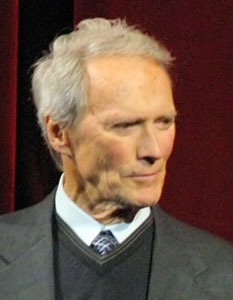
Clint Eastwood has a reputation for running a tight ship on set.
His son Scott grew up watching that firsthand, and he’s finally talking about one moment that stuck with him.
And what Scott Eastwood revealed about the day his father sent Kevin Costner home will tell you everything you need to know about how Clint operates.
A Lesson Learned on the Set of A Perfect World
Scott Eastwood recently appeared on the Going There with Anna Faris podcast and shared a story from the 1993 film A Perfect World, the crime drama his father directed starring Kevin Costner and Tom Hanks.
Scott was a kid at the time, tagging along on set the way sons of Hollywood legends sometimes get to do.
What he witnessed left an impression that clearly never faded.
According to Scott, Costner showed up to the set not ready to work, and Clint Eastwood did not let it slide.
“He sent Kevin Costner home one day,” Scott said. “He said, ‘You’re not ready. Go home.'”
That’s it. No long lecture. No second chances handed out in front of the crew. Just a direct instruction from a director who expected professionals to show up prepared.
Clint Eastwood has long been known for his no-nonsense approach to filmmaking. He shoots fast, wastes nothing, and does not coddle talent regardless of their star power. Sending a leading man home rather than working around his unpreparedness is exactly the kind of move that defines that reputation.
What Clint Told His Son About That Decision
Scott did not just witness the moment. He asked his father about it afterward, and what Clint said was direct enough to stay with Scott for decades.
“He said, ‘You come to work, you know your lines, you’re prepared,'” Scott recalled. “‘It’s disrespectful to everyone else on set if you’re not.'”
That’s the kind of thing a father says once and a son remembers forever.
And it’s worth noting that this wasn’t some abstract philosophy Clint was passing down. He said it in the context of a real situation, about a real consequence he had just handed to one of the biggest stars in Hollywood at the time.
Costner was coming off the massive success of Dances with Wolves and The Bodyguard when A Perfect World went into production. He was not some newcomer who could be dismissed easily. Clint sent him home anyway.
That tells you something about how Eastwood views the hierarchy on his sets. The camera doesn’t care about your last box office number. You either come ready or you don’t work that day.
Scott Eastwood’s Path Through His Father’s World
Scott Eastwood has spoken in various interviews over the years about the complicated experience of growing up as Clint Eastwood’s son in Hollywood.
By his own account, his father did not hand him anything. Scott has said Clint was not the type to make calls on his behalf or smooth his path into the industry. He had to earn his roles the same way anyone else would, at least in the sense that Clint was not going to be his agent.
But what he did give Scott was something harder to quantify. He let him observe. He let him watch what professionalism actually looked like when practiced at the highest level over decades.
The Costner story is a good example of that. Scott didn’t learn that lesson in a classroom or from a book. He watched his father enforce a standard in real time, on a real film, with a real consequence.
That kind of education doesn’t show up on a resume, but it shapes how a person thinks about work.
Scott has gone on to build a solid career of his own, with roles in films like Fury, Suicide Squad, and Pacific Rim: Uprising. He has talked openly about wanting to be taken seriously as an actor rather than coasting on the family name.
And given what he learned watching his father work, it’s not hard to understand why preparation and professionalism are things he takes seriously.
A Perfect World ended up being a well-regarded film despite whatever friction happened behind the scenes. Costner delivered a strong performance, and Eastwood’s direction kept the picture grounded. Whatever happened the day Costner was sent home, they clearly found a way through it.
But the lesson Scott took from that day was not about the movie. It was about what his father expected from the people around him, and by extension, what Scott should expect from himself.
Clint Eastwood is now in his mid-nineties and remains one of the most respected figures in the history of American filmmaking. He has directed more than forty films, won multiple Academy Awards, and worked with virtually every major star of the last six decades.
And if the stories his son tells are any indication, a big part of that track record comes down to one simple rule. You come to work ready, or you don’t come at all.
That’s not a complicated philosophy. But it’s one a lot of people in a lot of industries could stand to hear more often.
Source: Fox News Entertainment, “Scott Eastwood: Father sent Kevin Costner home from set while filming A Perfect World”