

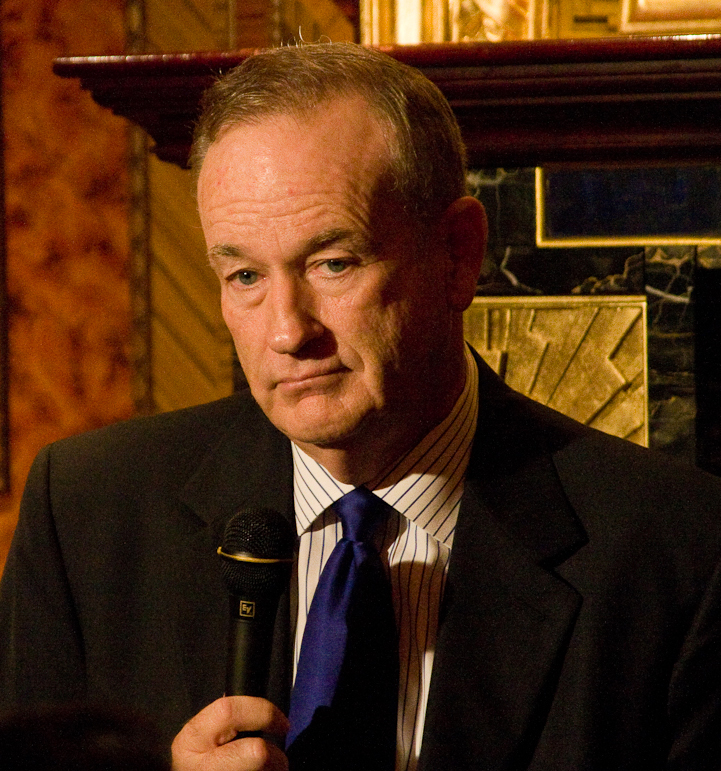
Donald Trump called it rigged. JD Vance called it shady. Now Bill O’Reilly is calling it something else entirely.
And what O’Reilly said on live television about California’s vote-counting process has a lot of Americans demanding answers.
The veteran commentator went on NewsNation recently and didn’t hold back one word.
The Spark That Set It All Off
The California primary on June 2, 2026, was supposed to be a turning point. Trump-backed candidates had real shots at breaking through in a state Democrats have owned for decades. Reality TV star Spencer Pratt ran for Los Angeles mayor, and gubernatorial candidate Steve Hilton had Trump’s endorsement in the governor’s race.
On election night, Pratt looked like he was safely in the runoff. Then the mail-in ballots started coming in, and that lead evaporated over the following days. By the time the count wound down, Pratt had slipped to third place, knocked out of the November runoff by Democrat Nithya Raman. The race ended up as a Democrat-versus-Democrat contest, with incumbent Mayor Karen Bass advancing alongside Raman.
Trump didn’t take it quietly. He went on Truth Social and wrote, “Not possible for Spencer Pratt to have lost the L.A. runoffs after the big lead he had,” adding “3rd World Nation. Rigged Elections!”
JD Vance took it to Fox News, telling Jesse Watters: “The way that they’re coming in just so happens to work out such that the Republican is getting kicked out of the final two, so it’s a Democrat versus Democrat runoff, that seems pretty shady to me.”
And Trump stormed off the set of *Meet the Press* after anchor Kristen Welker pressed him on his fraud claims. That clip made the rounds fast.
O’Reilly Lands on NewsNation
NewsNation anchor Leland Vittert sat down with O’Reilly to work through the whole thing, and the exchange got heated quickly.
Vittert framed the central question plainly: Was the story about voters who don’t care, or about voters who do care but whose votes aren’t being fairly counted?
O’Reilly came in swinging on the Los Angeles angle. “I don’t believe the citizen base in Los Angeles cares about their community,” he said. “And as you know, I did a special in San Francisco, and that was blatantly obvious — blatantly. But L.A. is worse than San Francisco.”
When Vittert rolled the Trump-Welker exchange and asked whether Trump was doing himself any favors, O’Reilly cut him off. “Wait, wait, wait. This is a con!” he said. “And it’s a big, giant con.”
But O’Reilly wasn’t letting California Democrats off the hook either. When it came to the L.A. mayoral race specifically, he pushed back on anyone claiming the results were clean without a thorough look. “That’s the analysis that’s correct — that Hilton, I don’t know whether he got a fair count or not, but because the state is so massive, 55 million people, it’s a lot harder to do fraud than it would be in Los Angeles, where the city controls the dogs who vote.”
He went further on the question of evidence, calling out Welker directly. “And there was no evidence presented to the American people that massive fraud took place. That’s still being investigated. Whether they come up with anything, I have no idea. But for Kristen Welker to say there’s no evidence of fraud in California when the vote was less than a week ago — I mean, the woman is an advocate for the liberal wing of the Democratic Party.”
Vittert pushed back hard. He asked O’Reilly directly whether, if a Democrat came on his show claiming fraud in Michigan when Trump won, he would demand evidence. O’Reilly agreed he would — but drew a line on timing. “Of course I would say, ‘Where’s the evidence?’ — but not four days after the vote. How could there possibly be an assemblage of evidence? How could you do it?”
That’s actually a fair point. Investigations take time. The federal prosecutor for the Central District of California, U.S. Attorney Bill Essayli, announced that his office had “multiple election fraud investigations underway” in coordination with the FBI’s Los Angeles field office. His office sent a prosecutor to the Los Angeles County ballot tabulation center to monitor the count in person.
What the Numbers Actually Show
O’Reilly also noted, separately, that he had “no evidence to back up that there was fraud in this election,” but still called the results “suspicious.” He questioned why the late surge in votes went to Raman rather than to Bass, who was already comfortably in first place. “Why was the surge for this woman? Why wasn’t it for Karen Bass, the other mayoral candidate? Why her? Because they wanted to knock Pratt out.”
The final tallies showed Bass receiving about 34 percent of the vote, Raman around 28 percent, and Pratt at roughly 26 percent. That’s a spread of a little over two points between second and third place — close enough that the late mail-in count absolutely decided the race.
California’s voting system doesn’t help build confidence. The state doesn’t require photo ID to vote. Mail-in ballots can arrive and be counted for weeks after election day. And the “jungle primary” format — where all candidates regardless of party run together, with only the top two advancing — means a Republican city in a blue state can end up with zero representation in the final round. That’s the system Democrats designed and Democrats benefit from.
Essayli did step in to knock down one specific claim circulating on social media that alleged Pratt received zero votes in one ballot update. His office reviewed the official county records and called that claim false. Each candidate received votes in every update. That’s the right call — bad information doesn’t help anyone trying to build a legitimate case.
The Bigger Picture Nobody Wants to Say Out Loud
The concerns here go beyond one race in one city. California has spent years building a mail-in voting infrastructure with minimal verification requirements, and the result is a system where Republican candidates routinely lead on election night and then watch that lead drain away over the following two to three weeks. Whether that’s fraud or just demographics doing what demographics do in a state where Democrats outnumber Republicans by millions — that’s the question investigators will need to answer.
But the pattern itself is real. And the fact that it keeps producing the same result — Republicans ahead at midnight, Republicans losing by the end of the month — is exactly why millions of Americans find the whole thing worth scrutinizing. These are the same last-minute rule changes, the same extended counting windows, the same resistance to basic verification measures that raised serious questions about 2020. The concerns didn’t come from nowhere.
O’Reilly’s “con” line was aimed at Trump’s framing, not at the underlying questions about California’s voting system. He’s been around long enough to know that screaming fraud four days after an election, before a single investigator has had time to look at a single ballot, doesn’t accomplish anything except handing the media a story about Republican hysteria instead of a story about California’s election integrity problems.
And California’s election integrity problems are real. “Every thinking person knows that it’s suspicious,” O’Reilly said, and that’s a sentiment a lot of people share whether or not they’re willing to say it on television.
The investigations are underway. Essayli’s office said it will “follow the evidence wherever it leads and prosecute any violations of federal election law to the fullest extent.” That’s the right approach. Let the investigators do the work. If fraud is there, find it and prosecute it. If it isn’t, say so clearly.
What can’t happen is what Welker tried to do — declare the case closed before anyone has actually opened the files.
Sources: Mediaite, NewsNation, The Hill, Yahoo News