
Big Tech keeps going after a movie about one of America’s greatest presidents.
YouTube is flagging podcast episodes about the film as election advertising — and the producer is firing back hard.
And now the director’s cut of Reagan is headed back to theaters despite everything Google’s platform is throwing at the team.
YouTube Calls Gene Simmons Talking About America “Shocking Content”
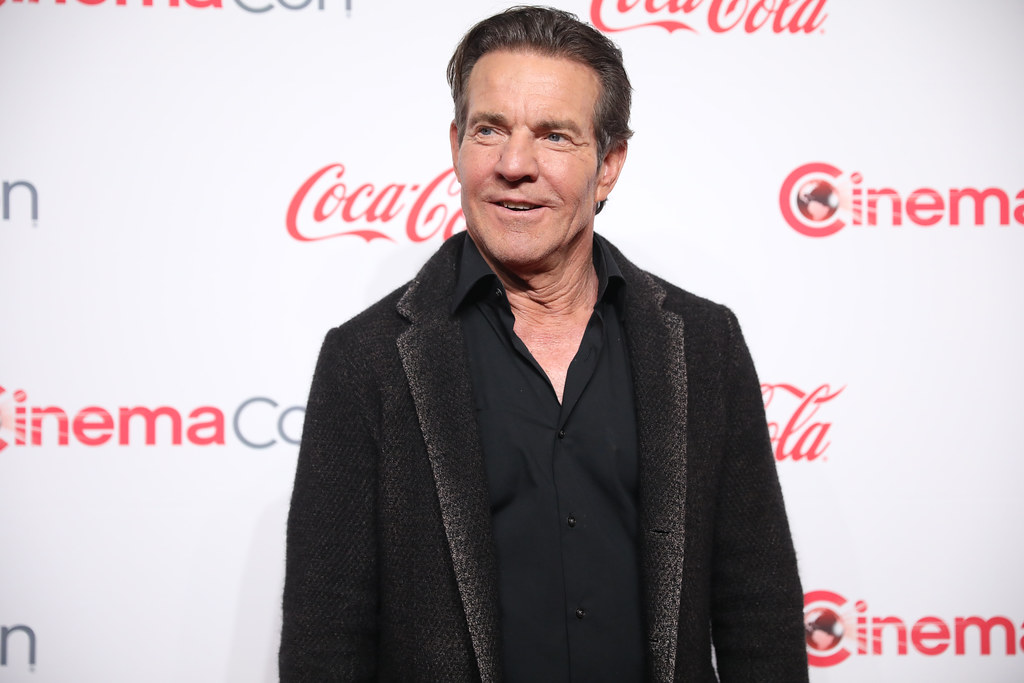
Producer Mark Joseph has spent years fighting to get the story of Ronald Reagan told on the big screen. Production on the 2024 biopic Reagan began in 2020, and the film starring Dennis Quaid as the 40th president eventually grossed more than $30 million at the box office. Now Joseph is back at it, promoting a director’s cut set to return to roughly 600 theaters on Sept. 25 after limited Independence Day screenings tied to the nation’s 250th anniversary. The extended version adds 10 minutes of footage that never made the original cut.
Getting the word out has turned into a fight. Again.
Joseph’s podcast special series, “Making Reagan,” features interviews with stars and others connected to the film. YouTube flagged ads promoting the episodes under its advertising policies, and Joseph is calling it exactly what it looks like — censorship. The first episode featured KISS co-founder Gene Simmons discussing family, his producing work, and his appreciation for America. YouTube labeled the ad “advertisement for elections” and “shocking content.”
“For 30 years, Simmons has been branded for outrageous content, and now he’s been deemed outrageous for talking?” Joseph told Fox News Digital.
Simmons is known for fire-breathing, blood-spitting stage theatrics and black-and-white face paint. His contribution to the film was a cover of “Stormy Weather.” YouTube apparently found a calm conversation about America more dangerous than decades of KISS performances.
A second episode featured an exclusive sit-down with John Hinckley Jr. — the man who shot President Reagan in 1981 — discussing the assassination attempt. YouTube blocked the promotion of that episode too, also citing “election advertising.”
“The idea that an information and news-oriented interview with the man who shot Ronald Reagan, John Hinckley, is labeled ‘election advertising’ and blocked from being boosted is equally crazy,” Joseph said.
And there is no recourse. According to Joseph’s team, when YouTube flags an episode this way, the platform does not provide an option to appeal the ruling and only allows them to boost a different episode.
The List of Flagged Episodes Keeps Growing
The Simmons and Hinckley episodes were not the only ones caught in YouTube’s net. Promotions for episodes featuring Kathie Lee Gifford, who co-wrote the tribute song “I Knew It Would Be You” for the film, were also flagged for “election advertising.” So were episodes featuring actresses Amanda Righetti and Lesley-Anne Down, actors Dan Lauria, Elya Baskin, and Trevor Donovan, author Arthur Laffer, singer Tanya Tucker, and screenwriter and filmmaker Howard Klausner.
Kathie Lee Gifford and Tanya Tucker talking about a movie about a president who left office in 1989 — flagged as election content. That is the state of Big Tech content moderation in 2026.
“The similarities to Facebook are that both use a nebulous reasoning that the content somehow constitutes electioneering, but with the ‘Making Reagan’ series on YouTube, these are just ordinary conversations with people who were involved with the film or the topic of the film and have nothing to do with advocating for an election,” Joseph said.
That Facebook comparison is not accidental. When Reagan first hit theaters in August 2024, Facebook repeatedly restricted the team’s attempts to boost posts and advertisements for the film. The film’s official Facebook page faced temporary suspensions after sharing an interview with Quaid conducted by Fox News Channel. Facebook cited automated systems and policies governing content involving politicians near a presidential election — even though Ronald Reagan has not appeared on a ballot in four decades.
Joseph has called on YouTube to reverse its decisions and stop blocking the team’s promotional efforts ahead of the Sept. 25 director’s cut release.
YouTube responded to Fox News Digital’s request for comment with a statement noting that “ads related to the podcast were removed for including profanity,” referring specifically to the Simmons episode. A YouTube representative acknowledged that after review, the ad does not violate its US Election Ads policy — but since it still contains profanity, it cannot be approved to run as an advertisement. That explanation does not account for the Hinckley episode or the many others flagged for “election advertising” that had nothing to do with profanity.
A Wider Pattern That Conservative Filmmakers Know Well
Joseph is not alone in dealing with this. Ash Greyson, producer, director, and CEO of boutique marketing agency Ribbow Media Group, told Fox News Digital that he has had ongoing issues using YouTube’s platform to promote conservative films. Greyson helped market the 2023 Christian drama Jesus Revolution along with God’s Not Dead and I Still Believe.
“It’s been a frustrating and ongoing issue for years, particularly on YouTube, where they will flag anything ‘faith,'” Greyson said, noting he has had very few issues with films outside those genres. “And it seems to be worse on the Christian stuff.”
That tracks with a broader pattern that anyone paying attention has noticed. The same platforms that throttled the Hunter Biden laptop story weeks before the 2020 election, and that suppressed discussions of COVID policy and January 6, are the ones deciding which films about American history deserve promotion and which ones get buried under “election advertising” labels. The “misinformation” and “election integrity” justifications are not neutral enforcement tools. They are viewpoint discrimination dressed up in policy language.
Free speech is not complicated. Outside of true incitement to violence, defamation, and slander, the First Amendment protects speech — including speech about Ronald Reagan, Gene Simmons, and John Hinckley. YouTube’s advertising policies are not the First Amendment, but the selective application of those policies against content that touches on conservative figures, Christian values, or American history is censorship in the only way that matters: it silences voices and suppresses reach.
The Reagan film has already run into another wall entirely. Guinness World Records declined to certify a milestone asserted by the filmmakers — that the movie achieved the widest gap between audience and critic scores on Rotten Tomatoes for any American-made movie. The critics gave the film a dismal score. Audiences loved it. That gap tells a story about whose tastes the credentialed class serves and whose it ignores.
But the director’s cut is coming anyway. Director Sean McNamara made the decision to leave out the “Make America Great Again” line from the original 2024 release, explaining that “in the middle of a divisive election season when we released the movie, we made the decision to leave out a moment that might have been mistaken for electioneering.” The restored scene shows Dennis Quaid’s President Reagan delivering the line at a speech to the Building and Construction Trades Department, AFL-CIO. Reagan was the first to use the phrase during his 1980 presidential campaign, long before it became associated with President Donald Trump’s 2016, 2020, and 2024 campaigns.
Ronald Reagan said “Make America Great Again” before it was a slogan. The filmmakers felt they had to cut it from a movie about Ronald Reagan because of a presidential election. That tells readers everything they need to know about the political environment these filmmakers are navigating.
And now YouTube wants to treat conversations about that same film as election advertising.
The director’s cut hits 600 theaters Sept. 25. Joseph is pushing forward regardless. The censorship has not stopped the film before, and there is no reason to believe it will stop it now.
Sources: Fox News Digital; Yahoo Entertainment; Deadline