

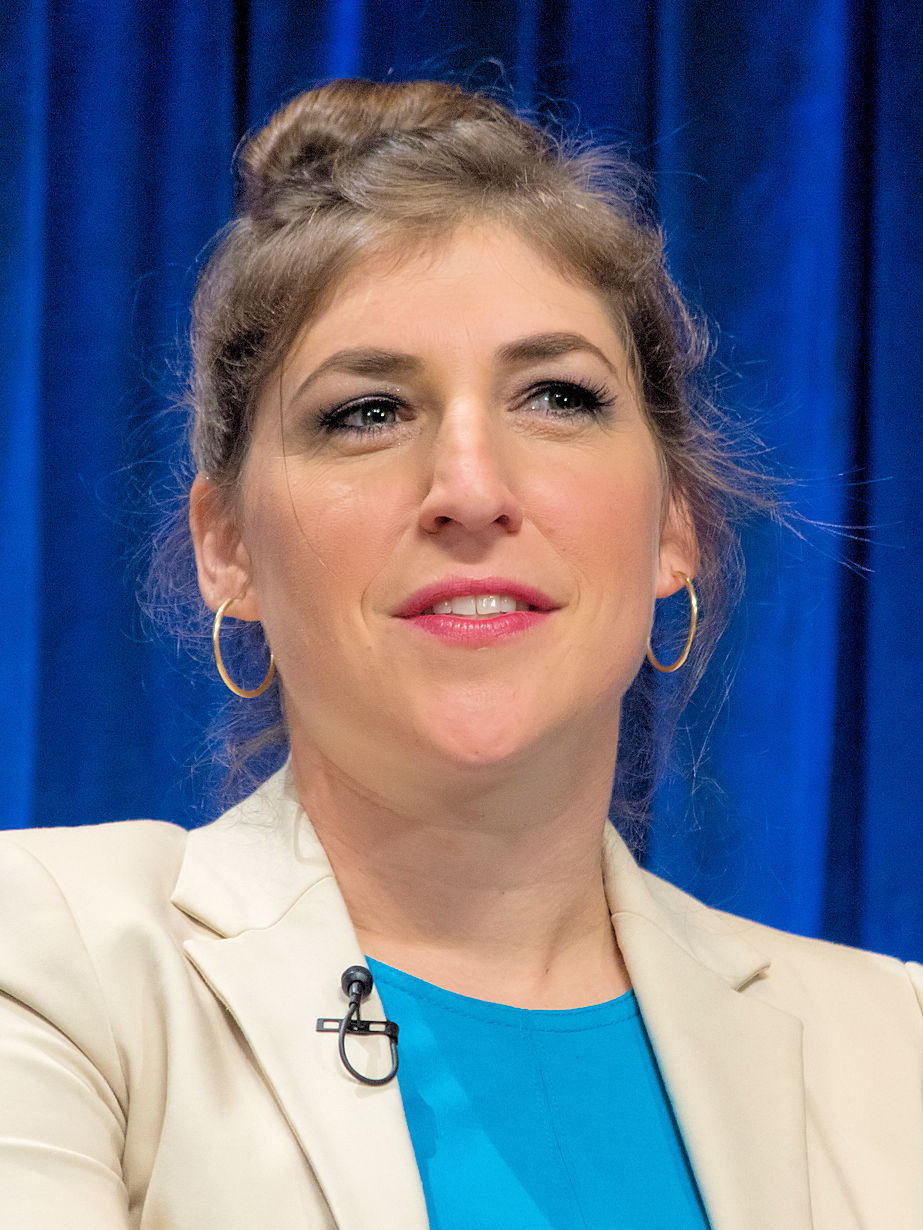
Hollywood has a long memory for the wrong reasons.
Mayim Bialik didn’t call for anything radical. She just wanted to talk.
And what happened to her for daring to ask questions will leave you shaking your head at what the Left turned this country into.
Bialik, the 50-year-old actress best known for playing Amy Farrah Fowler on The Big Bang Theory, sat down recently for an episode of the Second Thought podcast hosted by Free Press co-founder Suzy Weiss. What came out of that conversation wasn’t a political manifesto. It was something quieter and, in some ways, more damning.
She said she felt afraid in her own home.
Not because of anything dangerous. Because she asked questions.
“The notion that if I questioned what we were doing about school closures, church closures, Black Lives Matter marches,” Bialik told Weiss. “Like, I just wanted to talk about it. And even in my own home, it did not always feel safe.”
Let that land for a second. A grown woman, in her own house, surrounded by people who supposedly loved her, didn’t feel safe raising a policy question. Not a fringe conspiracy. Not a call to arms. Just: hey, does it make sense to shut down schools and churches while mass street gatherings are happening everywhere?
That was enough to get her accused of being a Republican.
“And even like in my own home I was accused of being a Republican, right?” she said. “Which like, nothing wrong with Republicans.”
She was quick to clarify her politics. “I’m not a Republican,” Bialik said. “I’m a bleeding-heart liberal.” And she means it — she’s said repeatedly she doesn’t believe in the death penalty and supports a range of left-wing causes. But she also said she no longer feels fully at home in the Democrat Party she was raised to support. That’s a telling sentence from someone who identifies as a bleeding-heart liberal.
The COVID lockdown years were a masterclass in enforced consensus. Government schools shut down for months — in some cities, years. Churches were padlocked. Small businesses were boarded up. And then, in the summer of 2020, massive BLM gatherings rolled through American cities for weeks on end, with the same public health officials who had banned backyard barbecues either cheering them on or going conspicuously silent. Millions of Americans looked at that and thought: something here doesn’t add up.
Bialik was one of them. And she paid for it socially.
“COVID messed everything up six ways to Sunday,” she said on the podcast.
But the real story isn’t the pandemic. It’s what the pandemic revealed about how the Left polices its own. The message sent to anyone who asked inconvenient questions was unmistakable: fall in line, or get labeled. Accused of being a Republican. Accused of not caring about Black lives. Accused of being dangerous. The machinery was designed to make ordinary, reasonable people feel like they were doing something shameful just by thinking out loud.
Bialik said she found a lifeline in Free Press, the media company co-founded by Suzy Weiss and her sister Bari Weiss. “It’s also when, for me, I had to turn to Free Press,” she said. “I had to turn to somewhere that was like, wait a second, something’s not making sense and it’s not okay.”
And it gets worse. When she later suggested that Joe Biden should step aside from his presidential run, the accusations that she was secretly a Republican reportedly grew louder. She said people accused her of “turning” on Democrats. She pushed back, saying she believes democracy means people should be able to disagree respectfully. Which used to be a fairly uncontroversial thing to believe.
The backlash Bialik describes didn’t stop at political arguments. She also recalled a confrontation in a Los Angeles parking lot after the October 7, 2023, Hamas terrorist attacks on Israel. A man wearing a “Zionism is racism” shirt approached her while she was with her children. “A big dude coming up to me as I’m getting into my car — what is happening?” she said. “That’s terrifying.”
She said her first instinct was to protect her sons.
Bialik also suggested she may have been quietly dropped from a major feminist organization’s campaign because of her views on Israel. She stopped short of naming the group. “Do I blow this up? Do I take one of the largest, most prominent feminist organizations that everyone donates to and say I was eliminated from a campaign because of investor needs?” she said.
And then there’s Jeopardy! She left the show after refusing to cross a writers’ strike picket line and was subsequently told her services were no longer needed. She said she wouldn’t be surprised if her outspokenness on Israel played a role. “I don’t shut up about injustice,” she said. “And I don’t especially cower about anything relating to the Jewish people or the state of Israel. And I would not be surprised if that theoretically might not have been a good fit.”
But here’s what’s worth sitting with. Bialik isn’t a conservative. She’s not a Trump supporter. She’s not anyone who would typically show up in these pages as a hero. She’s a self-described bleeding-heart liberal who earned a PhD in neuroscience and spent decades in Hollywood. And even she couldn’t ask basic questions about COVID policy without her own family treating her like a threat.
That’s not a fringe problem. That’s what the Left built during those years — a social enforcement system so thorough that it reached inside people’s homes and made them afraid to speak. Not afraid of the government. Afraid of their own relatives.
The BLM riots of the summer of 2020 burned through dozens of American cities. Federal courthouses were attacked. A police precinct in Minneapolis was seized and torched. Billions of dollars in property damage fell on working Americans and small business owners who had nothing to do with any of it. The same media figures and Democrat politicians who spent years calling January 6 an “insurrection” either cheered those riots, bailed out participants, or went quiet. And if you asked, even politely, whether it made sense to keep churches closed while that was happening — you got called a Republican.
Bialik said the pandemic deepened political division and made everyday conversations far more difficult, with people on both the Left and Right growing increasingly extreme. That’s a generous read. What she actually described was one side running a loyalty test and punishing anyone who didn’t pass it.
She’s talking about it now. And the fact that it still feels like a confession says everything.
Sources: Page Six, The Washington Times, Attack of the Fanboy, Lanka News Room