

The media’s favorite parlor game for the last decade has been comparing Donald Trump to Adolf Hitler.
But one prominent reporter just broke ranks in a way nobody in the press corps saw coming.
And the left is fuming after a New York Times journalist publicly called their go-to Trump smear what it actually is.
A Reporter Who Actually Knows the Story Refuses to Play Along
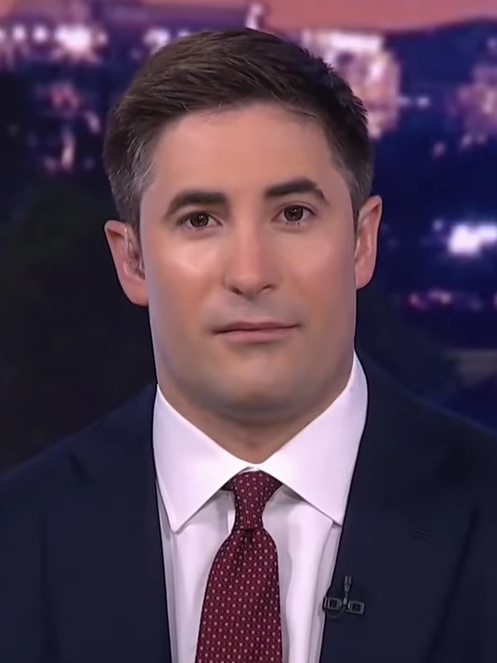
Jonathan Swan is not exactly a Trump cheerleader. He’s a New York Times White House reporter and co-author of a new book called Regime Change, written alongside his colleague Maggie Haberman. The book covers the behind-the-scenes of Trump’s second term and is not what anyone would describe as flattering.
But Swan, who is Jewish, drew a hard line when it came to the Hitler comparisons that have become practically a reflex for Trump’s critics on the Left.
In a recent interview with Axios CEO Jim VandeHei, Swan put it plainly: “I hate the Hitler comparisons. I think they’re just totally invalid.”
He went further. “Donald Trump’s not wanting to gas all these people and so even the mention of that name creates all sorts of imagery,” Swan said.
That’s a remarkable thing for a New York Times reporter to say out loud in 2026. The Hitler comparison has been a staple of left-wing media since Trump first came down that escalator in 2015. Columnists have built careers on it. Cable news panels have chewed on it for years. And here’s one of the reporters who spent three years with more access to this White House than almost anyone else, saying the whole thing is invalid.
The Book That Sparked the Conversation
The context matters here. Swan and Haberman’s book, published by Simon & Schuster in late June 2026, is built on more than 1,000 interviews conducted over three years. It covers the first 14 months of Trump’s second term and includes some genuinely strange details.
One of the more talked-about anecdotes involves a two-page document Trump showed the reporters during an Oval Office interview in March. Trump had been asked about his place in history and the power he wielded in his second term. He called for an aide to fetch a document he described as the work of a “historian,” which argued that Trump’s global reach surpassed that of figures like Napoleon, Genghis Khan, Attila the Hun, Mao, Stalin, and Hitler.
The document’s author turned out to be not a historian at all, but Gary Player’s longtime caddy and personal confidant, a man named Dave King. According to reporting by Swan and Haberman, King told them he “had first shared his assessment of Trump’s power with Player and later explained it directly to Trump over golf in Florida.”
And in a move that surprised approximately nobody who has followed Trump for any length of time, Trump had posted the document to Truth Social just after midnight before the book dropped, apparently getting out ahead of the story.
Swan’s Actual Point Gets Lost in the Noise
What Swan said in the VandeHei interview is worth reading carefully, because the media coverage has mostly focused on the caddy-as-historian angle and missed what Swan was actually driving at.
Swan’s argument was that the document Trump handed them was not evidence of some Hitler-esque megalomania. It was something else. “The point of that story, of Trump handing us this list of names, was that values and morals really didn’t play into it,” Swan said. “It was just an expression of raw power so the question then becomes, well what does Donald Trump want to do with that power?”
He added, “I think it’s a bit of an open question.”
That’s a more honest and more complicated take than what most of the press corps produces. Swan isn’t defending Trump. But he’s also not willing to reach for the laziest possible comparison just because it generates clicks and cable news segments. He’s saying the Hitler framing is wrong, not because Trump is a good person, but because the comparison is factually and historically absurd and does more to inflame than to inform.
That distinction apparently escaped most of his colleagues.
The Smear That Won’t Die
The Hitler comparison has always been more about the people making it than about Trump. It’s a way of signaling moral seriousness without doing any actual analytical work. Slap the Hitler label on someone and you don’t have to explain your position, you don’t have to make an argument, you just have to watch people recoil.
But there are real costs to that kind of rhetoric. When everything is Hitler, nothing is. When a president cutting federal spending or renegotiating trade deals gets compared to the architect of the Holocaust, the comparison stops meaning anything. Worse, it makes it harder to have any honest reckoning with what Trump’s second term actually represents, for better or worse.
Swan seems to understand that. Whether his colleagues at the Times and across the broader media will follow his lead is another question entirely.
And given that the book is called Regime Change, it’s safe to say Swan isn’t pulling punches on Trump in other areas. He’s not a convert. He’s just someone who has spent enough time close to the story to know when a talking point crosses from criticism into something that embarrasses the person saying it.
What It Means That a Times Reporter Said This
The mainstream press rarely polices its own excesses when it comes to Trump coverage. Corrections get buried. Overwrought analogies get recycled. The same pundits who were wrong about the Russia collusion narrative in Trump’s first term kept their platforms and kept making the same kinds of sweeping claims.
So when a New York Times reporter with three years of sourcing and access tells the world that the Hitler comparisons are “totally invalid,” that’s not a small thing. It’s an admission, however indirect, that a significant portion of the anti-Trump media coverage has been operating in bad faith, reaching for the most extreme framing available regardless of whether it holds up.
Trump’s critics spent years insisting that accountability required calling things by their true names. But Swan’s comment suggests the true name for the Hitler comparison isn’t accountability. It’s sloppiness dressed up as moral courage.
Whether the rest of the media takes that seriously is another matter. But at least one reporter who has been closer to this story than almost anyone else looked at the comparison and said no.
Sources: Mediaite; CNN; The Daily Beast; Simon & Schuster