

President Trump just pulled off something no American president has managed in decades.
But the details are still locked away, and even some of Trump’s biggest allies on Fox News are starting to ask questions.
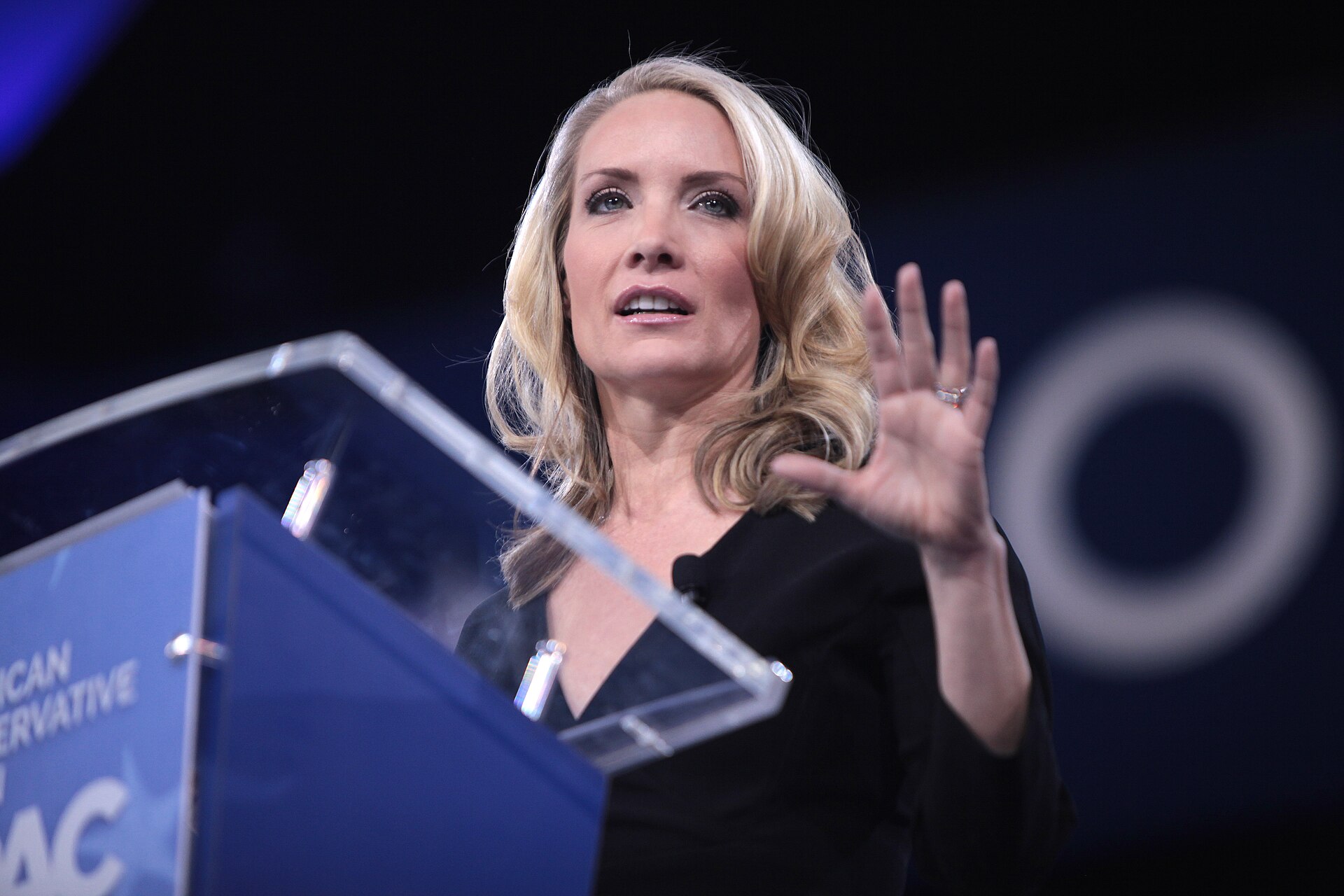
And Dana Perino went on live television and said out loud what a lot of people are thinking — nobody has read this thing.
What Perino Actually Said
On a recent episode of The Five, Perino laid out the transparency problem in plain terms. The Trump White House has touted itself as the most open administration in history. But when it came time to announce a landmark peace deal with Iran — a memorandum of understanding set to be formally signed in Switzerland — the actual text of the agreement was still not public.
“Okay, so you killed all those the leaders, but now the IRGC is in charge,” Perino said on air. “So, that’s who we’re dealing with and that’s who we’re supposed to stand next to on Friday and sign an agreement that nobody has seen or read?”
She didn’t stop there. “This is the most transparent administration in history? Like, I can make all of those the points.”
Greg Gutfeld jumped in: “You have to stop doing that, Dana.” The lone liberal on the panel, Jessica Tarlov, couldn’t resist. “I think she sounds great!” she said.
Perino kept going. “Like we said at the very beginning, the victories are usually visible, clear, understandable. And it’s just premature to say. We haven’t even read the information. If I were the Democrats, I would be saying, ‘You telegraph everything else. Why won’t you let us read the thing?'”
The Deal Itself
To be clear about what’s actually on the table: President Trump and Vice President JD Vance both digitally signed a memorandum of understanding with Iran that would halt fighting on all fronts for 60 days and reopen the Strait of Hormuz to all shipping traffic. A formal signing ceremony is scheduled in Switzerland. Trump posted on Truth Social that the deal with Iran “is now complete” and wrote, “Ships of the World, start your engines. Let the oil flow!”
Markets responded immediately. The S&P 500 climbed nearly 2%, and oil prices dropped close to 5% on the news that the Strait — through which roughly a fifth of the world’s oil passes — would reopen.
But as of the time of Perino’s remarks, Trump told reporters the text of the memorandum would be released “pretty soon” — sometime after the formal signing. Senior administration officials acknowledged that significant work remained to be done in the detailed nuclear negotiations ahead.
Perino offered two possible explanations for the secrecy. “Things are still being worked out behind the scenes,” she said, which she called “understandable.” But she also suggested the White House may have “jumped the gun” in announcing the deal before everything was locked down — cycling between “There’s a deal! Everything’s great!” and walking it back within hours.
“I have a feeling we’re going to be talking a lot about Iran, but nobody’s read the documents, so it’s unclear what you can really say about it,” she added.
The Bigger Picture
Perino, who served as White House press secretary under President George W. Bush, was careful to acknowledge what Trump has accomplished. She cited the 2020 elimination of Iranian military commander Qassem Soleimani and Operation Midnight Hammer — the strikes Trump said had “obliterated” Iran’s nuclear facilities. “Like, all of that is different and better and puts us in a better position than we were 10 years ago,” she said. “Or even more than that, like when the JCPOA written by Obama was there.”
That’s a fair point worth sitting with for a moment. Obama’s JCPOA — the 2015 deal that Trump tore up in 2018 — didn’t require Iran to dismantle a single reactor. It placed no limits on Iran’s ballistic missile program. It had no anytime-anywhere inspection regime. And it came with billions in sanctions relief that critics say ended up funding Iran’s proxy armies across the region. Trump called it “the worst deal I’ve ever seen,” and he wasn’t wrong.
What Trump is pursuing now is a different animal entirely. The current deal reportedly requires Iran to halt uranium enrichment and dismantle its nuclear sites — though the length of the pause is still being negotiated, with the U.S. pushing for 20 years and Iran reportedly not willing to go above 10. Those details will be hammered out during the 60-day ceasefire window.
And that’s exactly why Perino’s question stings a little. The administration has a genuinely strong hand to play here. Trump killed Soleimani. He launched Operation Midnight Hammer. He brought Iran to the table from a position of real strength — not the appeasement posture Obama took when he handed Tehran a glide path to nuclear capability wrapped in diplomatic ribbon. If this deal is as good as the White House says it is, releasing the text should be a victory lap, not a liability.
The voices pushing hardest against any diplomatic resolution tend to be the same voices who cheered on Iraq, Afghanistan, Libya, and every other nation-building misadventure that cost American lives and trillions of dollars while producing chaos. Trump ran against that foreign policy tradition twice and won twice. Ending a conflict through diplomacy rather than open-ended military commitment is exactly what he promised voters.
But Perino’s point isn’t an argument against the deal. It’s an argument for showing your work. The White House has every reason to release this document and let Americans see what their President negotiated. Keeping it under wraps doesn’t protect a good deal — it just hands Democrats a talking point they didn’t earn.
“I think the best thing we can tell our viewers is to say, ‘We got to wait and see,'” Perino said. That’s reasonable advice. But the wait shouldn’t be longer than it needs to be.
Sources: Mediaite; AOL News; ABC News; CBS News; NPR; Council on Foreign Relations