

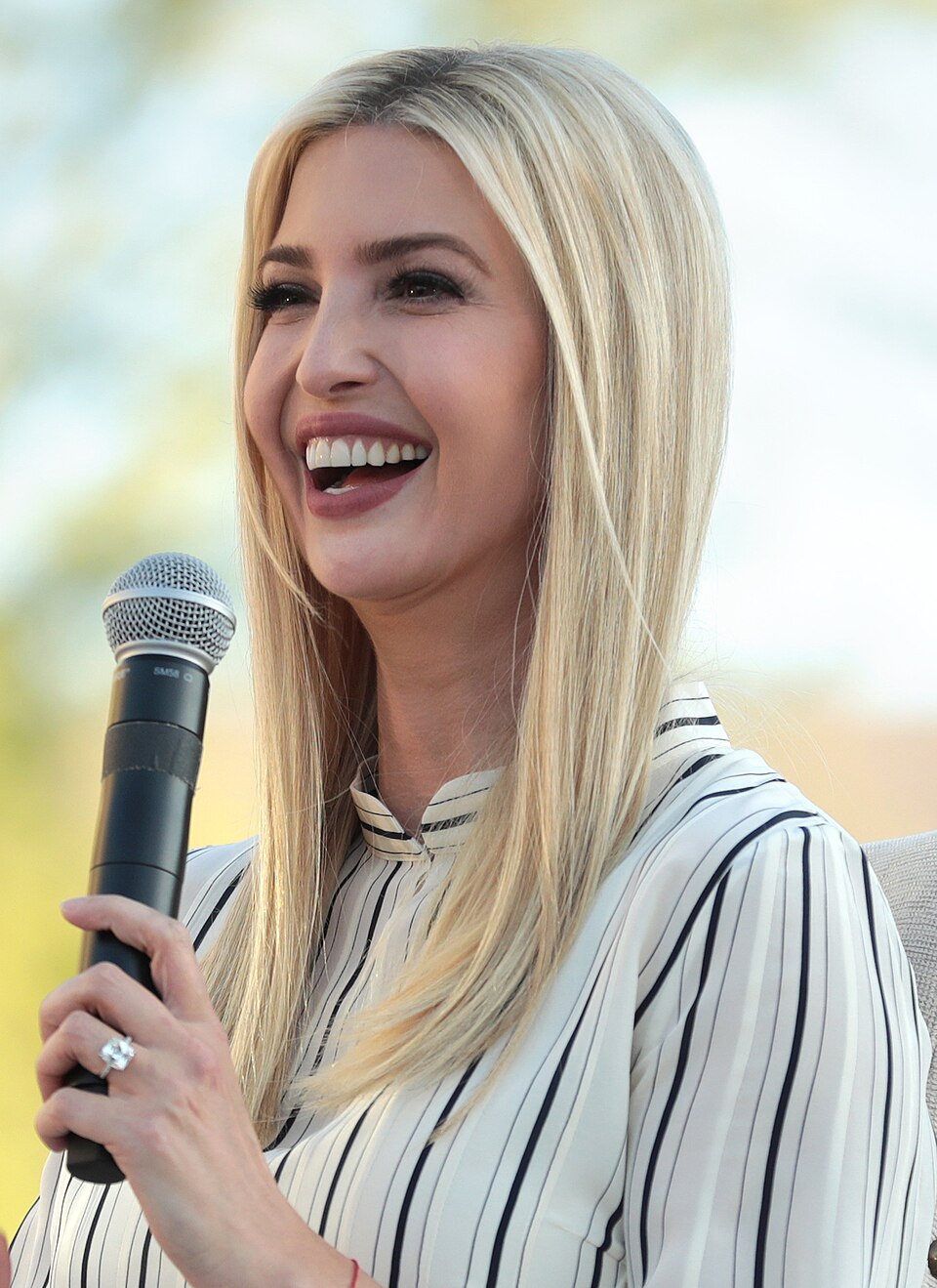
The threats against the Trump family reached scary new levels.
But this time, President Trump wasn’t the target.
The details of this plot against Ivanka Trump are only now coming to light — and they’re jaw-dropping.
An Iraqi Commander With a Blueprint and a Grudge
Mohammad Baqer Saad Dawood Al-Saadi, 32, didn’t just hate America from a distance. According to federal prosecutors, he was a senior commander inside Kata’ib Hizballah, the Iran-backed militia that the U.S. government designates as a foreign terrorist organization. He allegedly trained under the Islamic Revolutionary Guard Corps. And after President Donald Trump ordered the drone strike that killed Iranian military chief Qasem Soleimani in Baghdad in January 2020, Al-Saadi made a vow.
He was going to kill Ivanka Trump.
“After Qasem was killed, he went around telling people ‘we need to kill Ivanka to burn down the house of Trump the way he burned down our house,'” Entifadh Qanbar, a former deputy military attache at the Iraqi embassy in Washington, told the New York Post.
And he wasn’t just talking. Al-Saadi reportedly had a blueprint of Ivanka and Jared Kushner’s $24 million Florida home. He posted a map of the neighborhood to social media alongside a threat written in Arabic.
“I say to the Americans look at this picture and know that neither your palaces nor the Secret Service will protect you,” the post read. “We are currently in the stage of surveillance and analysis. I told you, our revenge is a matter of time.”
“We heard that he had a plan of Ivanka’s house in Florida,” Qanbar added.
Not Just Words — Nearly 20 Attacks Across Two Continents
Al-Saadi’s arrest didn’t come from stumbling onto a social media post. Turkish authorities nabbed him on May 15, and he was quickly transferred into U.S. custody and brought to Manhattan, where he appeared before U.S. Magistrate Judge Sarah Netburn in federal court.
The Justice Department charged him with six counts of terrorism-related offenses. The indictment covers his alleged role in directing or coordinating nearly 20 attacks across Europe and North America, including an explosives attack on a Bank of New York Mellon branch in Amsterdam, a stabbing of two Jewish men in London, and a shooting at the U.S. consulate in Toronto.
He now sits in solitary confinement at Brooklyn’s Metropolitan Detention Center. He faces a maximum sentence of life in prison.
Acting Attorney General Todd Blanche put it plainly. “As alleged in the complaint, Al-Saadi directed and urged others to attack U.S. and Israeli interests and to kill Americans and Jews in the U.S. and abroad, and in doing so advance the terrorist goals of Kata’ib Hizballah and Iran’s Islamic Revolutionary Guard Corps.”
FBI Director Kash Patel called the arrest “another high-value target responsible for mass global terrorism” and praised it as part of the administration’s “historic work to bring terrorists to justice.”
Soleimani’s Shadow, Still Reaching
The killing of Qasem Soleimani was one of the most consequential national security decisions of Trump’s first term. Soleimani ran the IRGC’s Quds Force and spent decades directing proxy militias, funding attacks on American troops, and building the terror infrastructure that groups like Kata’ib Hizballah operate through today. Trump made the call. The drone found its target. And the Iranian regime has been plotting revenge ever since.
Al-Saadi worked directly alongside Soleimani, according to federal prosecutors. The complaint also names Abu Mahdi al-Muhandis, the Kata’ib Hizballah leader who died in the same January 2020 strike. Both men were mentors to Al-Saadi. Both were taken out by the same American decision. And Al-Saadi, per the government’s case, spent the years that followed trying to make the United States pay for it.
Back in July 2020, just months after the strike, Al-Saadi posted an image on social media showing the U.S. Capitol in ruins, projected over the faces of Soleimani and al-Muhandis, with the caption: “our revenge for the martyred leaders is ongoing. No negotiations with the occupier.”
That wasn’t a grieving man venting. That was a commander telegraphing his intentions.
The Threat Got Louder After February
The arrest of Al-Saadi didn’t happen in isolation. The U.S. and Israel launched strikes against Iran in February 2026, and the threat picture against American targets — including the Trump family — escalated sharply in the months that followed.
In February 2026, Al-Saadi posted on social media in Arabic: “Kill everyone who supports America and Israel. Do not leave any of them remaining. Civil and military targets, as well as voices of discord, kill them everywhere.”
By April 2026, according to the Justice Department, he was texting photographs and maps of a prominent New York synagogue to an undercover FBI officer, directing that person to carry out a terrorist attack. He discussed whether to use an improvised explosive device. He also sent locations of Jewish institutions in Los Angeles and Scottsdale.
NYPD Commissioner Jessica Tisch confirmed her department “disrupted a plot against a Manhattan synagogue, and ensured its security when the threat was elevated.”
U.S. Attorney for the Southern District of New York Jay Clayton said Al-Saadi “attempted to disrupt American society through intimidation and violence.”
The Bigger Picture Nobody Should Miss
The Left spent years mocking Trump for taking out Soleimani. Democrats in Congress held votes trying to strip the President’s authority to act against Iran. The media ran wall-to-wall coverage warning that killing Soleimani would trigger World War III. None of that happened. What happened instead is that a mass-casualty terrorist network lost one of its most dangerous architects.
But the IRGC’s reach didn’t disappear. It adapted. Men like Al-Saadi kept the machinery running, kept the target lists updated, and kept the threats pointed at American citizens — including the President’s own daughter, in her own home, in Florida.
And the threat didn’t stay overseas. Synagogues in New York. Jewish institutions in California and Arizona. A U.S. consulate in Canada. A bank in Amsterdam. These weren’t random acts of rage. This was a coordinated campaign run by a senior commander who reported up a chain of command that runs straight back to Tehran.
Trump ordered the strike that took out Soleimani because Soleimani was a direct threat to American lives. Al-Saadi’s case proves the judgment was right. The network was real. The revenge plots were real. And without the kind of aggressive counterterrorism work that caught Al-Saadi in Turkey before he could act on any of his American targets, this story might have had a very different ending.
Al-Saadi made his court appearance Friday and his attorney called the case “unusual,” requesting more information about the circumstances of his arrest. He faces six counts including conspiracy to provide material support for acts of terrorism, conspiracy to bomb a place of public use, and destruction of property by means of fire or explosive.
The maximum sentence is life in prison. That’s where this one belongs.
Sources: New York Post, May 22, 2026; U.S. Department of Justice press release, May 19, 2026; Courthouse News Service, May 19, 2026; HSToday, May 19, 2026; Raw Story, May 23, 2026.