

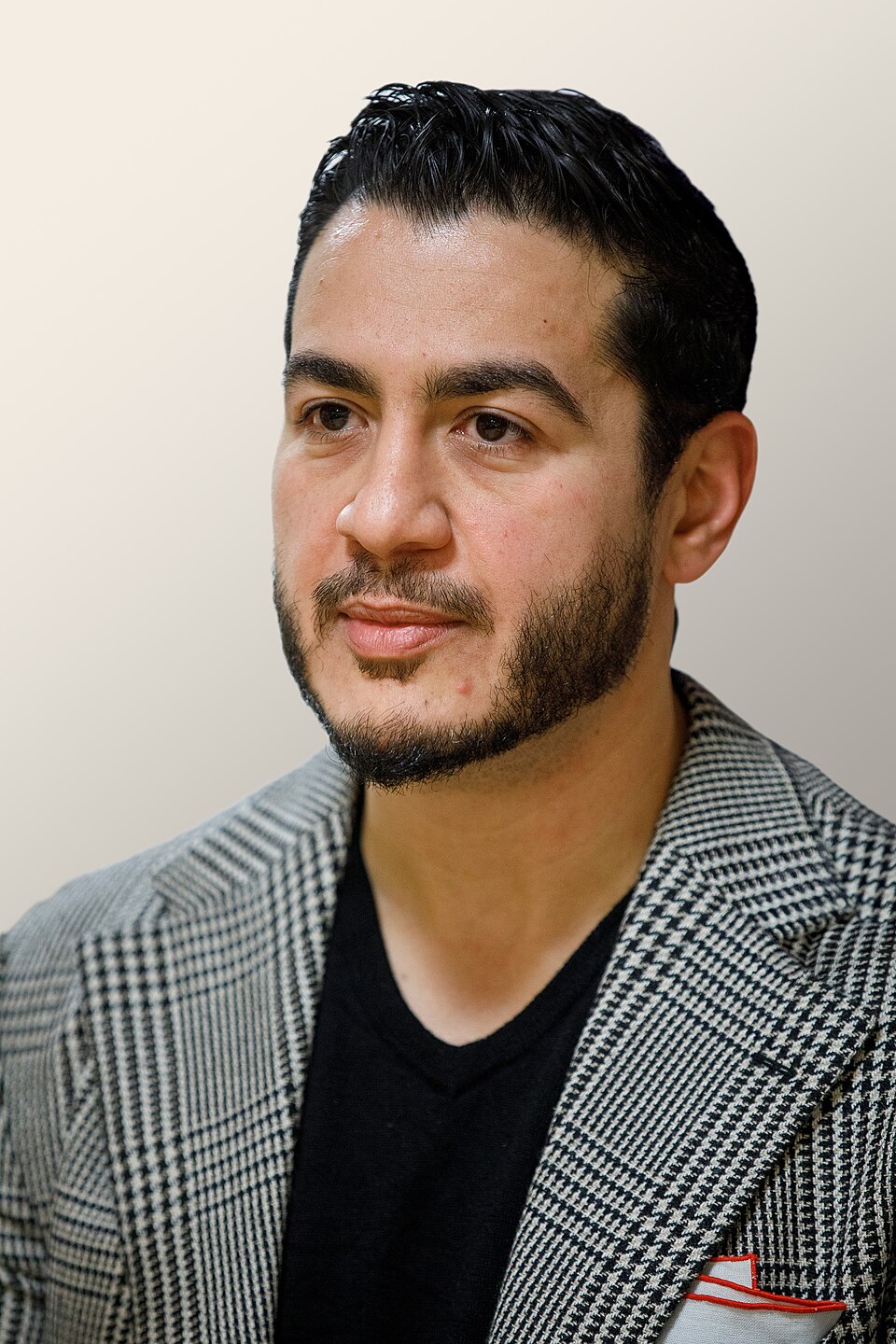
Abdul El-Sayed hasn’t even taken his Senate oath, and he already wants Washington running every doctor’s office in America.
His interviewer on public television treated the whole scheme like a feel-good human-interest segment.
And El-Sayed just made Donald Trump one offer with a price tag nobody bothered to mention.
El-Sayed Got the Velvet-Glove Treatment From PBS
Senator-elect Abdul El-Sayed (D-MI) sat down with PBS News Hour co-anchor Amna Nawaz while the incoming class of Democrat senators was in Washington, DC for orientation. What followed looked a lot more like a coronation than an interview.
Nawaz opened by asking what had surprised him most about his first days in town. El-Sayed claimed Republican colleagues had reached out to work with him, then refused to name a single one.
“I keep private conversations private, but I will tell you that they are Republican colleagues who had less than nice things to say about me during the campaign,” El-Sayed said.
Nawaz let it slide. “Maybe next time you come back, we’ll get some more details on progress,” she told him.
That set the tone for the rest of the roughly 12-minute segment.
The Trumpcare for All Pitch Showed Up Without a Price Tag
The big moment came when Nawaz raised El-Sayed’s idea of rebranding Medicare for All as “Trumpcare for All” if a new name would win the President over. She asked exactly one follow-up. “Is that a serious offer?”
El-Sayed said it was.
“Yeah, I mean look, I don’t care what we call it. I ran to get people healthcare. I really don’t care what the name is,” he said.
Then he dangled the President’s ego as bait. “And it seems like you like to put your name on things,” El-Sayed said.
A minute later, after Nawaz confirmed he hadn’t spoken with Trump since the election, El-Sayed turned and addressed the President through the camera. “So, Donald, if you’re watching, let’s do it.”
Cute line. But notice what never came up. Not one question about cost. Not one question about taxes. Not one question about the private insurance plans tens of millions of working families would lose.
And the numbers aren’t a secret. When the Mercatus Center at George Mason University studied the Bernie Sanders version of Medicare for All, economist Charles Blahous found it would add at least $32.6 trillion to federal spending over its first ten years, and he called that a lower-bound estimate. The Urban Institute, hardly a right-wing outfit, put its own figure at about $34 trillion.
Blahous went further. His study found that doubling every federal individual and corporate income tax in the country still wouldn’t fully cover the bill.
That’s the program El-Sayed wants stamped with Trump’s name. A government takeover of American medicine, financed by the biggest tax hike in the nation’s history, with bureaucrats in Washington deciding which treatments get approved and how long patients wait for them.
Nawaz had all of that one search away. She asked whether he was serious and moved on.
A Lecture on Tax Dollars From a Man Who Wants Trillions More
Here’s where the interview took a turn worth savoring. When Nawaz shifted to foreign aid, El-Sayed suddenly discovered a deep concern for how Washington spends the public’s money.
“We don’t pay our tax dollars to buy bombs and tanks for other countries. We want to pay our tax dollars to buy good schools and healthcare here on our own,” El-Sayed said.
Read that one twice. The same senator-elect who wants to pile tens of trillions onto the federal tab turned into a penny-pincher the moment the subject changed. He doesn’t object to spending tax dollars. He objects to spending them on anything other than his own wish list for government schools and government medicine.
Nawaz did manage one pointed question, asking how he planned to reverse the coming Medicaid changes when President Trump holds a veto pen. El-Sayed brushed past the math and predicted rural Republicans might join him, adding he wouldn’t be surprised by “maybe even a veto proof majority.”
But a veto override takes 67 votes in the Senate. Democrats will hold nowhere near that many. The Medicaid changes he calls “cuts” mostly ask able-bodied adults to work, volunteer, or train in exchange for taxpayer-funded coverage, a standard most working Americans would consider common sense.
Nawaz didn’t push back on any of it.
The Follow-Ups That Never Came
The soft touch carried right through the rest of the segment.
Nawaz asked about US Representative Haley Stevens (D-MI), the primary rival who endorsed Republican Mike Rogers two days before the election. El-Sayed sneered that Stevens had walked out on her own. “Well, when you self-expel, at some point, you’re choosing to walk all the way out of the tent. And that was a choice she made,” he said.
But Stevens told a very different story when she announced that endorsement. “Our Democratic nominee for Senate said I was no longer welcome in his campaign and that I should stay away,” Stevens said in her video.
So which is it? Did she leave, or did he show her the door? Nawaz never asked. So much for the big tent Democrats keep advertising.
El-Sayed also took a swipe at Stephen Miller, the President’s new White House Chief of Staff. Asked whether he could work with Miller, El-Sayed shot back, “That’s a choice Stephen Miller is gonna have to make.”
That’s rich coming from a freshman who wants Trump to hand him the biggest expansion of federal power since the New Deal. Miller has done more than almost anyone in Washington to put American workers ahead of cheap foreign labor and the donor class. El-Sayed’s real problem with Miller is that Miller won’t flinch when the Left starts making demands.
Nawaz closed by asking how El-Sayed talks to his daughters about the attacks he faced. He got a long, uninterrupted victory lap about Michigan’s big heart. Fair enough as a human moment, but it capped a segment where the toughest question of the night concerned Senate vote counts.
Public Television Has Every Reason to Play Nice
So why the kid gloves? Follow the money.
In July 2025, Congress clawed back about $1.1 billion that had been set aside for the Corporation for Public Broadcasting, the conduit that pipes federal money to PBS, NPR, and their local stations. The House passed the rescission 216-213, and every single Democrat voted to keep the checks flowing. PBS itself warned that roughly 15 percent of its stations might not survive without that cash.
And come January, Democrats take control of both chambers of Congress, along with the appropriations bills that go with them.
Maybe that’s too cynical. Nawaz has grilled plenty of guests over the years, and more than a few Republicans could vouch for that.
But it’s hard to miss the pattern. A network hoping its old federal lifeline comes back has little reason to make a rising Democrat senator squirm, especially one who loves spending other people’s money as much as El-Sayed does.
The bigger worry is what comes next. El-Sayed isn’t some backbencher. He backed US Senator Chris Van Hollen (D-MD) to replace Chuck Schumer as majority leader, and the socialist wing of the party now sees him as one of its rising stars. Medicare for All has gone from a Bernie Sanders campaign slogan to a plank that new Democrat senators run on openly.
President Trump’s veto stands in the way through January 2029. But every government-run health system floated in Washington eventually runs into the same wall: somebody has to pay, and somebody has to wait. Health savings accounts, real price transparency, and competition between providers would bring down costs without handing Washington the keys to every exam room.
Nawaz never put any of that to her guest. Charles Blahous put it in writing years ago, when his Medicare for All study first landed.
“Enacting something like ‘Medicare for all’ would be a transformative change in the size of the federal government,” Blahous said.
Sources: “CAIR Hour? Muslim PBS Anchor Coddles Abdul El-Sayed on Facing Right-Wing Hate,” NewsBusters; “Abdul El-Sayed on Democratic leadership, health care access and inspiring a new generation,” PBS News; “El-Sayed’s primary opponent stuns Democrats by endorsing Republican opponent in Michigan Senate race,” Associated Press via PBS News; “How the Urban Institute’s Estimates of ‘Medicare for All’ Costs Stack Up Against Mine,” Mercatus Center; “Study: ‘Medicare for all’ projected to cost $32.6 trillion,” Associated Press; “Congress rolls back $9 billion in public media funding and foreign aid,” NPR via LAist; “Congress votes to strip more than $1 billion in funding for NPR, PBS,” Axios