

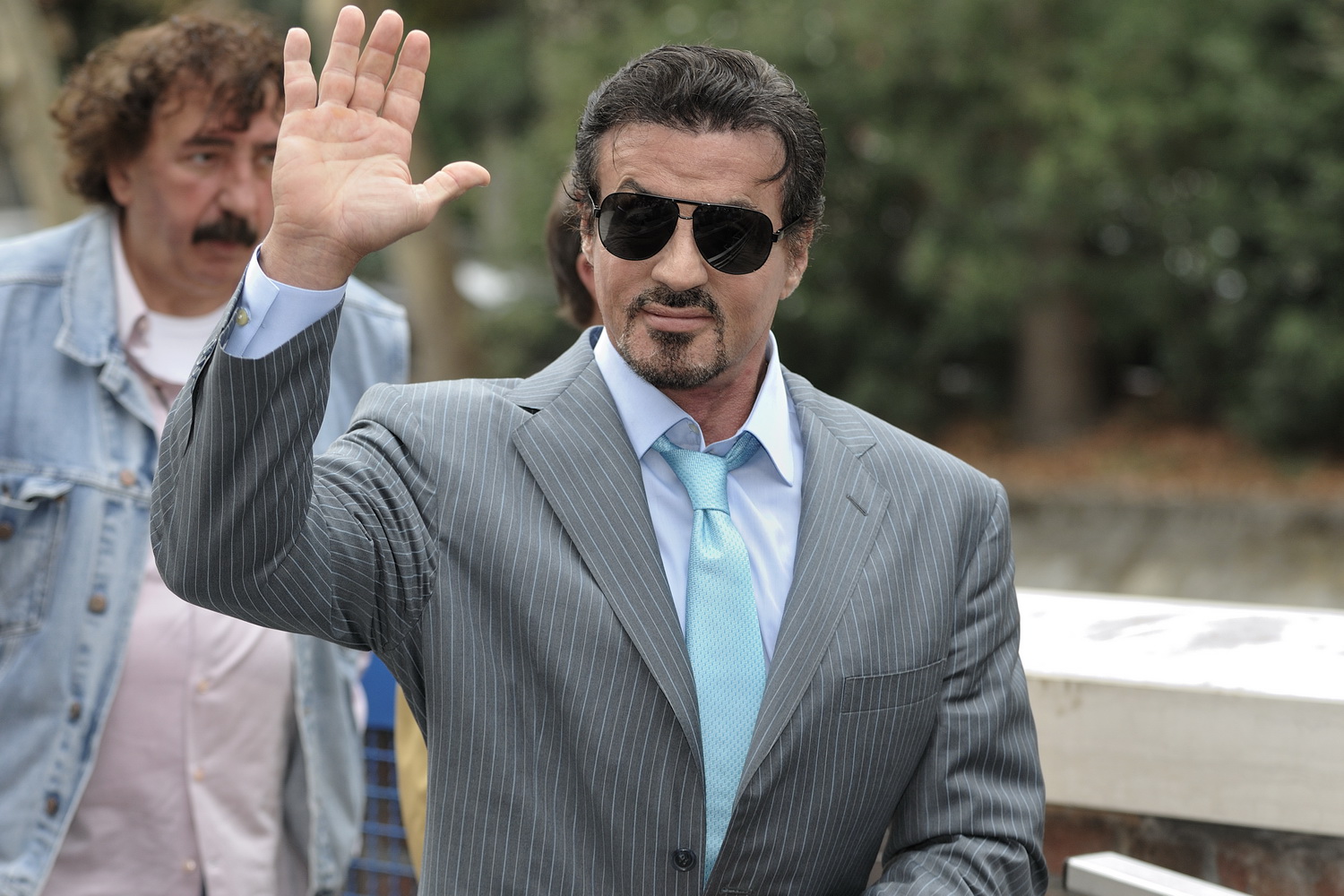
Sylvester Stallone says the coastal snobs running Hollywood wrote off a huge chunk of the country decades ago.
The studio crowd swears it simply makes what audiences want to watch.
And Stallone knows the one name those executives reach for every time a heartland story lands on their desk.
The Rocky Star Says the Studios Forgot the Guy in the Middle
The Tulsa King star sat down with the podcast The Rest Is Entertainment and handed Taylor Sheridan the credit for finding the viewers the rest of the industry treated like static between the coasts.
“It’s very, very important because that audience was ignored for centuries, it seems, since John Wayne,” Stallone said. “And he really mined a consciousness like, ‘Oh, we forgot about that guy in the middle of America.’ They’re always writing about California and New York.”
Centuries is a stretch, sure. The Duke made his last picture, The Shootist, in 1976, the same year Rocky hit theaters. But anybody who grew up watching Wayne on a Saturday afternoon knows exactly what Stallone meant.
“But the middle America, it’s a different vibe,” he added. “And so people were starving for it. It’s like a simpler world and more, I would just say, confrontational.”
Starving is the right word. Hollywood spent years serving the heartland a steady diet of lectures, then acted surprised when the heartland stopped buying tickets.
And Stallone doesn’t think the big studios have caught on yet. He gave the streaming services the edge, praising how quickly they move. “But the beauty of streaming is they’re fast, and they’re nimble, and they can really put a show on the air in a matter of weeks,” he said.
Hollywood Reached for Robert Redford Twice
Here’s the part of the story the industry would rather nobody connect.
Back in 1975, Stallone was a nobody with, by his own account, $106 in the bank. He banged out the Rocky script in about three and a half days. Producers Irwin Winkler and Robert Chartoff loved it. United Artists loved it too.
They just didn’t want the guy who wrote it.
The studio pictured Robert Redford, Burt Reynolds, Ryan O’Neal, or James Caan throwing the punches. The offers for the script alone kept climbing until they hit $360,000, a fortune for a starving actor in the mid-1970s. Stallone turned down every dollar unless he played Rocky Balboa himself.
United Artists finally caved. The studio cut the budget to roughly $1 million and left the producers holding the risk if the picture tanked.
It didn’t tank. Rocky became the box office champ of 1976 and took home Best Picture.
Now fast-forward four decades. Taylor Sheridan shopped a modern ranch drama to HBO and pitched Kevin Costner to play the family patriarch. HBO’s executives didn’t bite on Costner. “They said, ‘We want Robert Redford,’” Sheridan later recalled.
Then, over lunch at a fancy spot in West Los Angeles, an HBO vice president spelled out the network’s real problem with the show. “Look, it just feels so Middle America,” the executive told him.
Same town. Same reflex. Same name at the top of the wish list.
Nothing against Redford, who made The Natural and plenty of other fine pictures. The actor was never the problem. The problem was a studio class that couldn’t imagine a working man’s story unless a Hollywood golden boy fronted it, and preferably one the critics in Manhattan already adored.
Paramount picked up the show HBO didn’t want. Yellowstone went on to become a ratings monster, and its finale drew 11.4 million viewers on its first night across Paramount Network and CMT, the biggest audience in the show’s run. After three days of viewing, that number climbed past 13 million.
That’s a lot of people “starving,” to borrow Stallone’s word.
Two Outsiders Who Wouldn’t Take the Studio’s Deal
Billy Bob Thornton, who stars in Sheridan’s Landman, put it plainly when asked about his boss’s early years. “Hollywood wasn’t nice to Taylor,” Thornton said. “There’s something about being an outsider that drives you.”
Stallone would know. Studios told him to take the money and get out of the way. Executives told Sheridan his story felt too much like the people who actually live in most of the country.
Both men said no. Both men got proven right.
And Stallone still carries himself like a guy who remembers the $106. Hollywood is about to revisit his own fight in I Play Rocky, a Peter Farrelly picture about how the original film came together. Stallone stayed out of it entirely because he figured his involvement would turn it into an “ego massaging vehicle.”
Try finding that kind of restraint in an industry that hands itself trophies every few weeks on live television.
But he did sound tickled by the young actor playing him, Anthony Ippolito. “And then they showed me the fellow who was going to play me and I thought it was me,” Stallone said. “He gained weight. I mean, he looked the real deal.”
The Heartland Already Voted With the Remote Control
Stallone has never hidden where he stands. President Trump named him, along with Mel Gibson and Jon Voight, as “Special Ambassadors to a great but very troubled place, Hollywood, California.” Trump later picked Stallone as a 2025 Kennedy Center honoree.
The elite set couldn’t stand it. One political analyst greeted the new direction for the honors by telling his followers to “Prepare your stomach.”
That’s the attitude in a nutshell. The same people who sneer at a Philadelphia boxer and a Montana rancher then wonder why fewer Americans tune in to their award shows.
Trump connected those dots when he announced the honorees. “I shouldn’t make this political, because they made the Academy Awards political and they went down the tubes,” he said.
And the bubble hasn’t popped. Rosie O’Donnell spent the post-election stretch celebrating the Democrat midterm sweep from her new perch in Dublin and floating a move back to New York. Hollywood’s loudest voices cheer every time Democrats gain ground, even as the party drifts toward the socialist wing that wants Washington running everything from health care to energy prices.
The folks in the middle of the country who pay those energy bills don’t get much airtime in that crowd.
Maybe the studios finally wake up. Every executive in town has seen the Yellowstone numbers by now, and plenty of them have tried to bottle the formula.
But copying the cowboy hats isn’t the same as respecting the people who wear them. Sheridan’s shows work because he doesn’t write the heartland as a punchline or a cautionary tale. Stallone’s best work did the same thing fifty years ago, when a Philadelphia nobody running up the museum steps meant more to working Americans than any lecture ever could.
The streamers figured that out. The old studios keep hiring consultants to explain it to them.
Fifty years after Rocky, Hollywood still keeps the same polished names at the top of its list. Middle America quit waiting by the phone a long time ago.
Sources: Fox News, “Sylvester Stallone says Hollywood abandoned Middle America as Taylor Sheridan found an ignored audience”; The Hollywood Reporter, Taylor Sheridan Yellowstone cover story; The Hollywood Reporter, “Yellowstone Closes Season 5B With Finale Ratings”; Variety, “Yellowstone Series Finale Draws 13.1 Million Viewers in L+3”; TheWrap, “Billy Bob Thornton Says ‘Hollywood Wasn’t Nice’ to Taylor Sheridan”; Fox News, “I Play Rocky revives the gamble that made Sylvester Stallone a superstar”; PhillyVoice, “Trailer for Sylvester Stallone biopic I Play Rocky”; No Film School, “How Sylvester Stallone Fought to Keep the Rocky Script”; TCM, “The Big Idea: Rocky”; The Washington Post via The Nightly, “Trump to host Kennedy Center Honors”; PhillyVoice, “Sylvester Stallone chosen as Kennedy Center honoree”